Software · 20 October 2026 · 4 min read
The End of “Build in Public”: AI Clones Are Forcing Indie Developers into Hiding
In brief: The speed and precision of AI-assisted code generation tools are disrupting independent software and game development. Several creators have pulled public demos from major showcase events like Steam Next Fest, fearing that their core gameplay mechanics could be scraped and cloned by automated agents before their games ever reach the market. The crisis challenges the longstanding practice of building in public and exposes legal vulnerabilities around interactive design.
by Team Mocchi's
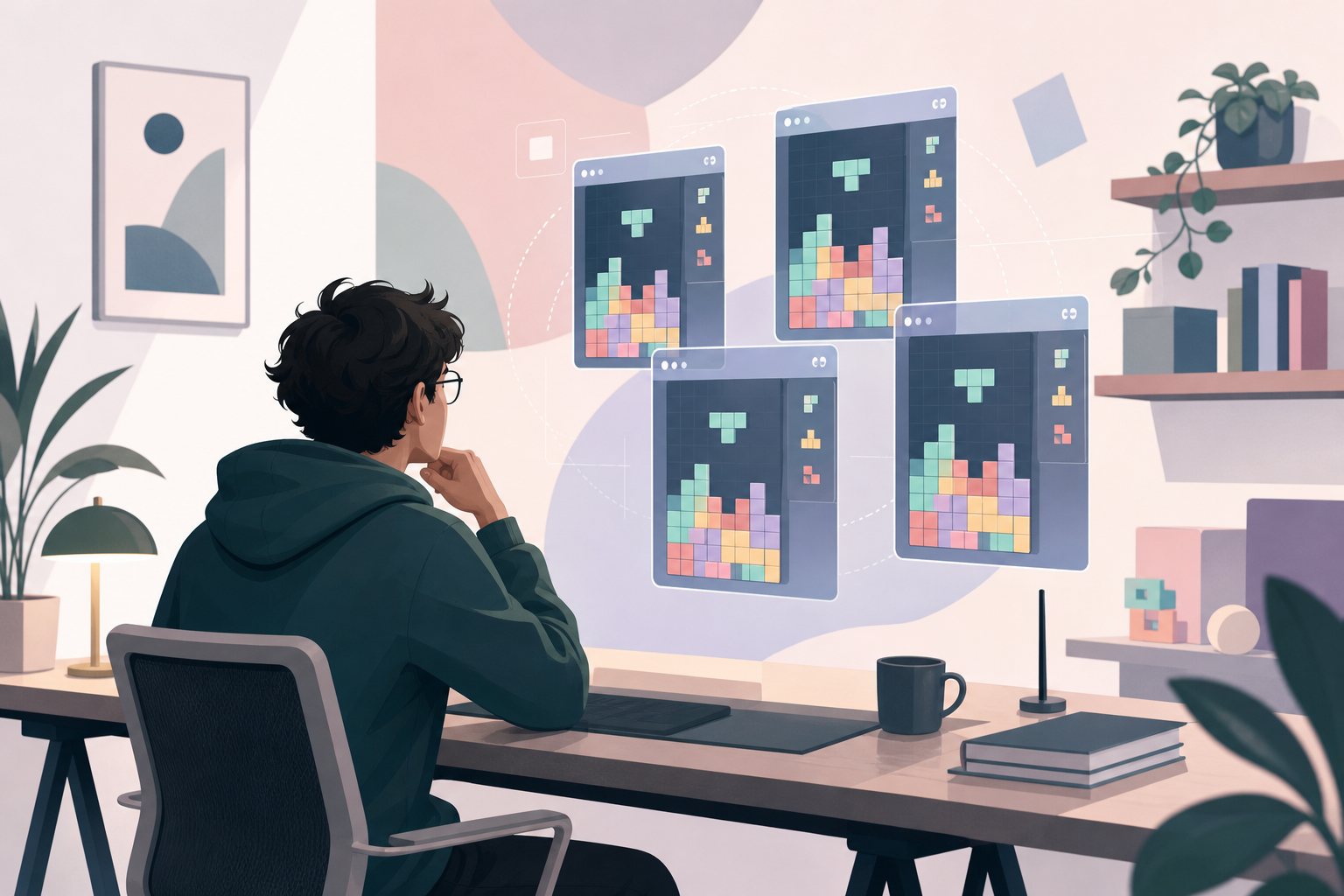
For over a decade, independent software creators and game developers relied on a playbook grounded in radical openness: sharing early prototypes on social feeds, posting weekly developer logs, and launching free public demos during high-traffic community showcases like Steam Next Fest to build wishlists and gather player feedback. In recent months, however, the rapid maturation of AI coding assistants and «vibe coding» agents has shattered that model, turning every public work-in-progress into prime training and replication material.
The friction reached a turning point over the weekend when independent studio Alliance Arts pulled its planned public demo for Drunken Goddess Reflux just ahead of Steam Next Fest. As reported by Ars Technica, the development team cited unambiguous security concerns: they feared the demo content would be rapidly scraped, decomposed, and replicated using AI tools, enabling opportunistic actors to flood digital storefronts with lookalikes before the official game could launch. The studio opted instead to limit access to closed, non-disclosure sessions.
The developer’s dilemma: silence versus instantaneous theft
Alliance Arts is not an outlier, but rather part of a broader retreat among creative coders. Renowned independent designer Lucas Pope, creator of Papers, Please, recently pointed out that developers can no longer safely talk about projects under active development without risking having their core concepts absorbed and mimicked by automated tooling.
The threat has already materialized in multiple high-profile cases. Technical artist and educator Freya Holmér saw an early prototype clip of a rotational pivot puzzle game reverse-engineered into playable web clones within days by individuals orchestrating vibe-coding agents. McPixel developer Sos Sosowski captured the impossible trap confronting creators today: failing to share development updates means zero commercial discovery, yet sharing progress publicly invites immediate algorithmic replication before production wraps.
Legal vacuums and the speed of machine mimicry
What makes this shift particularly destabilizing is the foundational framework of intellectual property law in software. Copyright protects literal source code, proprietary textures, audio files, and bespoke written dialogue, but it does not protect abstract mechanics, interaction loops, or design rules. When a multimodal AI system observes a sixty-second gameplay video, extracts the underlying physical mechanics, and directs an agent to generate clean implementation code in Godot or web runtimes without touching copyrighted source files, traditional legal defenses collapse.
Digital marketplaces, already managing high submission volumes, lack automated mechanisms to distinguish between legitimate creative homage and machine-synthesized copycats. The resulting pressure risks demoralizing grassroots software engineering while rewarding operators who deploy automated swarms to commoditize emerging ideas.
Mocchi's take
For digital agencies and technical teams building custom software or interactive experiences, this shift extends far beyond game design and challenges the viability of casual «build in public» strategies. When any exposed user interface or visible interaction pattern can be synthesized into functional code by generative agents overnight, competitive moats can no longer rely on frontend novelty. Defensibility now demands shifting core value deeper into proprietary domain logic, resilient backend infrastructures, tight hardware integrations, and direct community trust that cannot be inferred from a product screen.