IA · 7 September 2026 · 4 min read
The Hidden Anatomy of AI Campuses: Corporate Shells and Grassroots Pushback
In brief: The unrelenting expansion of physical infrastructure designed to power frontier artificial intelligence models is laying bare deep structural liabilities. A major investigative look into a $3.2 billion data center project in upstate New York highlights how multi-tiered holding structures blur accountability across developers, cloud operators, and tech conglomerates. At the same time, public sentiment is shifting sharply against the environmental and grid toll exacted by these mega facilities.
by Team Mocchi's
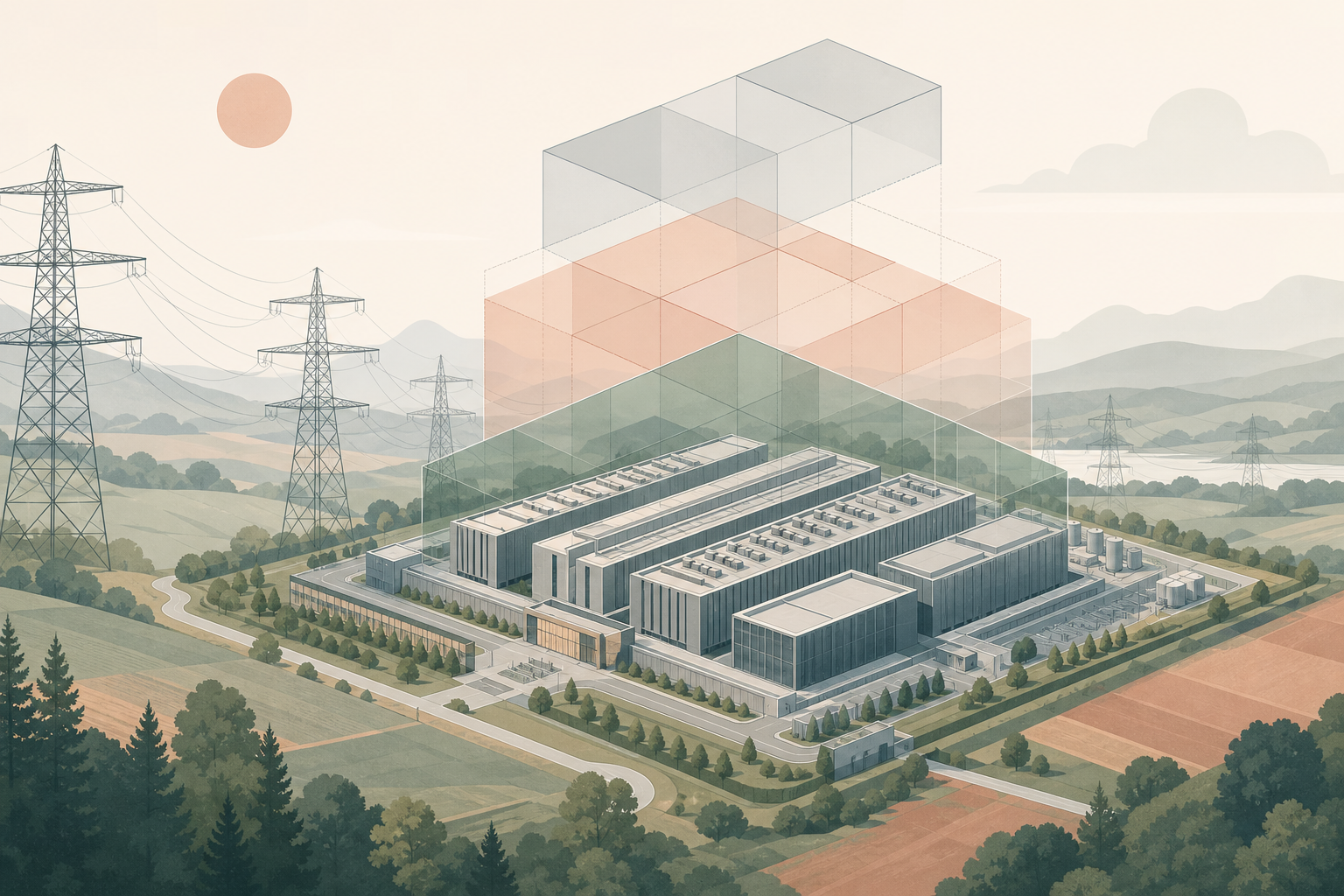
Beneath the high-profile announcements of massive GPU clusters earmarked to train frontier models, the physical expansion of artificial intelligence infrastructure is hitting a regulatory and legal wall: accountability diffusion. When industrial installations require billions in capital, strain regional power grids, and consume substantial water reserves, identifying who bears legal and operational responsibility for safety lapses and environmental externalities has become an intricate corporate puzzle.
The Lake Mariner Fire and the Multi-Tiered Shell Game
A stark illustration of this tension recently unfolded in Somerset, New York, at the Lake Mariner Data Center—a $3.2 billion campus expanding across the site of a decommissioned coal plant. A fire broke out in a structure still under active construction, confronting the local volunteer fire department with severe hazards: dry hydrants, uncommissioned fire suppression networks, and missing hazardous material safety sheets, which reportedly burned up during the incident.
As an investigation by Ars Technica uncovered, the operational chaos was compounded by an intricate ownership structure. The publicly traded operator, TeraWulf, runs the facility on land leased from an affiliate controlled by its own chief executive. The facility's compute capacity is leased to Fluidstack, a UK-based infrastructure provider whose contractual payments are backstopped by Google, which holds warrants for a 14 percent equity stake in the venture. Meanwhile, the actual computing cycles serve frontier AI players such as Anthropic. In the wake of the blaze, local officials attempting to secure binding safety protocols found themselves navigating a maze of corporate entities, with no single party stepping forward to assume full local liability.
Shielding Capital by Diffusing Operational Risk
This fragmented arrangement is not an anomaly; it has become the standard operational blueprint for the AI infrastructure boom. By routing facility developments through special purpose vehicles, layered colocation pacts, and synthetic lease structures, hyperscalers and frontier AI firms can secure dedicated access to vast computing pipelines without placing direct physical liabilities or environmental obligations onto their balance sheets.
While this financial engineering protects corporate sponsors from immediate regulatory exposure and litigation, it shifts friction onto local communities. Municipal authorities and first responders are forced to interact with thinly capitalized operating entities that lack unilateral executive power, while the primary economic beneficiaries of the infrastructure remain legally insulated behind holding companies and contractual shields.
Grassroots Resistance and Political Deflection
Compounding these governance cracks is an unprecedented wave of community resistance. The initial civic enthusiasm surrounding tax incentives and industrial rejuvenation has soured. According to reporting by WIRED, recent polling in the United States shows that up to 75 percent of surveyed citizens now oppose data center construction in their home counties—up dramatically from 42 percent a year earlier.
The pushback stems from tangible grievances: escalating household electricity rates, overloaded transmission lines, and massive water consumption for cooling systems. Facing growing political scrutiny from both sides of the aisle ahead of midterm elections, industry attempts to dismiss domestic opposition as foreign-engineered disinformation campaigns are losing traction, prompting municipal councils across key hubs to enact zoning freezes and building moratoria.
Mocchi's take
For European technology leaders and system integrators, the operational friction surrounding American hyperscale builds provides a critical takeaway: artificial intelligence is an industrial supply chain subject to physical constraints, not a disembodied software layer. Across Italy and the European Union—where grid capacity is strictly allocated and corporate transparency is mandated under directives such as the CSRD—opaque holding structures will not pass regulatory or civic muster. As we integrate advanced model capabilities into mission-critical software, accountability across the full infrastructure supply chain will rapidly transition from an obscure operational detail into an essential pillar of risk governance.