IA · 9 August 2026 · 4 min read
Amazon Bets on 7.6 Gigawatts of Gas in Texas: AI Tests Climate Pledges
In brief: Amazon has confirmed its investment in a massive 7.65-gigawatt natural gas power plant in Texas designed to power a new AI data center. Permitted to emit up to 33 million tons of CO2 annually, the facility could become the single largest source of greenhouse gas pollution in the United States, highlighting the tech industry's escalating energy dilemma.
by Team Mocchi's
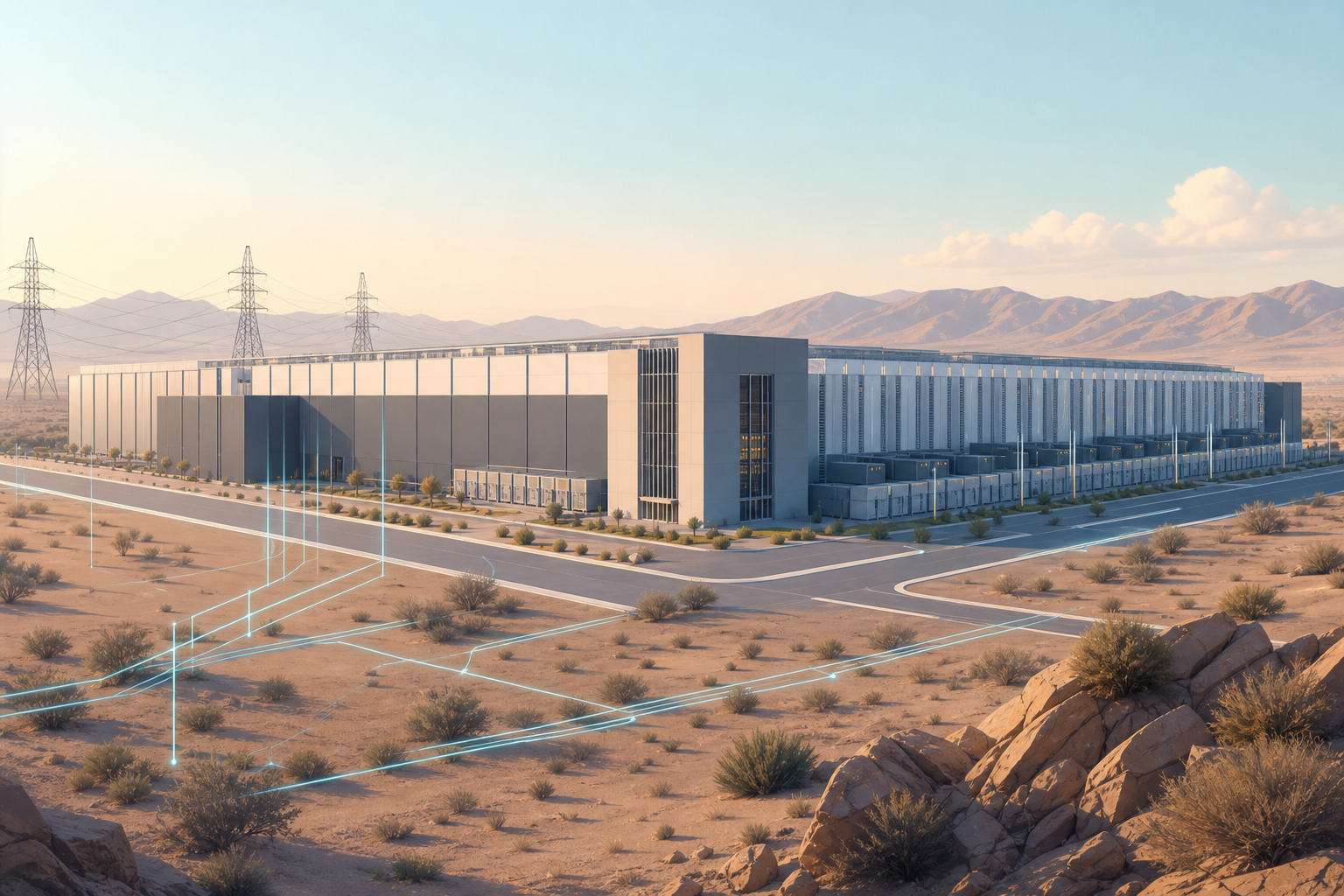
A massive off-grid power hub in Texas
The insatiable energy demand driven by artificial intelligence workloads is forcing tech giants to pursue unprecedented infrastructure solutions. Amazon has confirmed the acquisition of a site in Pecos County, West Texas, where it plans to construct a massive data center cluster supported by a dedicated natural gas power plant. The facility, known as GW Ranch, is slated to feature 35 gas turbines generating up to 7.65 gigawatts of electricity.
As reported by The Verge, citing tracking data from Cleanview, Texas environmental regulators granted the site a permit allowing for up to 33 million metric tons of annual CO2 emissions. This theoretical limit surpasses the output of any operational coal-fired power plant in the United States. Significantly, the project is designed to operate off-grid initially, supplying electricity directly to Amazon's data center to avoid straining local public utility capacity.
The Climate Pledge dilemma
The project places severe strain on Amazon's corporate environmental commitments. In 2019, the company co-founded the Climate Pledge with a target to achieve net-zero carbon emissions across its global operations by 2040. However, the rapid expansion of AI compute infrastructure has begun pushing emission metrics in the opposite direction.
According to coverage by TechCrunch, Amazon's carbon emissions grew by 16% over the past year. In response to scrutiny surrounding the Texas plant, an Amazon spokesperson acknowledged that the world looks different today than when the climate pledge was established, while maintaining that the company's long-term commitment remains unchanged.
Energy independence becomes the hyperscaler strategy
Amazon's move reflects a broader trend across the hyperscale cloud sector. Public grid connection queues in major markets often exceed five years, a timeline at odds with the fast-paced race to deploy AI clusters. Consequently, tech companies are increasingly turning to self-generation or direct power purchase agreements.
Industry peers including Meta, Google, and Microsoft are similarly exploring dedicated natural gas and nuclear power arrangements to secure reliable baseload energy. Generating power on-site mitigates public pushback over rising utility rates for local households, but shifts the environmental burden directly onto carbon reduction goals.
Mocchi's take
Amazon's strategy underlines how AI's insatiable hunger for power is creating a direct conflict between technology scale and climate sustainability targets. For European and Italian organizations building or integrating AI software, the key takeaway extends beyond physical infrastructure: compute efficiency is becoming a core architectural requirement. Optimizing code, leveraging lightweight domain-specific models, and avoiding computational waste are no longer just cost-saving practices, but essential strategies for managing operational expenses and ESG compliance in an energy-constrained landscape.