IA · 10 August 2026 · 4 min read
Anthropic Makes Claude Code's Auto Mode Default: Moving Beyond Step-by-Step Human Approvals
In brief: Anthropic announced that starting August 14, 2026, Claude Code's auto mode will be turned on by default for all paid subscription tiers. The move marks a shift in AI-assisted software engineering by eliminating constant authorization prompts for every execution step. Testing data reveals a clear trend: human manual reviews suffer from severe prompt fatigue, making automated safety guardrails far more effective.
by Team Mocchi's
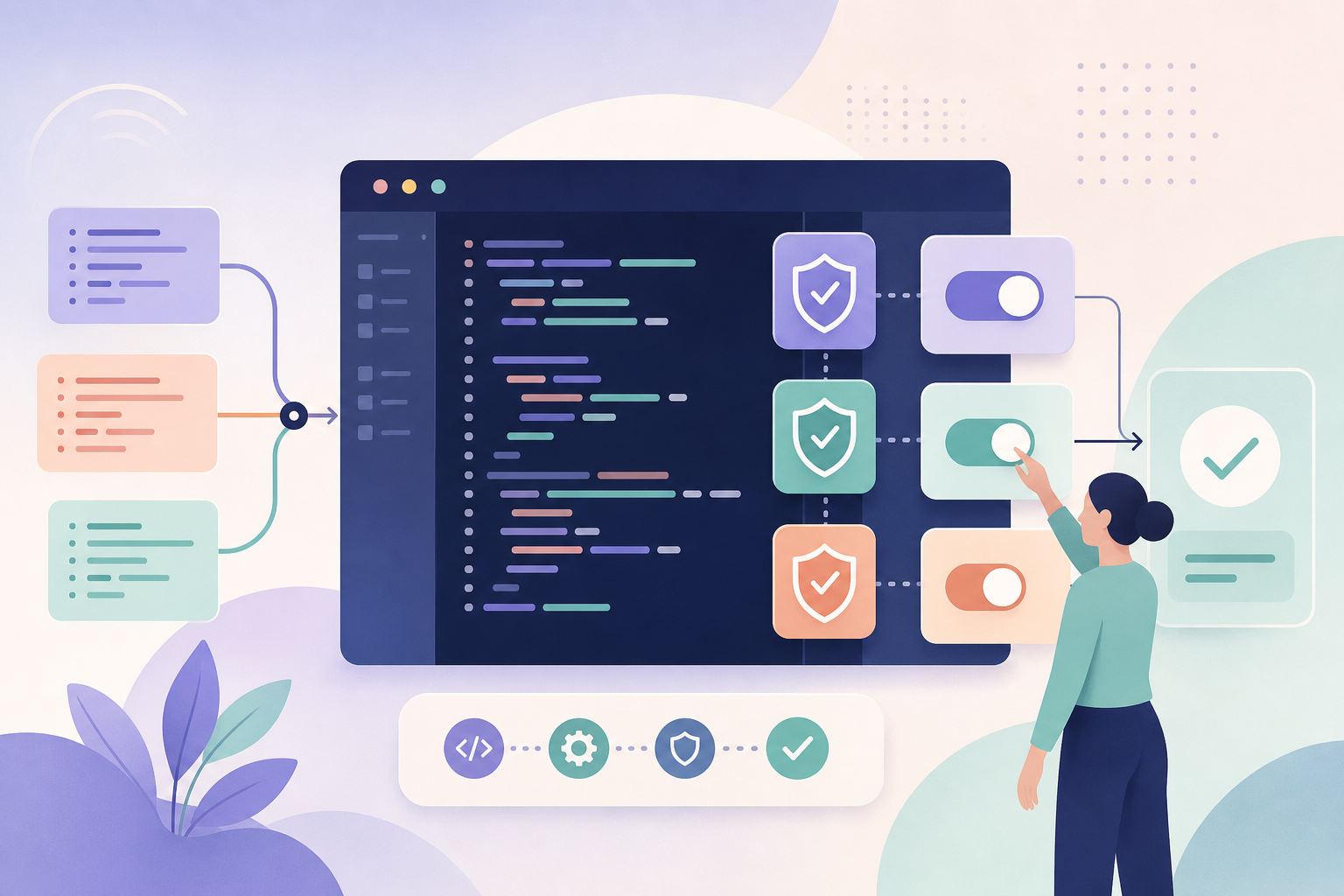
Moving Beyond Manual Approvals in AI Coding
The day-to-day interaction between software engineers and autonomous AI agents is taking a major step toward operational autonomy. As reported by TechCrunch, Anthropic announced that starting August 14, auto mode will become the default setting for all Pro, Max, and Team accounts within Claude Code.
First unveiled as an experimental feature in March 2026, auto mode removes the need for developers to manually approve every single command, file write, or script execution suggested by the agent. Under the new default setup, Claude Code will continuously execute assigned tasks, pausing to ask for explicit user consent only when an action is flagged as irreversible, destructive, or aimed outside the local workspace environment.
The Human Review Paradox: Prompt Fatigue in Practice
Making automation the default behavior stems not only from a desire for speed, but also from clear empirical data regarding developer safety and behavioral patterns. In internal research conducted by Anthropic across a sample of 1,053 paid testers, a striking paradox emerged: manual human oversight proved significantly less effective than automated algorithmic filters.
The data revealed that human reviewers successfully identified and blocked only 13.6% of harmful or erroneous actions. In contrast, the agent's auto mode identified and prevented 89% of risky behaviors. The root cause lies in "prompt fatigue": when faced with dozens of repetitive permission prompts, user attention drops sharply, leading developers to habitually approve 97% of authorization requests presented on screen.
Highlighting this paradigm shift, Boris Cherny, Head of Claude Code at Anthropic, publicly noted that the entire internal team has been using auto mode exclusively for months, calling a return to manual permission prompts impractical for engineering productivity.
Built-in Enterprise Guardrails and Safety Rules
To support default automation at scale while preserving codebase integrity in corporate environments, Anthropic has coupled the decision engine with new preventive safety guardrails. Among the introduced features are dedicated modules designed to detect and block prompt injection attacks, ensuring that malicious inputs buried within external dependencies cannot redirect the agent's behavior.
Furthermore, team managers and developers can configure strict, unbypassable boundary conditions known as hard deny rules. These rules allow organizations to establish strict operational perimeters, categorically preventing the agent from accessing sensitive directories, reading private API keys, or exfiltrating data beyond the corporate network.
Mocchi's take
Anthropic's decision highlights an essential truth in modern AI-assisted software development: security cannot rely on human micro-approvals. Notification fatigue and habituated clicking represent genuine security risks for engineering organizations. For companies integrating autonomous coding agents into their workflows, automated execution constrained by strict, deterministic guardrails—such as hard deny rules, policy-as-code, and isolated sandboxes—is far more reliable than the illusion of manual oversight. The real task for engineering leads is shifting from approving every individual action to defining clear, robust perimeter boundaries within which autonomous agents can operate at full speed.