IA · 7 July 2026 · 3 min read
The Rise of Background Agents: Anthropic Brings Claude Cowork to Mobile and Web with Offline Execution
In brief: Anthropic has announced the expansion of Claude Cowork to mobile devices and web browsers for Max subscribers. The key advancement is the AI agent's ability to run complex tasks asynchronously in the cloud, removing the need for the user's laptop to remain awake. This shift escalates the competition from coding-centric tools to general-purpose, cross-device office assistant agents.
by Team Mocchi's
Beyond the Open Laptop: The Evolution of Asynchronous Agents
Until today, using advanced AI agents required a bizarre logistical compromise: leaving your laptop screen cracked open, or your PC constantly awake, to allow the algorithm to finish complex workflows overnight or in your absence. This physical limitation is now a thing of the past. Anthropic has announced the release of Claude Cowork for mobile devices (iOS and Android) and web browsers for users subscribed to its Max tier.
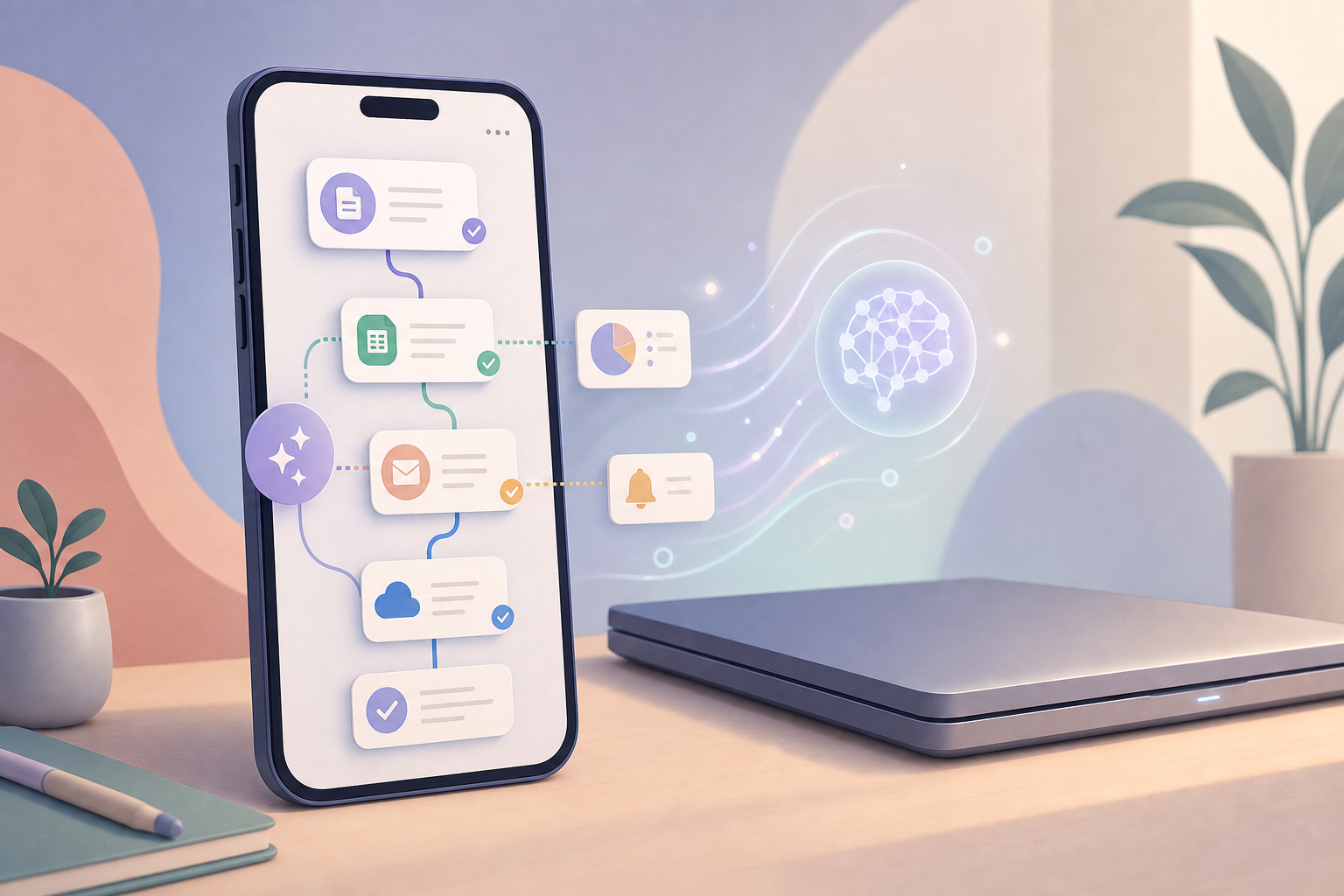
The update is far from a simple interface port: the agent is now capable of operating entirely asynchronously in the cloud. This means a user can trigger a complex workflow from their office desk, close their laptop, pack it in their bag, and monitor progress or approve decisions directly from their smartphone during their evening commute.
Unshackled From Local Hardware
Initially launched in January as a dedicated desktop app, Claude Cowork was built to translate the automation capabilities typical of developer tools (like Claude Code) into an interface accessible to anyone doing administrative or general office work. As reported by Wired, previous attempts to bring this technology to mobile – such as the Dispatch feature – still required the user’s primary computer to remain awake and connected to the internet.
With this latest update, Anthropic moves the entire execution load to its own cloud servers. The agent no longer depends on the status of the user's local device to run scheduled tasks or react to real-time events, such as incoming emails or external notifications. This technical decoupling positions Cowork as a true autonomous collaborator working in the background 24/7.
The Battle for the Office Desktop (and Mobile)
Anthropic’s move is part of a broader technological race redefining the boundaries of enterprise software. According to an analysis by TechCrunch, the battle among major AI labs is no longer about who has the smartest chatbot, but about occupying the actual digital surfaces where everyday office work takes place.
This trend, accelerated in early 2026 by the viral success of independent projects for continuous automation, has pushed industry giants to develop increasingly integrated proprietary solutions. While OpenAI is expanding its Codex assistant beyond pure programming to support reporting and data analysis, and Google is scaling its asynchronous capabilities with Spark, Anthropic is betting on cross-device flexibility to make its agents omnipresent.
Concrete Use Cases: From Nightly Prep to Your Phone Screen
The practical workflow of Claude Cowork illustrates this new paradigm of asynchronous delegation. In a typical scenario showcased by Anthropic, a user can ask the agent to prepare for a client meeting scheduled for 6:00 AM the following morning.
Without requiring any human intervention or an active computer overnight, Cowork autonomously scans email threads, retrieves relevant Slack channels, reviews recent meeting transcripts, and gathers the latest online news about the client. By the specified time, the agent generates a summary briefing document and drafts a follow-up email, ready for the user to review and send while sipping their morning coffee, directly from their smartphone.
Mocchi's Take
As a software agency, we view this shift from transactional "prompt-and-response" interactions (typical of chatbots) to asynchronous background delegation as a massive milestone. For businesses, the evolution of tools like Claude Cowork dramatically lowers the barrier to entry for workflow automation: companies no longer need complex custom server architectures or bespoke API integrations to run autonomous multi-platform tasks overnight. However, this transition requires organizations to think deeply about data governance and the security of permissions granted to cloud-based agents. It will be essential to train teams to adapt to a new role, moving from direct task execution to strategic supervision and quality control of AI-driven workflows.