IA · 1 July 2026 · 3 min read
Democratizing AI Agents: Anthropic Introduces Claude Sonnet 5
In brief: Anthropic has released Claude Sonnet 5, a powerful midsize AI model designed to run autonomous agents efficiently and at a fraction of the cost of larger frontier models. By delivering high-level reasoning, coding, and tool-use capabilities at highly competitive prices, Sonnet 5 aims to democratize the deployment of autonomous workflows in enterprise environments.
by Team Mocchi's
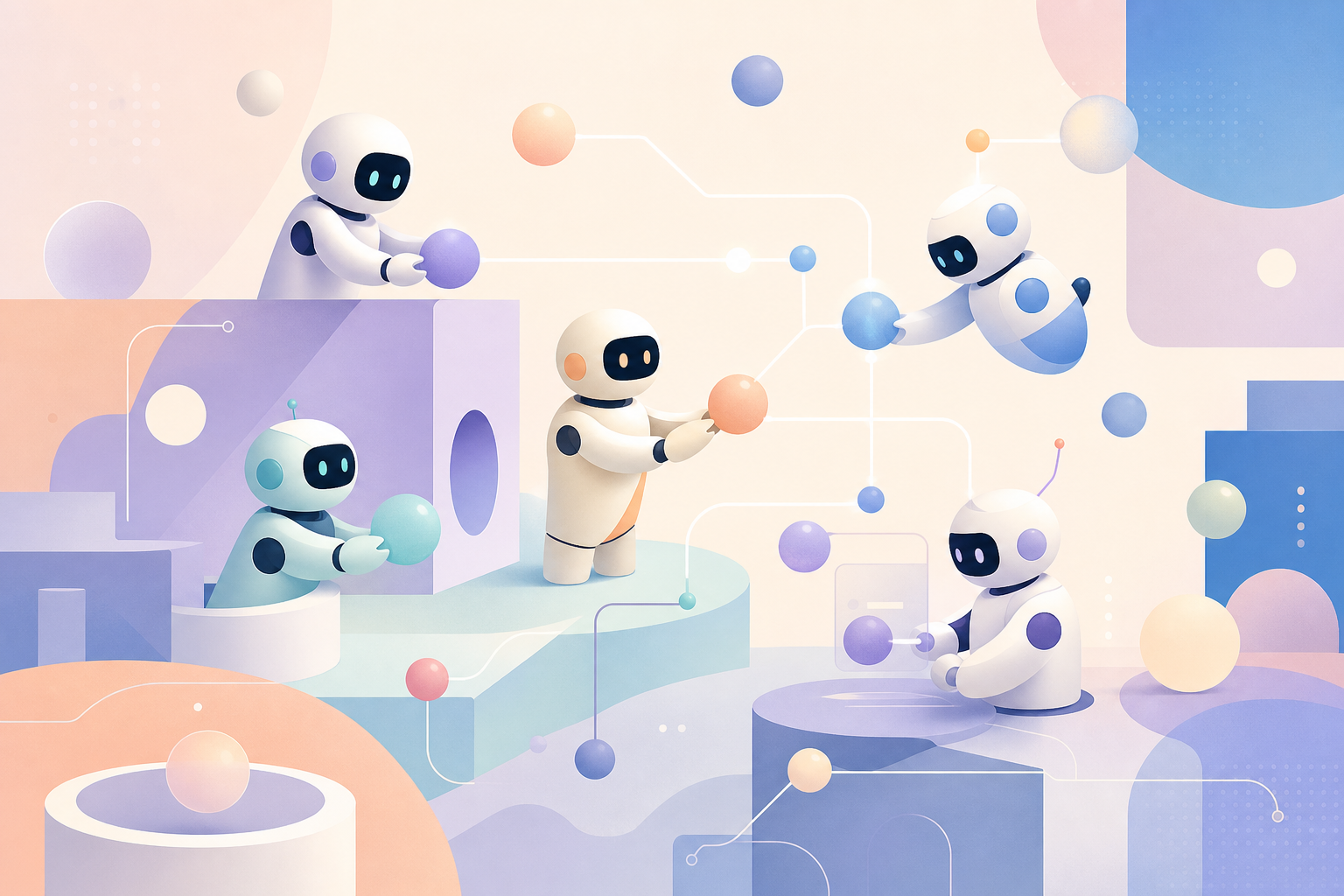
The New Standard for Agentic AI
The evolution of artificial intelligence is undergoing a fundamental shift: moving away from purely conversational chatbots toward autonomous agents capable of planning and executing complex tasks. With the debut of Claude Sonnet 5, a midsize model focused on efficiency and cost reduction, the frontier of agentic capabilities is no longer a luxury reserved for supercomputers or unlimited corporate budgets.
This release marks a turning point for assisted software development and business workflow automation. The announcement demonstrates that the economic sustainability of inference has become the primary battleground in the industry, surpassing the mere pursuit of raw power found in larger models.
High-End Performance at a Fraction of the Cost
The new model introduces substantial improvements over its predecessor, Sonnet 4.6, particularly in logical reasoning, the use of external tools such as browsers and terminals, and autonomous coding. In AI-assisted software development benchmarks, this version achieved a 63.2% success rate in solving complex coding issues, closing the gap with top-tier models like Opus 4.8 while operating at a fraction of the computational expense.
The positioning strategy focuses on providing a highly competitive alternative for enterprises aiming to scale independent digital assistants without facing unsustainable infrastructure costs. For the initial launch period, API rates are set at $2 per million input tokens and $10 per million output tokens, later adjusting to a standard rate of $3 and $15, respectively. These figures are significantly lower than those of other high-end solutions on the market, making mass agent adoption a realistic option for organizations of all sizes.
Moving Toward Operational Autonomy
What sets this generation of models apart is not just their ability to generate text, but their capacity to act in complex environments. The system can structure multi-step plans, interact with web interfaces, navigate file systems, and execute scripts within secure sandboxed environments. This reduces the need for constant human supervision, which has historically been the main bottleneck in integrating autonomous AI systems into daily business workflows.
The launch takes place within a highly dynamic competitive landscape, characterized by a shift from simple chat interactions to multi-agent architectures, where different sub-systems collaborate to solve a single business problem. Market value is increasingly defined by execution reliability and the predictability of energy and computational costs.
Implications for the Business Ecosystem
For companies integrating artificial intelligence solutions or developing custom software, the availability of such a capable model at a reduced cost represents a strategic milestone. It is now highly viable to design complex workflows—ranging from advanced customer support automation to automated source code maintenance—while dramatically lowering the cost per transaction. The era of applied AI is no longer measured solely by the theoretical power of research labs, but by the practical and financial viability of its daily use in enterprise operations.