Software · 11 November 2026 · 4 min read
Anthropic takes on the workplace: Claude Meetings, Sheets, and Whiteboards launch a full office suite
In brief: Anthropic has introduced a native productivity suite designed for knowledge workers, led by Claude Meetings alongside collaborative tools Claude Sheets and Claude Whiteboards. The AI assistant can now participate in live video calls, taking notes, creating roadmaps, and retrieving internal data before meetings wrap up, as the company diversifies beyond developers ahead of its landmark IPO.
by Team Mocchi's
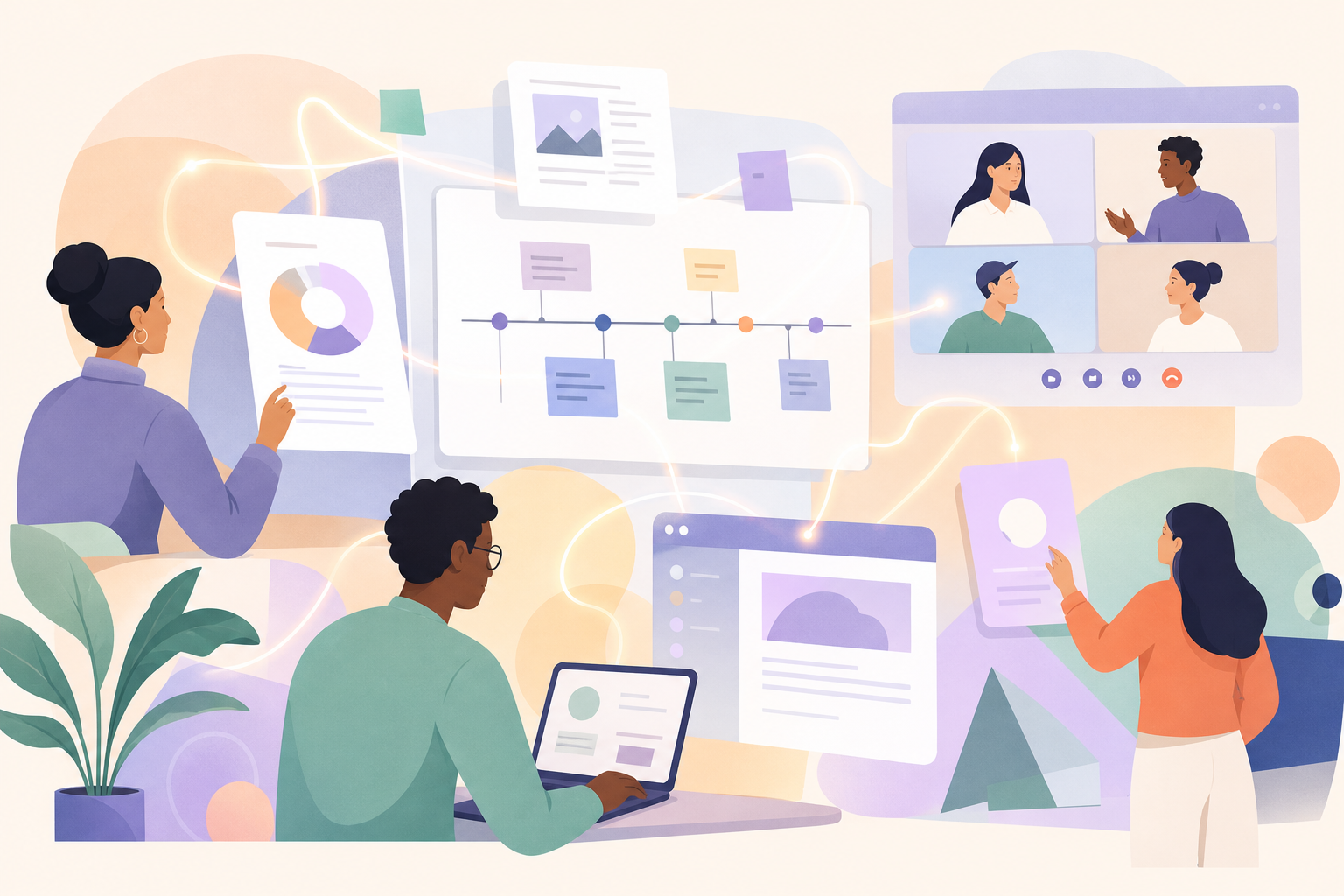
For years, Anthropic built its reputation around software engineers and high-end enterprise workloads, a position solidified by the widespread adoption of Claude Code. In San Francisco, Dario Amodei’s lab signaled a clear strategic expansion toward general business productivity by unveiling tools built specifically for non-technical professionals: Claude Meetings, Claude Sheets, and Claude Whiteboards.
The update represents a major structural shift in workplace automation. Rather than treating AI as a retroactive summarizer once a call has concluded, Anthropic is positioning the assistant as an active, in-meeting collaborator that operates while internal discussions are still taking place.
Claude joins the call: live execution and proactive collaboration
Under Claude Meetings, the assistant joins virtual sessions as a visible attendee with a dedicated announcement posted in chat. As reported by TechCrunch, the system does not wait for participants to hang up before taking action: it listens to the conversation in real time and begins working on the fly. If a team discusses a product roadmap, Claude can outline action items on a digital board, generate drafts, or query connected enterprise systems to pull up historical metrics mentioned aloud.
Once the meeting ends, meeting minutes, task assignments, and visual assets are immediately accessible within the Claude interface. The initial rollout is available in beta for Team and Enterprise subscribers on Google Meet, backed by corporate safeguards: Claude will not enter calls with external guests without administrative approval and automatically departs the room if an external participant joins unexpectedly.
Whiteboards, spreadsheets, and deeper MCP integrations
Alongside meeting capabilities, Anthropic expanded its Artifacts canvas by launching Claude Sheets and Claude Whiteboards to all paid tiers, providing collaborative environments for tabular manipulation and visual brainstorming. Meanwhile, Claude Data (formerly Claude Dashboards) has advanced to general availability.
According to Nicholas Lin, who oversees product at Anthropic, the goal is to bridge the adoption gap for everyday knowledge workers, as he detailed to The Verge. By leveraging the Model Context Protocol (MCP), Anthropic is rolling out interactive connectors that embed native tools from partners like HubSpot, Atlassian, and Adobe directly inside the chat interface. Users can edit a PDF or monitor a marketing campaign without tab-switching across disconnected browser windows.
The enterprise race leading to Wall Street
The move underlines an intensifying clash between frontier AI labs and established software suites. As OpenAI pushes further into automated presentations and Meta adapts its Muse agent for custom workplace workflows, Anthropic is mounting a direct offensive against the core territory of Microsoft 365 Copilot and Google Workspace.
For Anthropic, the initiative arrives at a pivotal moment. Approaching a landmark $1.4 trillion IPO valuation on Nasdaq, the company must convince public market investors that its revenue engine does not solely rely on API consumption and developers, but can command recurrent per-seat subscriptions across standard enterprise desks.
Mocchi's take
Bringing Claude straight into live video calls and spreadsheets confirms that conversational agents are leaving the chat silo to operate inside daily team workflows. For businesses, the clear advantage lies in eliminating the dead time between meeting debates, manual follow-ups, and fragmented data queries across CRMs. However, practical enterprise deployments show that success hinges on data governance: plugging an active agent into audio streams and business repositories demands strict access controls and tenant isolation before anyone clicks «join meeting».