IA · 24 June 2026 · 4 min read
Anthropic Launches Claude Tag: Turning AI into a Full-Time Slack Teammate
In brief: Anthropic has introduced Claude Tag in beta for Slack corporate users, shifting the digital assistant model into an always-on collaborator. With persistent memory, shared channel identities, and a proactive ambient mode, this agent learns from chat context and helps teams automate tasks directly within company channels.
by Team Mocchi's
A Silent Teammate in Workplace Communication Channels
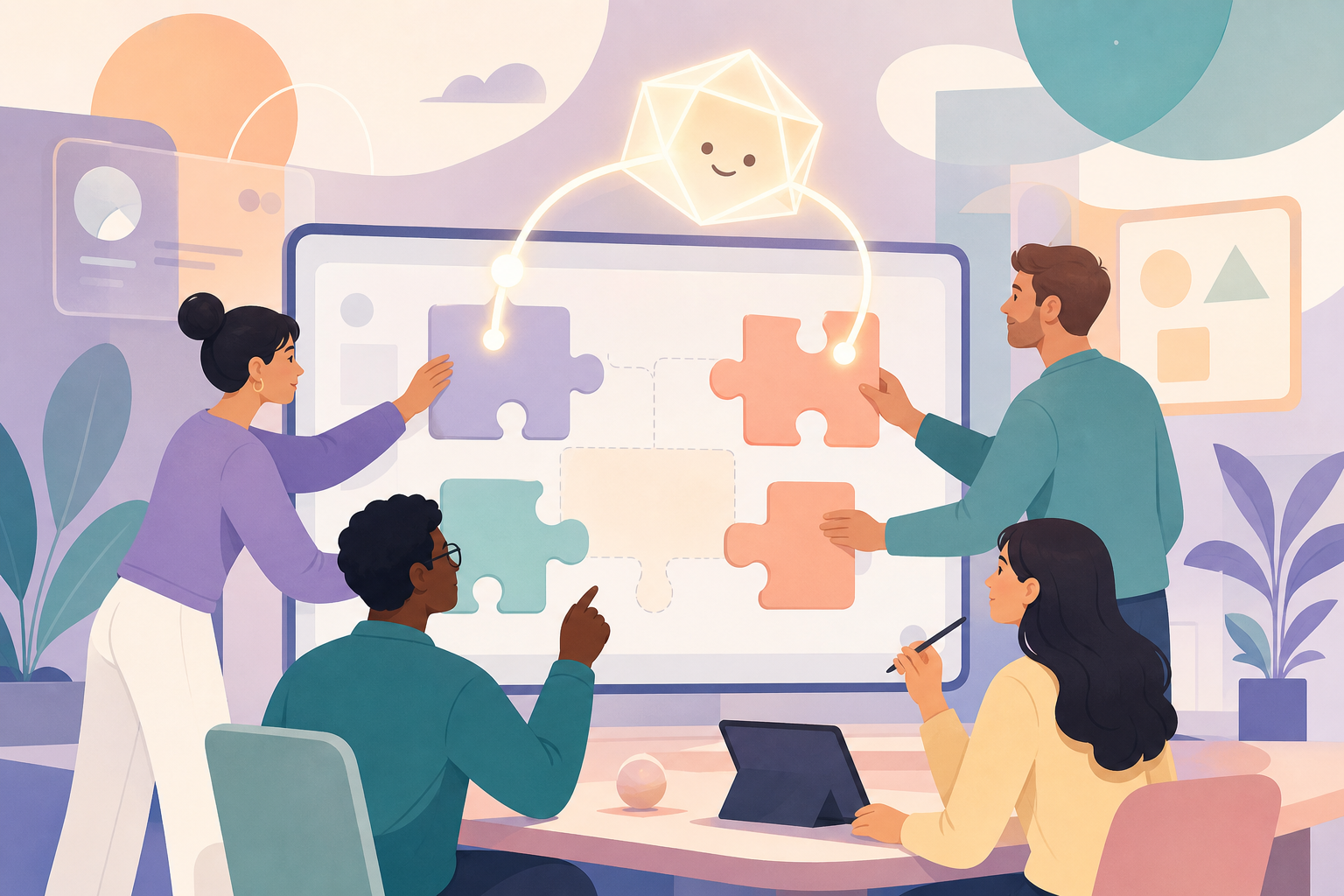
The transition from passive chatbots to active, cooperative agents takes a decisive step forward with the debut of a new technology designed to integrate directly into workplace communication channels. A new service called Claude Tag has been announced in beta, representing an always-on virtual assistant inside Slack engineered to behave like an actual teammate.
This new tool, targeted at enterprise users on Team and Enterprise plans, moves beyond the traditional logic of temporary direct messages. By allowing anyone within a channel to invoke the assistant with a simple tag, the agent progressively learns from daily workflows and ongoing discussions, building a persistent layer of context that previously got lost between isolated sessions.
Shared Memory and Channel-Wide Identities
Until now, interacting with large language models within corporate messaging platforms has been highly fragmented. Each user typically initiated a private conversation or a separate thread. With this new architecture, however, the agent assumes a collective identity tied directly to a specific channel.
This means all members of a given working group share the exact same instance of the model. If one user assigns a task to the assistant or feeds it strategic information, another colleague can jump into the thread, review the progress made, and pick up the conversation exactly where it was left. This persistent memory allows the agent to analyze message history over time, steadily improving response accuracy based on real-world project evolution.
Data Governance and Secure Information Flows
Introducing assistants capable of reading and analyzing corporate chat history inevitably raises questions regarding privacy and data security. To address these concerns, the management of the system provides granular control for IT administrators.
Each instance of the assistant is strictly sandboxed and restricted to the channels specified by corporate policies. For example, an agent configured to support the legal department is unable to pull information or store data originating from software engineering channels. This compartmentalized approach prevents accidental leakage of trade secrets or sensitive personal data, ensuring that each department leverages an assistant trained exclusively on its relevant domain.
From Simple Prompting to Proactive Ambient Assistance
The true innovation of this rollout lies in the shift toward proactive behavior. Upon receiving a complex request, the agent does not merely output an immediate text response; instead, it breaks down the task into logical phases. Leveraging the tools and permissions granted to it, it executes these steps sequentially, updating the team step-by-step directly within the thread.
Alongside this direct execution model, an “Ambient” mode is introduced. In this state, the agent passively monitors channel conversations to step in spontaneously when it detects an opportunity to be helpful. This could mean retrieving historical data from archives, suggesting a fix for a bug previously resolved elsewhere, or pointing out an inconsistency—acting as an attentive and quiet observer.
Outlook for Custom Development and Integration
The rise of “always-on” agents opens exciting pathways for organizations building custom software and complex enterprise data architectures. An AI's ability to autonomously digest organizational context through instant messaging reduces the need for lengthy manual onboarding of internal information systems.
Integrating these tools is no longer about querying static databases; it is about facilitating a dynamic, shared workflow. For businesses, adopting these agentic systems represents an opportunity to streamline internal knowledge management, dismantle operational silos, and make institutional expertise immediately available to everyone, one chat message at a time.