IA · 18 October 2026 · 3 min read
Fewer Juniors, More Meetings: How AI Reshaped Anthropic's Internal Workforce
In brief: Anthropic published an internal workplace report detailing how deep AI adoption has altered its workforce composition and daily routines over the past year. Junior technical roles have sharply declined, while senior engineers report spending less time writing code and more time coordinating, attending meetings, and supervising fleets of Claude agents.
by Team Mocchi's
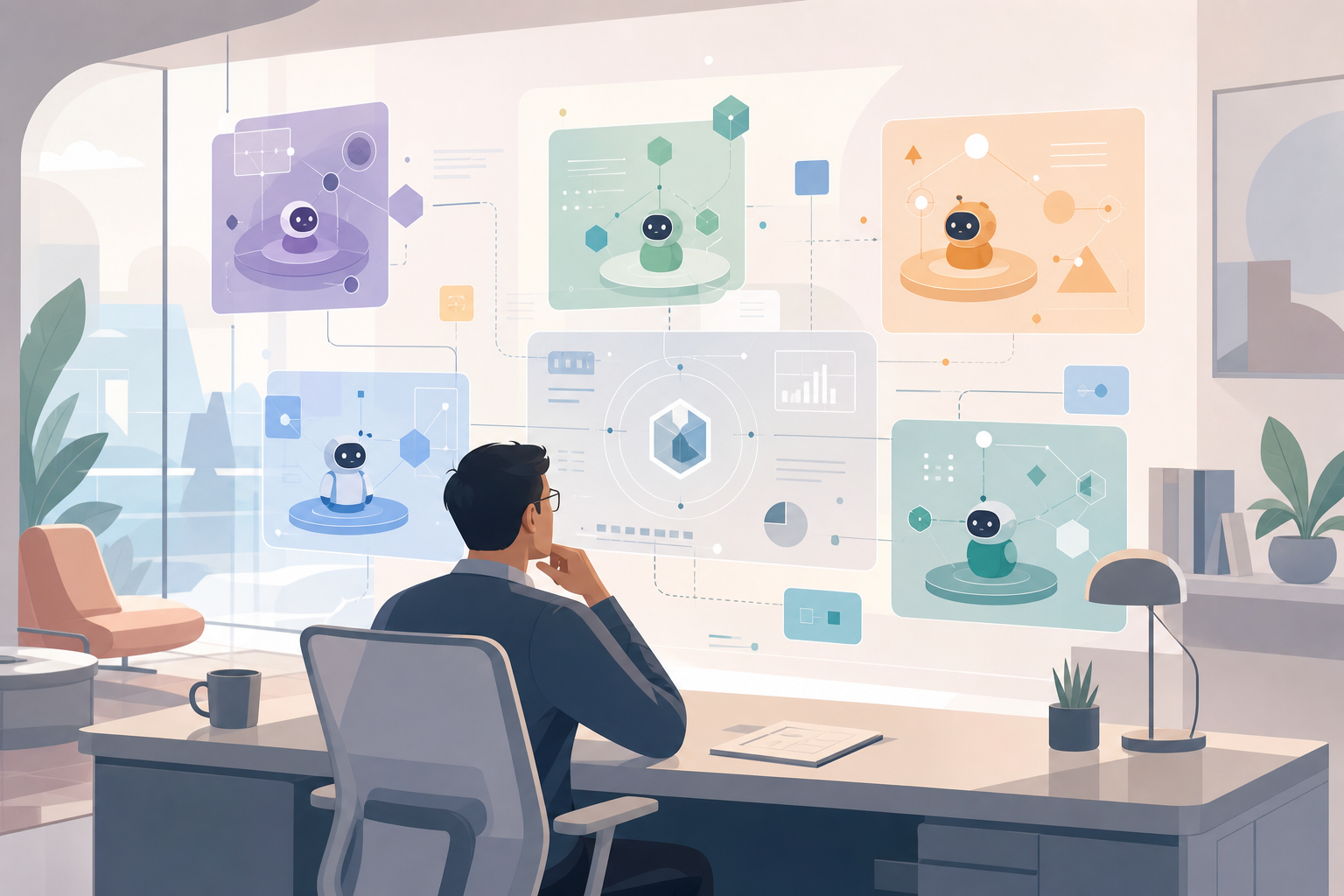
The narrative that artificial intelligence simply reduces cognitive strain is giving way to a much more complex organizational picture. Anthropic recently published an internal study analyzing how its own workforce composition and day-to-day operations have changed over the past year. Because the company has deliberately structured its workflows around Claude, Anthropic positions these internal trends as an early preview of how AI may reshape hiring, labor demand, and task allocation across the wider knowledge economy.
The findings illustrate a workplace under perpetual pressure to delegate everything to AI, where human contribution has shifted toward architecture, strategic alignment, and critical oversight rather than hands-on execution.
The steep drop in junior engineering roles
The most notable shift is happening at entry-level hiring. As reported by TechCrunch, the share of junior-level employees in Anthropic's technical departments dropped from 21% to 14% since early 2025. The decline among new technical hires is even more pronounced, plunging from 27% to just 9%.
This contraction reflects the current capabilities of foundation models in automating entry-level developer tasks, such as boilerplate generation, unit test writing, basic refactoring, and documentation. With automated agents handling these assignments in seconds, the organization's hiring appetite has pivoted heavily toward senior staff capable of validating architectural choices and spotting subtle hallucinations before they hit production environments.
From coding to «babysitting Claudes»
For existing staff, daily routines have undergone a dramatic evolution. In an internal survey conducted in April 2026, 27% of employees reported feeling more productive because of Claude. However, 20% noted that their role had fundamentally shifted from actually doing the work to «managing Claudes».
One Anthropic engineer compared this dynamic to babysitting: each active Claude instance spawns subtasks, queries, and exceptions that compete simultaneously for human oversight, creating a new kind of cognitive friction. The primary bottleneck is no longer how fast software can be written, but the limits of human attention and judgment required to inspect and steer autonomous workflows. As a direct consequence, engineers find themselves spending significantly more time in coordination meetings and review sessions.
Democratized development beyond engineering teams
The study also captures a broader organizational recalibration. Technical teams now represent 56% of Anthropic's overall workforce, down from 61%. While part of this shift is tied to the expansion of commercial and legal teams as the business scales, Anthropic explicitly attributes the trend to coding tools enabling non-technical employees to build their own software, prototypes, and automated data pipelines without filing development tickets.
Mocchi's take
Anthropic's internal findings mirror what we see in practical software delivery: AI does not remove the need for engineering rigor, but it shifts the focal point from writing syntax to architectural governance and verification. For technology organizations and Italian enterprises alike, the real danger is cutting off entry-level pipelines. If foundational tasks are entirely absorbed by models, cultivating the senior engineers of tomorrow will require intentional mentorship models based on system auditability rather than routine manual coding.