Tech · 17 September 2026 · 4 min read
Apple plans enterprise server comeback with M-series Ultra chips and Nvidia networking
In brief: Fifteen years after discontinuing the Xserve lineup, Apple is preparing a return to enterprise data center hardware with a dedicated AI server platform. Powered by configurations of two to four future M8 Ultra processors, the initiative aims to convert the widespread adoption of Mac mini and Mac Studio units across AI labs into a purpose-built enterprise server offering. Championed by new CEO John Ternus, the program also explores an unprecedented networking partnership using Nvidia's NVLink interconnects.
by Team Mocchi's
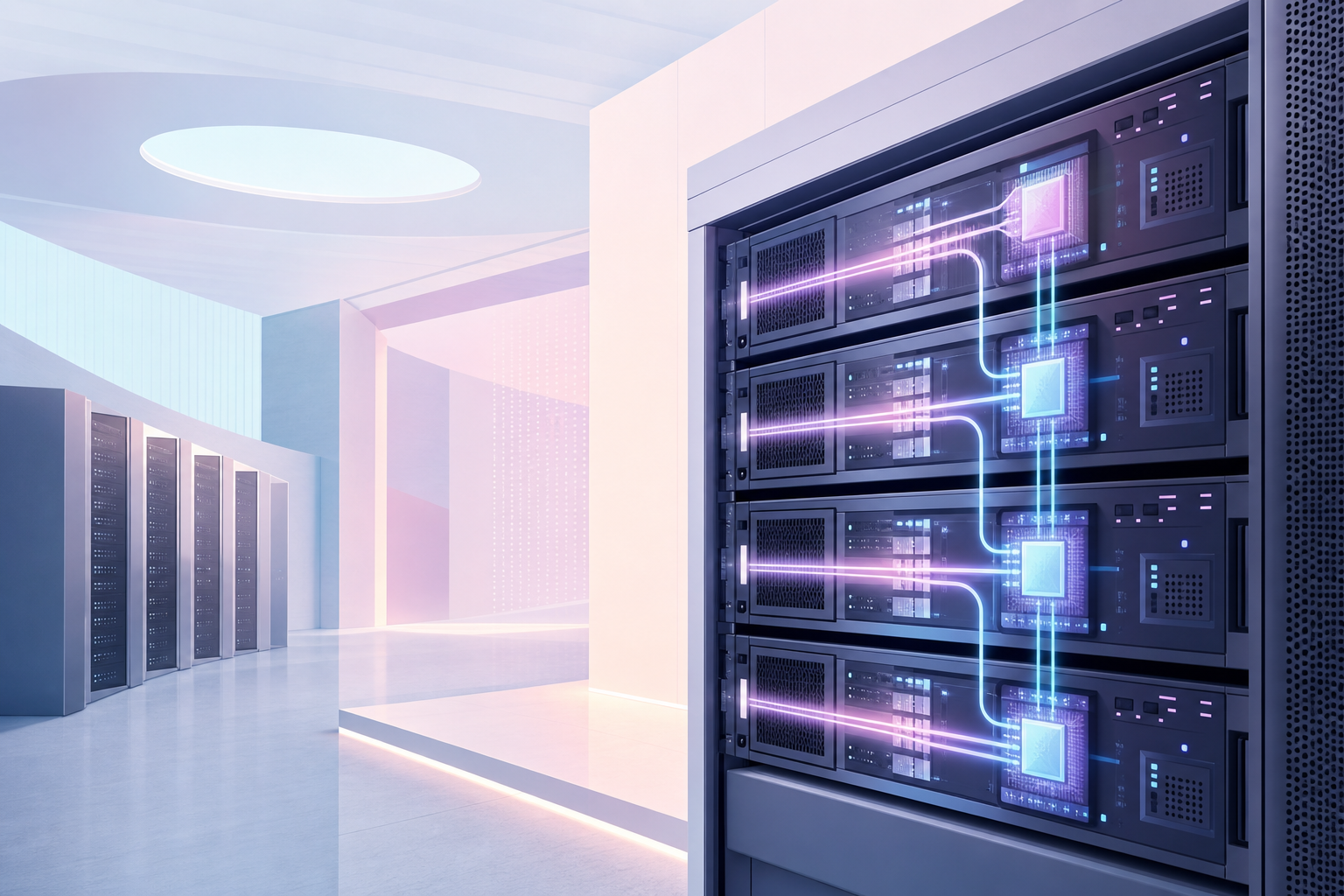
In January 2011, Apple retired the Xserve line, walking away from enterprise rack hardware to focus strictly on consumer devices and high-end desktop workstations. Fifteen years later, the demands of large language models and autonomous agent swarms are pulling Cupertino back into the data center. Apple is actively developing an enterprise server platform optimized for artificial intelligence workloads, centered on future iterations of its flagship Apple Silicon processors.
The project, kicked off internally about a year ago, aligns with the leadership transition of new CEO John Ternus, who took over from Tim Cook in early September 2026. As reported by Ars Technica, the plan received strong internal backing while Ternus was still running hardware engineering. The strategic motivation stems directly from an organic industry shift: artificial intelligence researchers and startups have spent the past two years stockpiling desktop Macs to power their server environments.
From developer desks to enterprise server racks
Mac Studio and Mac mini workstations have emerged as unexpected workhorses for modern machine learning teams. Apple Silicon's unified memory architecture allows CPUs and GPU cores to share hundreds of gigabytes of high-bandwidth memory within a single address space. This design provides remarkable efficiency for agent inference and reinforcement learning pipelines, consuming only a fraction of the power required by conventional GPU clusters.
Industry reporting indicates that major players like OpenAI have procured tens of thousands of Mac desktops to train autonomous agents via trial-and-error simulation, while Anthropic has leased dedicated Mac instances hosted on Amazon Web Services. Rather than watching enterprise customers improvise custom server rack mounts for desktop chassis, Apple is designing a rack-mountable system tailored for enterprise data center operations.
Multi-socket M8 Ultra clusters and the Nvidia bridge
The server lineup is targeting an arrival around 2029, a timeframe that aligns with Apple's long-term semiconductor roadmap. According to The Verge, the system is being architected in two configurations featuring either two or four upcoming M8 Ultra chips operating in unison.
The most notable architectural wrinkle involves the high-speed networking layer. Despite historical friction between the two companies, Apple has reportedly engaged in discussions with Nvidia to integrate NVLink Fusion technology. Implementing such an interconnect would bridge multiple M-series processors into a coherent computational fabric, mitigating the bandwidth bottlenecks commonly encountered when scaling deep learning workloads across distributed nodes.
The roadmap still faces broader supply chain hurdles. A persistent global deficit in memory chips, driven by aggressive infrastructure spending across the hyperscale sector, continues to pressure production costs and availability. Furthermore, with several years remaining until the projected launch, Apple could adjust its interconnect strategy or prioritize these systems internally for its own Private Cloud Compute fleet to service consumer Apple Intelligence requests.
Mocchi's take
Apple's prospective return to enterprise rack hardware underscores a critical reality in modern AI engineering: unified memory bandwidth and energy efficiency matter just as much as peak teraflops. For European businesses managing on-premise deployments under strict power budgets and data sovereignty requirements, enterprise-grade ARM hardware could offer a practical, lower-overhead alternative to expensive hyperscale GPU clusters. If Apple bridges its memory density advantages with proven data center networking fabrics, enterprise IT teams will gain a credible counterweight to the prevailing cloud provider monopoly.