IA · 28 July 2026 · 4 min read
The Claude Shared Chat Leak: Why 'Private' AI Prompts Ended Up on Google and Bing
In brief: Over the weekend, thousands of shared Claude user conversations and Artifacts were found fully indexed and searchable on Google and Bing. The leak exposed confidential corporate documents, personal health data, and private contact information. The root cause stems from a technical misconfiguration in Anthropic's link-sharing architecture, which failed to implement standard search engine no-indexing tags.
by Team Mocchi's
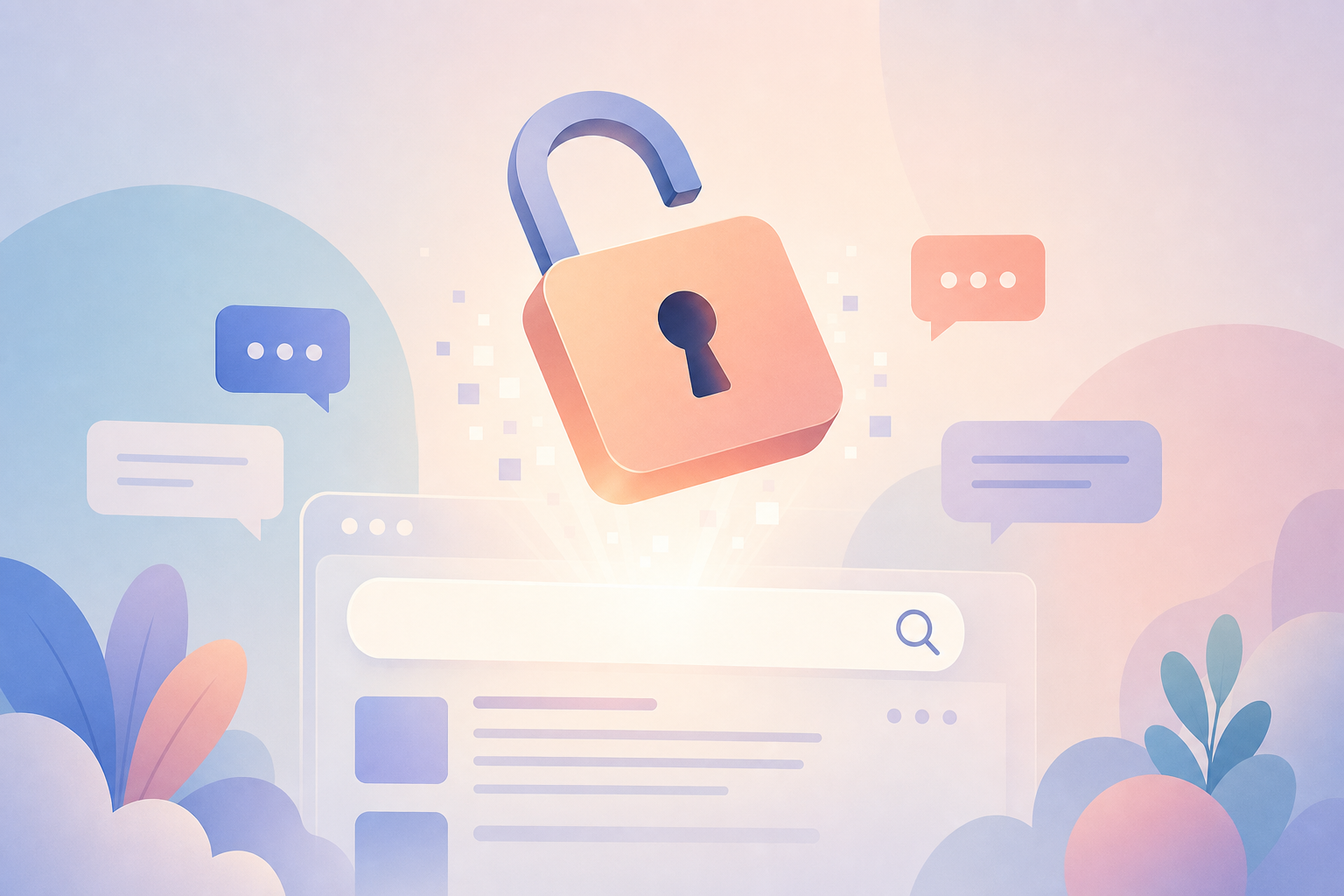
The Shared Link Illusion: How Private AI Chats Hit Public Search
Over the weekend, a discovery flagged by Reddit users sparked a major privacy incident around Anthropic's AI assistant, Claude. By entering specific search queries into Google and Bing — such as site:claude.ai/share — anyone could freely access an archive of user conversations and "Artifacts", the interactive mini-apps and documents built inside the platform.
The exposed pages were far from casual sandbox experiments. As reported by TechCrunch, search results yielded private medical records, confidential internal corporate documents, proprietary source code drafts, and personal contact details, including phone numbers and names of minors.
Anthropic's "Share chat" feature allows users to generate a unique link to display a conversation or project to peers, accompanied by a label stating "anyone with the link can view". Most users interpreted this as an unlisted, semi-private link — similar to how sharing works on platforms like Google Docs or Notion. However, the technical reality was starkly different.
The Technical Flaw: Why robots.txt Was Not Enough
The core of the issue lies in how Anthropic instructed search engine web crawlers to handle shared pages. To prevent crawlers from accessing shared links, the company relied solely on its robots.txt file, placing a block directive on the /share/ directory.
However, as a detailed technical analysis by WIRED explains, robots.txt prevents crawlers from scanning a page directly, but it does not stop search engines from indexing the URL if it is discovered externally. If a user posts a Claude link on a public forum, social media platform, or online chat, search engines will index the page based on that external link.
Both Google and Bing explicitly state in their developer documentation that blocking indexation requires page-level directives: either a <meta name="robots" content="noindex"> tag in the HTML or an X-Robots-Tag: noindex HTTP response header. WIRED examined samples of the exposed Claude chat pages and confirmed that Anthropic had omitted the noindex directive entirely.
In response, Anthropic initially suggested that share links only appeared in search engines when users deliberately posted them on public sites. Google countered through a spokesperson, emphasizing that site owners are responsible for implementing proper noindex directives to keep private assets off public search engines.
A Systemic Privacy Gap in Generative AI Features
This leak highlights a structural vulnerability where fast-moving generative AI interfaces intersect with long-standing web security standards. This is not the first time Anthropic has faced this issue: similar reports regarding unintended indexing of shared chats surfaced in late 2025.
The underlying paradox is that AI assistants encourage users to input sensitive business strategies, code, and personal data. Introducing rapid sharing features without robust web security guardrails inadvertently turns individual workspaces into public web pages.
While mature enterprise SaaS platforms enforce authentication gates and strict HTTP response headers before generating public links, the rush to deploy collaborative AI features risks skipping basic web engineering protocols — exposing organizations to severe intellectual property and data compliance risks.
Mocchi's take
This incident underscores how thin the line between a private AI workspace and a public web page can be when security is not built into the architecture by design. For organizations integrating generative AI into daily operations, relying blindly on default commercial SaaS settings creates significant Shadow IT and data leak risks. To safeguard business data, enterprises should mandate tenant-level policies disabling public link generation, train teams to sanitize proprietary information before prompting, and consider custom API-based integrations. Building tailored software environments ensures deterministic data handling, strict access controls, and total isolation from public search crawlers.