Software · 15 October 2026 · 3 min read
From Guidelines to Guardrails: Figma Unveils Specs to Tame AI Agents on the Canvas
In brief: At its Config event in India, Figma announced Figma Specs, a native Markdown-based editor designed to define brand rules and design languages for both human teams and AI agents. Alongside the public beta launch of Code Layers and an integration with the headless CMS Payload, the company addresses the non-deterministic nature of generative models, turning the design canvas into a governed environment where AI produces interfaces and code strictly aligned with company guidelines.
by Team Mocchi's
Over recent months, introducing autonomous agents into digital design environments promised to eliminate the friction between concept and technical implementation. However, for product teams and software designers, early excitement quickly met a fundamental hurdle of generative artificial intelligence: non-determinism. Left unconstrained, an agent tasked with composing an interface frequently ignores accessibility standards, breaks typographic scales, and recreates UI components that already exist within corporate libraries.
During its inaugural Config event in India, Figma addressed this friction directly by announcing a suite of architectural features designed to bind algorithmic output. The goal is not to throttle generative assistance, but to establish strict computational guardrails that transform brand guidelines into machine-readable rules. As reported by TechCrunch, the platform aims to formalize how both native and third-party AI agents interpret and adhere to a company's design system directly on the canvas.
Figma Specs: Living Documentation Embedded in the Canvas
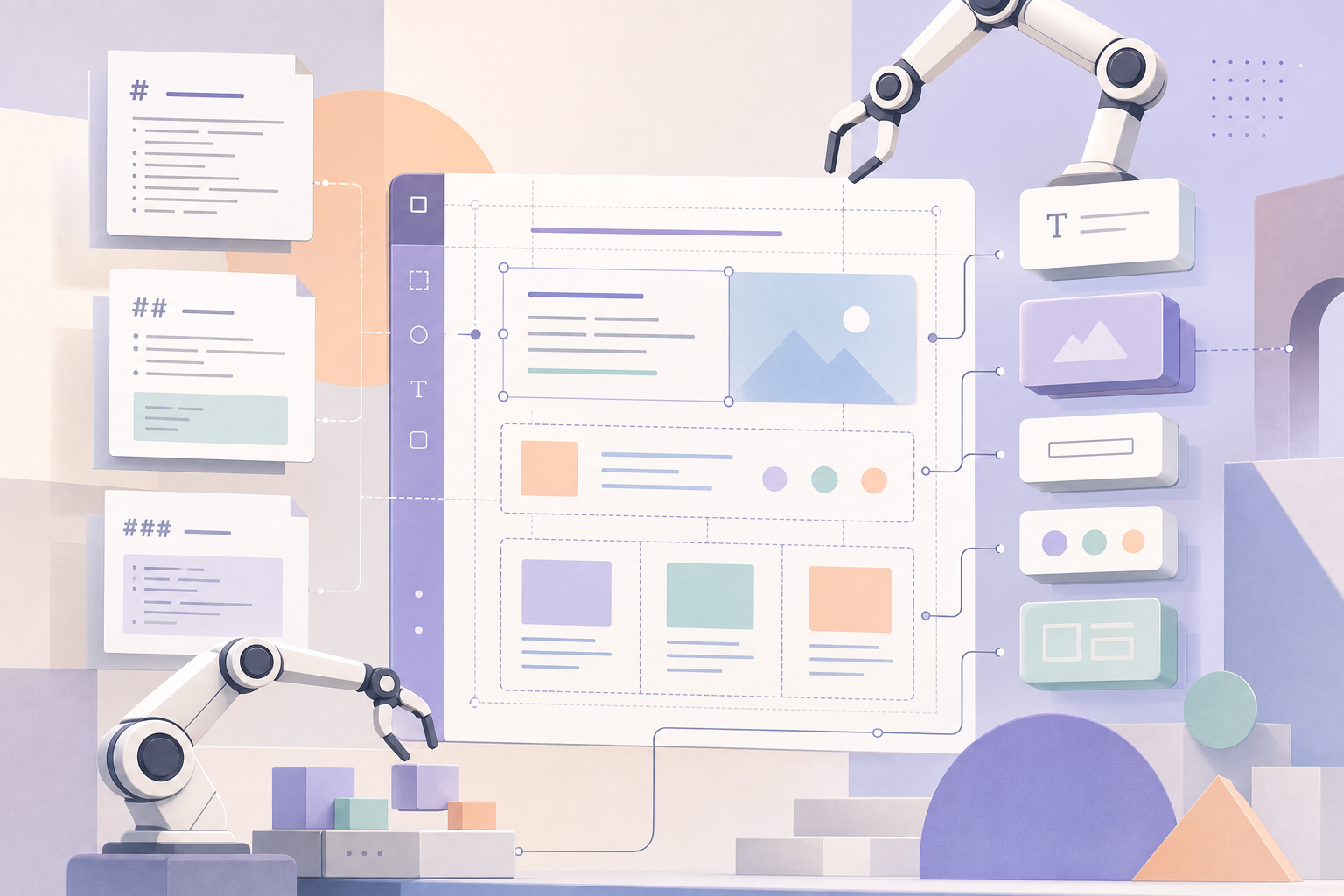
The centerpiece of this update is Figma Specs, a native Markdown-based editor built to document design systems directly within the creative workspace. Rather than functioning as a passive text scratchpad, Specs operates as either a standalone document or a persistent layer alongside canvas files. It can reference visual components, embed FigJam diagrams, and link directly to production code layers.
Its primary innovation lies in who consumes that documentation. While Specs provides human teams with an organized single source of truth, it serves equally as a contextual foundation for autonomous agents. By centralizing design libraries, code repositories, and brand governance rules, organizations provide AI models with an authoritative context window. When a designer instructs an agent to generate a checkout flow or refactor an interface, the agent references the Specs document first, ensuring it only uses approved color variables, correct design tokens, and authorized layout patterns.
Bridging the Gap With Code Layers in Public Beta
Alongside structural guardrails, Figma is actively dismantling the barrier separating static prototyping from functional software. The company announced the public beta rollout of Code Layers, a feature first introduced in private testing last June that injects actual code directly into canvas layers.
This mechanism alters how interactive prototypes behave. Rather than faking dynamic states through complex artboard transitions, components within Code Layers run genuine frontend logic. The platform’s agents operate bidirectionally across this layer, translating visual mockups into functional code or altering logic blocks based on natural language prompts. To solidify this pipeline, Figma also introduced integration with Payload, the open-source headless CMS, enabling product teams to populate interfaces with production data from day one.
Mocchi's take
From our vantage point as a software agency, Figma’s pragmatic shift highlights an essential reality: artificial intelligence becomes viable in enterprise production only when anchored by deterministic constraints. For product teams and digital businesses maintaining complex software architectures, uniting Markdown-driven documentation with executable Code Layers resolves the chronic friction between UI design and frontend development. Organizations that structure their design systems and brand rules into machine-readable specifications today will unlock unprecedented velocity, ensuring automation eliminates technical debt rather than compounding it.