Tech · 21 November 2026 · 4 min read
Farewell to the "Search" Button: Google Redesigns Its Homepage Around AI Chats
In brief: Google has begun rolling out a redesigned desktop homepage worldwide. For the first time in the search engine's history, the dedicated "Google Search" button has been removed, replaced with shortcuts for file analysis and multimodal generation. A new collapsible sidebar brings past AI Mode threads to the forefront, marking an official shift from keyword querying to persistent conversational workflows.
by Team Mocchi's
The sunset of the web's most famous button
For more than a quarter of a century, Google's homepage stood as the defining symbol of the open web: a colorful logo, a clean input box, and two buttons underneath, "Google Search" and "I'm Feeling Lucky". Google has now officially started rolling out one of the most radical visual and architectural shifts in its history across desktop browsers: the traditional search button is gone from the main page.
The update, tested over the past several weeks, was officially confirmed by Google Search VP Robby Stein. In place of the legacy submission button, the interface now presents interactive prompts tailored for generative AI features: quick buttons to generate images, analyze attached files, and brainstorm directly with Gemini. As noted by Ars Technica, dropping the search button causes virtually no practical disruption — almost all users either hit Enter or pick an autocomplete suggestion, which had long obscured the physical button anyway. Yet the symbolic weight is enormous: the web's front door is no longer framed as a directory query box, but as an active AI operating canvas.
Persistent threads: search is no longer "one and done"
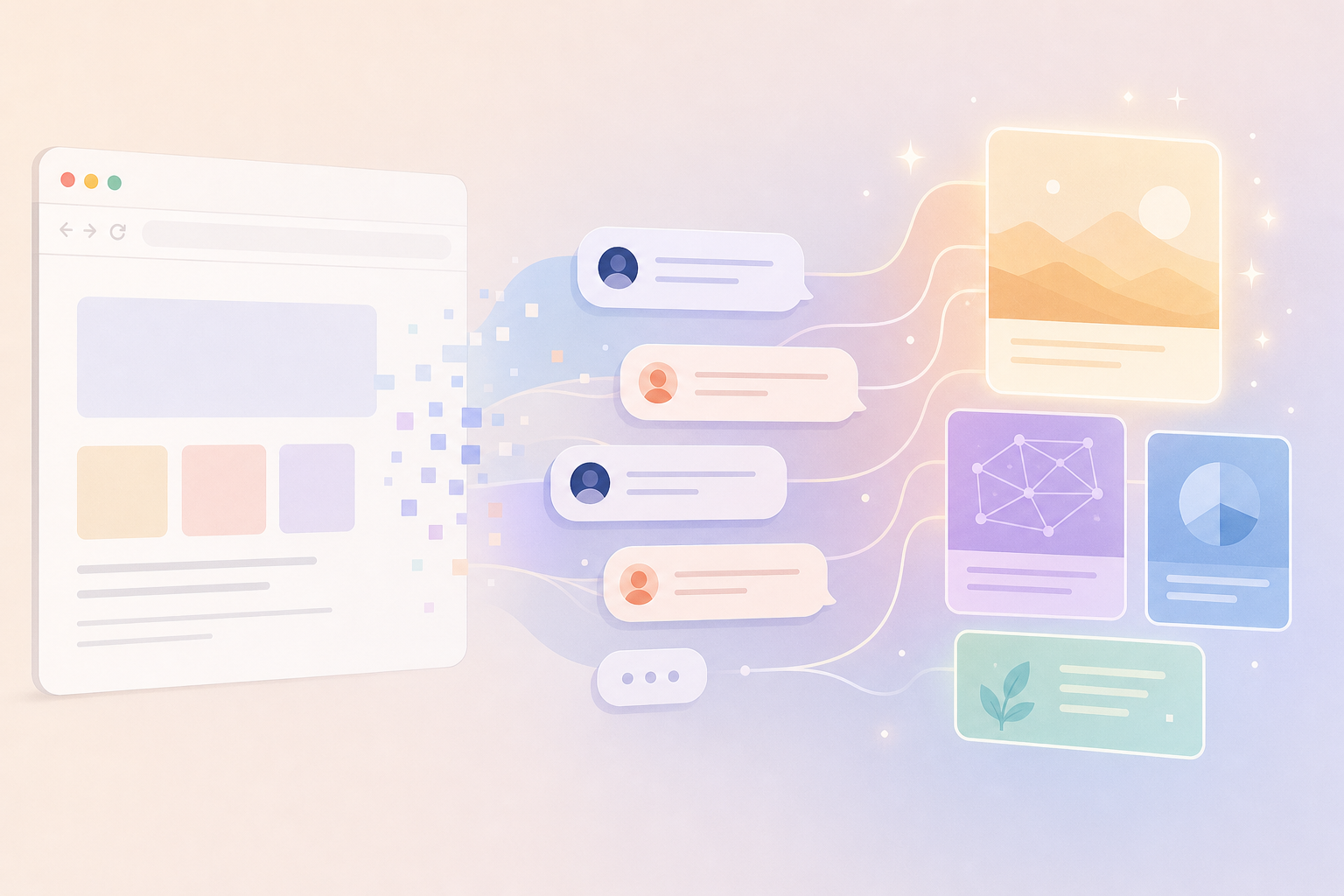
The most noticeable operational change sits along the left edge of the desktop view. A subtle gray vertical bar now reveals an expandable sidebar displaying the user's recent search conversations conducted in "AI Mode". From this sidebar, visitors can revisit previous research threads, open new conversational paths, or connect their sessions directly to Gemini Notebook.
Crucially, the sidebar stays accessible even when navigating deeper into query results. As reported by The Verge, Stein highlighted that the interface acknowledges a fundamental shift in user behavior: people no longer treat search as a series of isolated, "one and done" lookups, but rather as progressive investigations requiring sustained context. Internal testing showed that allowing users to easily pick up where they left off yielded significant gains in user progress and research continuity.
From ten blue links to an AI cockpit
This redesign solidifies a strategic transition that began with conversational prompts in the search box and continued with expanded input fields for long, context-rich prompts. Google is steadily relegating the classic list of external links to a secondary layer, prioritizing synthesized overviews and continuous dialogue.
While the quirky "I'm Feeling Lucky" button remains — preserved as a nostalgic nod to Google's late-1990s origins — the surrounding context has changed completely. The desktop homepage now closely mirrors modern generative workspaces, transforming google.com from an objective router of traffic into Gemini's primary front-end. Instead of simply pushing users outward to third-party websites, the platform invites them to synthesize information, dissect files, and produce work directly within Google's own canvas.
Mocchi's take
For software engineers and business leaders, Google's move sends a clear message: linear keyword search and ten blue links are no longer the primary way users explore the internet. Italian businesses must adapt their digital presence and SEO strategies to focus on semantic depth and visibility within generative synthesizers, rather than relying solely on legacy ranking factors. On the product and software side, this redesign reinforces what we prioritize when developing custom applications: users are moving away from static forms and isolated queries, expecting persistent, conversational interfaces with continuous context that genuinely assist their workflows.