IA · 27 August 2026 · 5 min read
Google Launches Gemini 3.5 Transcribe: AI Cleans Up Speech and Cuts Filler Words
In brief: Google has announced Gemini 3.5 Transcribe, a dedicated audio model engineered to streamline voice dictation and speech-to-text workflows. Delivering a 70% reduction in latency compared to Chirp 3, the model automatically removes filler words, applies real-time self-corrections, and rolls out across developer APIs, desktop apps, and web browsers.
by Team Mocchi's
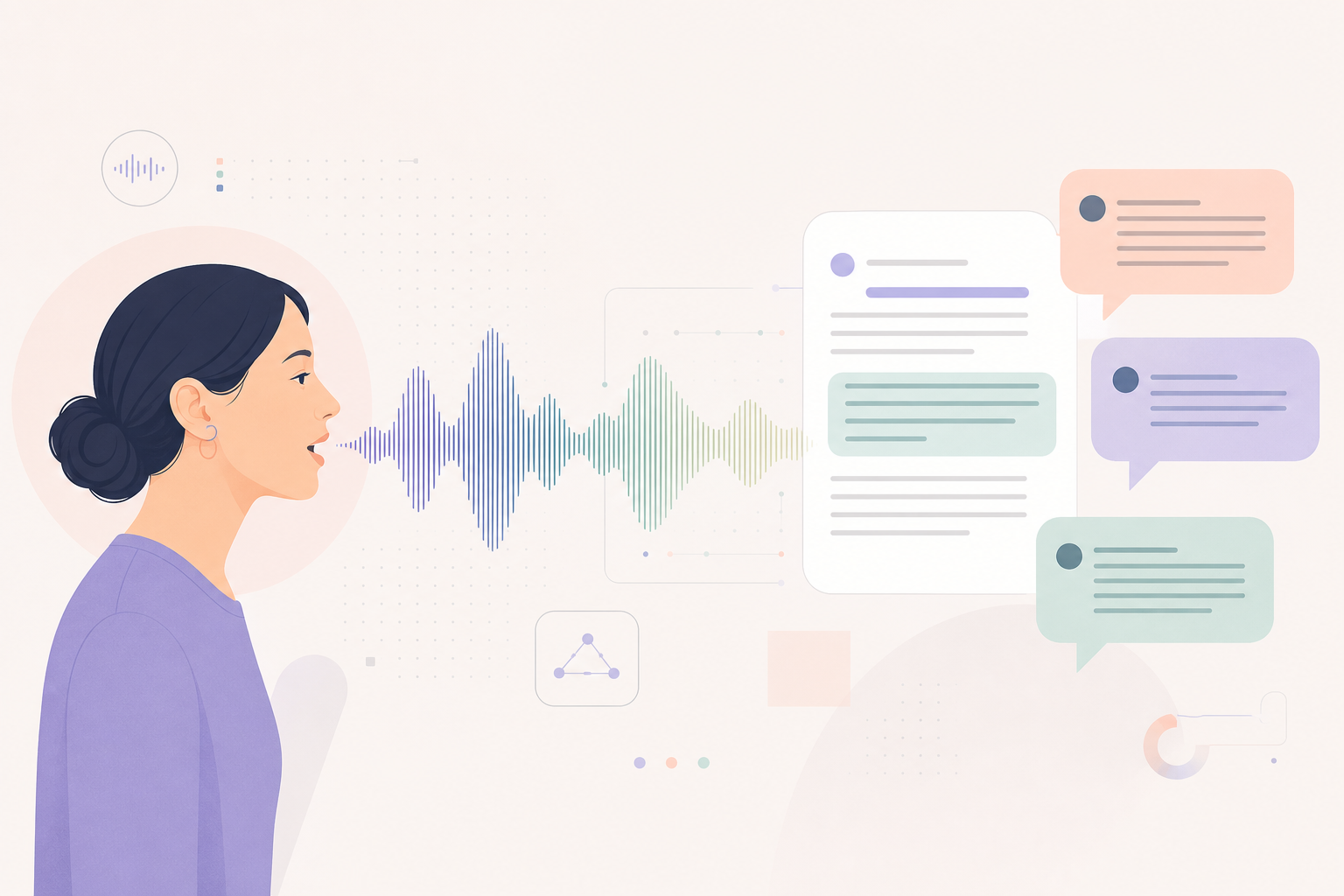
While the tech industry continues to await the broad release of Gemini 3.5 Pro, Google has unexpectedly expanded its lineup of specialized models with the debut of Gemini 3.5 Transcribe. The new speech-to-text (STT) engine aims to overcome the historical bottlenecks of voice dictation, transforming fragmented, spontaneous speech into polished, well-structured text in real time.
Mountain View's core objective is bridging the gap between what users say off the cuff and what they actually intend to communicate, integrating semantic post-processing directly into the audio ingestion pipeline.
Eliminating Filler Words: The Leap Beyond Chirp 3
In raw performance terms, Gemini 3.5 Transcribe represents a substantial upgrade over Chirp 3, Google's previous flagship audio engine. As reported by Ars Technica, the new architecture cuts audio-to-text latency by roughly 70%, lowering the live Word Error Rate (WER) to 5.5% compared to 7.32% on the prior version.
However, the model's primary differentiator lies in contextual awareness. As detailed by The Verge, Gemini 3.5 Transcribe automatically strips speech disfluencies—such as "ums", "ahs", and verbal stumbles—while handling mid-sentence self-corrections seamlessly. The system supports over 85 languages, performs multi-speaker diarization for up to three voices in pre-recorded audio, and delivers word-level timestamps.
Crucially for enterprise environments, the model supports custom vocabulary inputs. Organizations can define specialized industry terminology, acronyms, and product names to ensure domain-specific jargon is preserved accurately rather than smoothed away by the model.
Ecosystem Rollout: From macOS to Developer APIs
Google has started deploying Gemini 3.5 Transcribe across its product stack. The model currently powers the Rambler dictation feature within Gboard on Pixel 11 devices, with broader device expansion scheduled for later this year. Starting today, it also drives voice input in the official Gemini desktop application on macOS.
For developers, Gemini 3.5 Transcribe is accessible in public preview via the Gemini API and Google AI Studio. It is also integrated into Google's Antigravity development environment, leveraging screen context and active chat history to enable hands-free vibe-coding and technical workflows without constant keyboard intervention. Google also announced that native support will arrive soon in Google Chrome, allowing users to dictate clean, formatted text directly into any standard web input field.
Balancing Intent Against Verbatim Fidelity
Gemini 3.5 Transcribe marks a distinct shift from classical acoustic transcription. Rather than strictly mapping audio waveforms to literal characters, the model interprets speaker intent to produce grammatically sound text.
While this semantic filtering dramatically improves productivity for emails, documentation, and conversational chatbot prompts, it requires thoughtful deployment. In sectors where verbatim legal or medical accuracy is mandatory, automated AI editing could inadvertently alter critical nuance. Maintaining configurable vocabulary controls and clear operational guardrails remains vital when adopting these models in compliance-sensitive pipelines.
Mocchi's take
Google's latest release underscores how voice is steadily transitioning from a secondary accessibility input into a primary interface for modern software. For Italian and European businesses building internal tools, ERPs, or custom workflow software, ultra-low-latency STT models capable of filtering verbal noise open up practical automation avenues across deskless operations and customer support. The API support for domain-specific vocabularies will allow engineering teams to deploy voice-first experiences in highly specialized sectors—such as manufacturing and healthcare—without building cumbersome custom post-processing layers.