Tech · 8 November 2026 · 5 min read
Google takes over troubled Wyoming mega data center with $17B investment from Crusoe
In brief: Crusoe Energy has officially handed over its massive, unfinished data center site in southeastern Wyoming to Google. Originally envisioned as a 10-gigawatt AI infrastructure hub, the project had run into severe schedule delays and escalating costs under Crusoe's oversight. Instead of merely leasing capacity, Google is taking over full ownership with plans to invest $17 billion to complete and manage the campus directly.
by Team Mocchi's
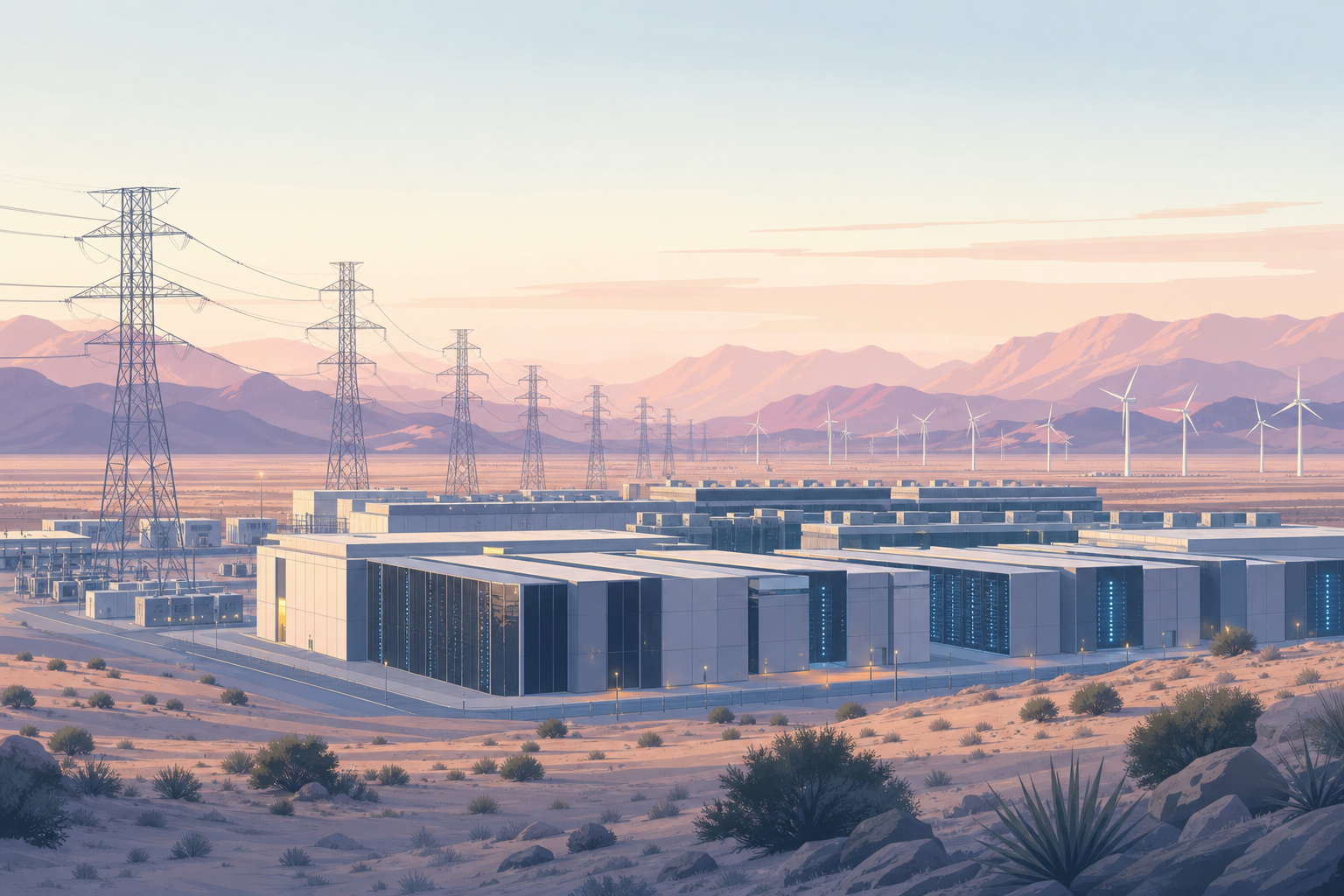
The global race to secure artificial intelligence compute is increasingly running into the immovable constraints of the physical world: high-voltage transformers, local power capacity, and concrete execution. Crusoe Energy, the Denver-based infrastructure provider recently valued at $30.9 billion, has confirmed the sale of its incomplete data center campus in southeastern Wyoming directly to Google. Rather than waiting on an outside contractor, Mountain View is taking full operational control, announcing a $17 billion investment to finish and run the facility on its own terms.
From Crusoe’s mega-campus to Google’s direct takeover
The Wyoming facility was initially pitched last year as one of the most ambitious compute developments on Earth. Partnering with Blackstone-backed energy player Tallgrass, Crusoe had planned to scale the southeastern Wyoming site up to an astonishing 10 gigawatts of capacity over time—an energy footprint equivalent to powering millions of homes, designed specifically for future AI frontier clusters.
However, turning blueprints into operational server rooms proved much harder than anticipated. As reported by TechCrunch, Google had been slated to be the cornerstone anchor tenant for the site. But following mounting anxiety over chronic construction delays and runaway cost estimates under Crusoe's watch, the search giant decided to bypass the landlord relationship entirely. Google opted to buy the land and half-built infrastructure outright to bring construction management in-house.
Concrete, transformers, and delays: the limits of third-party builders
The handover in Wyoming illustrates an acute bottleneck across the entire AI ecosystem. Over the past two years, specialized third-party operators raised tens of billions by promising turnkey high-performance data centers to tech giants. Yet the real-world friction—delays in sourcing custom substation equipment, protracted utility interconnection queues, and rising community pushback, as recently chronicled by The Verge—has exposed the fragile execution capabilities of fast-growing startups taking on civil megaprojects.
Despite surrendering the Wyoming campus, Crusoe remains a central player in the AI hardware boom. The company continues to collaborate with Google on a separate site near Amarillo, Texas, while actively building out its flagship Abilene campus for Oracle and OpenAI, flanked by a 900-megawatt development next door for Microsoft. In September, Crusoe closed a fresh $3.9 billion funding round, proving that institutional investor demand for GPU compute capacity remains insatiable despite severe delivery hurdles.
The hyperscalers' race toward total vertical integration
For Google, spending $17 billion to take over the project marks an aggressive push toward full vertical integration. Hyperscalers simply cannot allow their model training timetables and product deployment schedules to be dictated by third-party landlords struggling with subcontracts and leverage.
Taking over power procurement, civil engineering, and physical plant management gives Google direct leverage over timelines, eliminates landlord margins, and ensures dedicated infrastructure without rival tenants competing for megawatts. It is an operationally intensive strategy that only a handful of cash-rich balance sheets can execute, further widening the competitive moat against smaller cloud upstarts.
Mocchi's take
The Google-Crusoe deal punctures the narrative that a nimble class of independent "neocloud" developers could dismantle the hyperscaler monopoly. Advanced AI compute is no longer just about software algorithms or access to GPUs; it has transformed into a heavy-industrial contest over high-voltage substations, land rights, and multi-billion-dollar balance sheets. For European and Italian businesses developing software and integrating AI models, this shift makes one thing clear: dependence on the big three cloud giants will only deepen. The strategic priority for engineering teams is not dreaming of cheap commodity compute, but optimizing software architectures and mastering efficient model distillation so they are never held hostage by the rising price of megawatt-scale infrastructure.