IA · 16 October 2026 · 5 min read
Agree to Training or Delete Your Page: Meta's New Terms Enforce AI Web Scraping
In brief: Effective October 30, 2026, Meta will introduce a sweeping update to its commercial terms of service. Companies, publishers, and professionals running business accounts across Facebook and Instagram will be required to grant Meta's automated crawlers access to their external websites for data collection and model training, offering no opt-out mechanism short of leaving the platform.
by Team Mocchi's
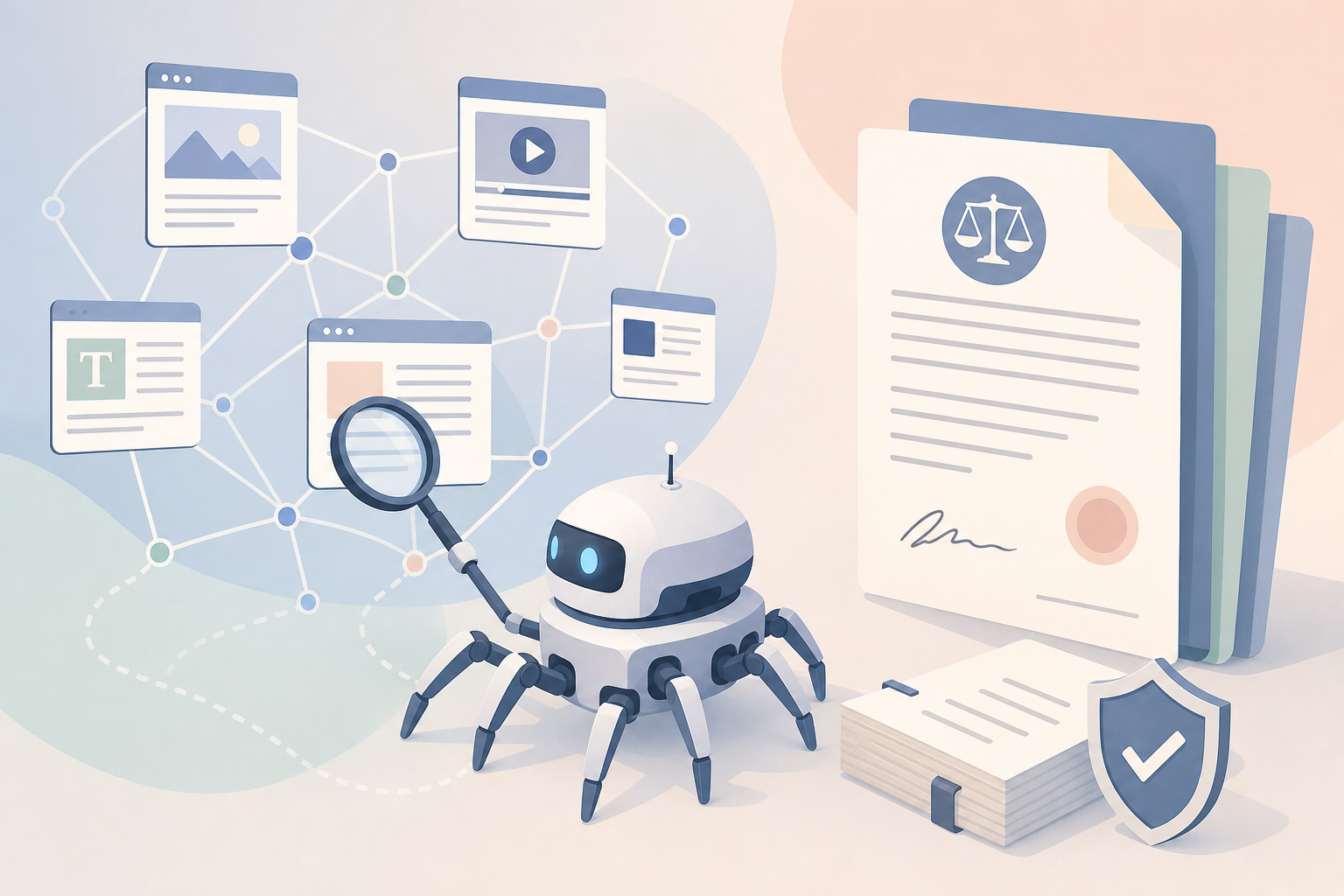
A seemingly routine update to a tech giant's legal terms can quickly redefine the economic boundaries of the web. Meta has notified business account holders of an extensive overhaul to its Commercial Terms of Service, scheduled to take effect on October 30, 2026. Far from a routine update to advertising guidelines, the revised text inserts a sweeping authorization that permits the company's automated crawlers to ingest content from linked corporate websites specifically to train its models.
As reported by Ars Technica following an initial review by Nieman Lab, the clause is broad and explicit: any entity using Meta's commercial products grants the company, or third parties operating on its behalf, the authority to employ scrapers, bots, and spiders to crawl, index, cache, and retrieve data from any domain or URL associated with their accounts. Crucially, the contractual language explicitly lists the purpose of this data ingestion: to develop, improve, and "train" the company's systems.
The October 30 deadline and a take-it-or-leave-it model
The contract's phrasing leaves little room for misunderstanding. Business users grant Meta automated access to scrape external websites and create test credentials to pull updates periodically. While the explicit acronym "AI" is absent, the conjunction of high-frequency automated scraping and the verb "train" directly targets foundational machine learning pipelines.
What has triggered immediate concern among legal experts is the total lack of an opt-out mechanism. The policy is structured on a take-it-or-leave-it basis: organizations unwilling to grant Meta permission to crawl their domains for training purposes are instructed to discontinue using the platform's commercial tools entirely. For businesses that depend on Facebook and Instagram for customer acquisition and audience reach, walking away is rarely a viable alternative.
News publishers caught in a licensing squeeze
The policy lands squarely amidst an escalating dispute between global publishers and artificial intelligence providers over training rights. As media organizations pursue copyright litigation or negotiate multi-million-dollar licensing pacts with companies like OpenAI, Meta's contract update appears designed to bypass the bargaining table entirely.
As noted by The Verge, nearly every news outlet in the world maintains verified business profiles on Meta to distribute reporting. By continuing to manage these channels after the end of October, publishers could inadvertently grant Meta a contractual defense against future copyright claims, effectively surrendering their training rights without receiving any compensation in return.
Menlo Park's defense versus the limits of robots.txt
Addressing the growing criticism, Meta downplayed the change as a routine simplification of its existing policies. A company spokesperson insisted that Meta has no intention of using the commercial terms to circumvent standard robots.txt instructions, emphasizing that webmasters retain the technical ability to block the platform's user agents at the server level.
However, legal scholars point out that contractual consent fundamentally undermines the protections of robots.txt. The web exclusion standard is a voluntary protocol, whereas signed terms of service constitute an enforceable private contract. Should legal disputes arise, Meta could argue in court that account administrators granted explicit contractual permission to scrape their domains, rendering technical web-blockers legally irrelevant.
Mocchi's take
For digital agencies and software-driven businesses, this contract update marks a turning point in how intellectual property must be governed online. We can no longer treat platform agreements as boilerplate compliance tasks handled exclusively by social media managers; they now directly dictate who can train proprietary models on your digital assets. For organizations producing specialized documentation, proprietary catalogs, or original technical analysis, auditing terms of service and evaluating data leakage across distribution channels has become an operational necessity.