Tech · 24 September 2026 · 5 min read
Meta Ditches the Camera on Smart Glasses: Introducing Ray-Ban Meta Audio
In brief: At its Connect 2026 conference, Meta introduced the Ray-Ban Meta Audio, a new line of smart eyewear co-developed with EssilorLuxottica that strips away photographic sensors entirely. Aimed at defusing persistent controversies around covert surveillance and non-consensual recording, the device focuses strictly on open-ear audio, beamforming microphones, and interaction with the Muse AI agent. By dropping cameras, Meta reduced frame weight to 43 grams, extended battery life to 12 hours, and made ambient wearables viable in social and corporate environments.
by Team Mocchi's
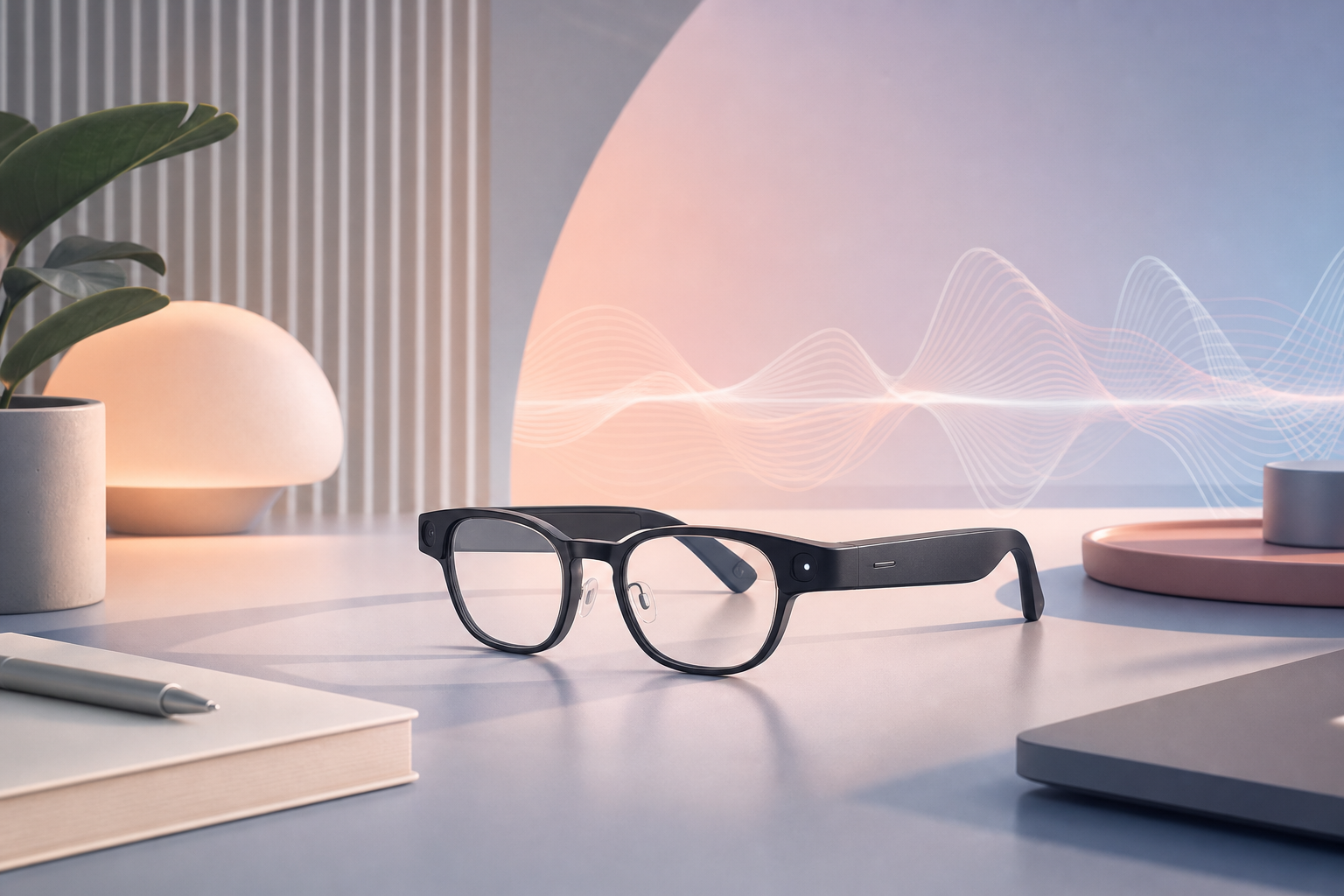
For years, the wearable technology industry operated under the premise that smart glasses required digital eyes to be genuinely useful. At Meta Connect 2026 in Menlo Park, however, Mark Zuckerberg signaled a pragmatic shift in direction: Meta announced the Ray-Ban Meta Audio, the company's first connected eyewear line designed without any cameras.
Built in partnership with eyewear conglomerate EssilorLuxottica and starting at $349, the device retains Meta’s conversational AI ecosystem — centered on its Muse assistant — while intentionally omitting all optical capture hardware.
Countering the Privacy Backlash and Slimming the Frame
Meta's pivot directly addresses sustained public pushback and regulatory scrutiny. Over the past year, as noted by TechCrunch, camera-equipped smart glasses faced intense criticism and reputational fallout after widespread reports of clandestine recordings and surveillance in public spaces. Even software safeguards designed to disable hardware if the exterior recording LED was covered or altered failed to resolve the social unease.
Removing the camera modules also unlocked significant physical and industrial design improvements. As Alex Himel, Meta’s vice president of wearables, told The Verge, eliminating front-facing optics allowed engineers to re-architect the internal layout, shifting bulky electronics away from the browline.
The Ray-Ban Meta Audio weighs just 43 grams — noticeably lighter than the roughly 50-gram standard Gen 2 frames and significantly leaner than heavier display prototypes. The new line arrives in classic Clubmaster and Burbank silhouettes with thinner temples, adjustable nose pads, and 23 lens and frame variations. Freed from energy-hungry image processors and sensors, battery life jumps to an estimated 12 hours of active use on a single charge.
Open-Ear Audio and the Muse Integration
Functionally, the glasses occupy a middle ground between premium open-ear headphones and an always-available voice assistant. Wearers can take phone calls, stream podcasts, receive real-time language translations, and issue complex commands to Meta’s Muse agent using a dedicated wake word.
Meta executives acknowledged that open-ear audio has quietly emerged as the dominant real-world use case for smart frames, far outstripping casual photo and video capturing. By ditching the camera, Meta creates a compelling alternative to wireless earbuds like Apple's AirPods, while sidestepping the clunky form factors that doomed standalone AI pins and pendants.
At the same time, Meta is not abandoning computer vision: as detailed by WIRED, the Connect 2026 keynote also showcased the third-generation Ray-Ban Meta frames with updated cameras, alongside an early preview of the Meta VR Glasses — an ultralight 5K micro-OLED mixed reality headset tethered to a compute puck scheduled for 2027. Meta's product roadmap has bifurcated: rich visual capture for dedicated spatial computing, and strictly acoustic interfaces for public life.
Mocchi's take
Ditching the optical sensor is the single most pragmatic decision the smart glasses category has made for enterprise adoption. Across European workplaces and production facilities, unshielded cameras have always triggered severe GDPR compliance hurdles and workers' council objections. Audio-only frames finally offer a pathway to integrate autonomous AI agents and real-time operational workflows without turning employees into walk-around surveillance cameras, proving that ambient tech often becomes more powerful when you strip away the sensors that breed distrust.