Software · 6 August 2026 · 4 min read
Meta Launches Muse Code: An AI Agent to Tackle Massive Codebases in Parallel
In brief: Meta has announced the beta release of Muse Code, a command-line AI agent engineered to help software developers navigate and modify large codebases. Powered by the Muse Spark model, the system uses parallel sub-agents operating within isolated worktrees to execute multiple tasks at once without merge collisions. The release positions Meta directly against tools like Claude Code and OpenAI Codex.
by Team Mocchi's
The Challenge of Enterprise Codebases
Over the past two years, AI-assisted software development has rapidly evolved from simple code completion to tools capable of refactoring entire functions. However, when enterprise software projects reach scale — containing hundreds of thousands or millions of lines of code distributed across dozens of modules — most existing AI tools begin to struggle with context limits and state management across the repository.
To address this engineering bottleneck, Meta officially announced the beta release of Muse Code, a new command-line coding agent designed specifically for large-scale software projects.
How Muse Code Works: Parallel Sub-Agents and Isolated Worktrees
Executable directly from the terminal via a single command, Muse Code is built to complete full software engineering tasks across massive repositories. As Meta CEO Mark Zuckerberg outlined and TechCrunch reported, the agent goes beyond writing snippets: it plans architectural changes, writes code, and validates results using automated checks.
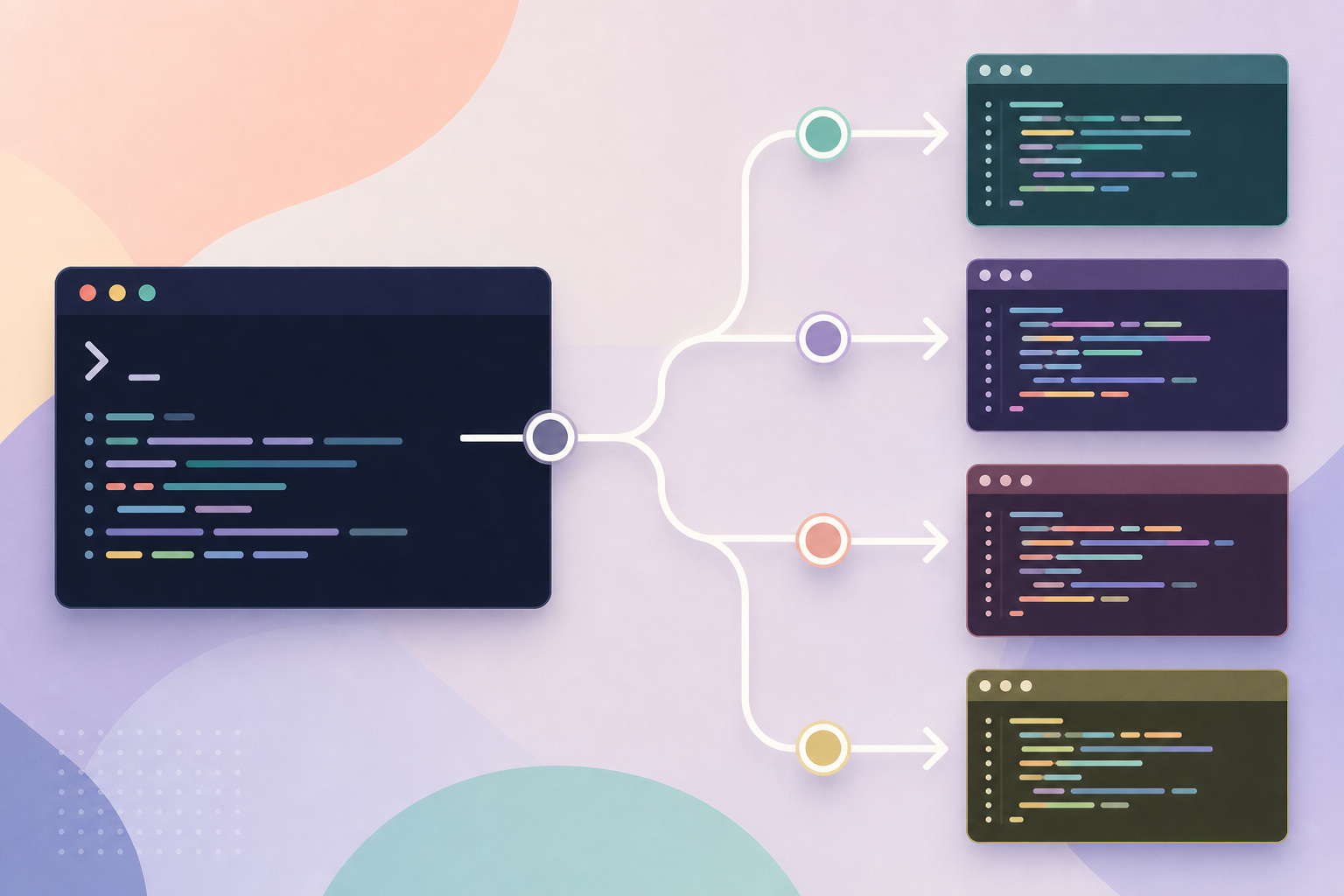
The core architectural innovation lies in its parallel task execution. Powered by Meta's dedicated Muse Spark model, the primary agent can decompose complex tasks into sub-tasks and fan them out to multiple sub-agents operating concurrently. Each sub-agent runs inside an isolated "worktree," guaranteeing that uncommitted work never interferes with or breaks the developer's main working copy. In internal tests, Meta demonstrated the agent successfully building six separate game features simultaneously without encountering merge collisions.
Meta’s Answer to Claude Code and Codex
Meta’s launch of a dedicated terminal agent represents a major strategic push into advanced developer tooling. While OpenAI with Codex and Anthropic with Claude Code have established early footprints in AI-assisted development, Meta is aiming to differentiate on architectural efficiency and cost effectiveness for enterprise workflows.
Alexandr Wang, leading Meta's AI efforts, emphasized that Muse Code is engineered to provide a highly cost-competitive option for complex engineering environments. Rather than running monolithic, sequential prompt chains that incur high API costs over vast context windows, the fanned-out sub-agent architecture scopes context to specific tasks, optimizing token consumption while significantly speeding up execution times.
Mocchi's take
The shift toward parallel command-line AI agents marks an important milestone for enterprise software development. For organizations managing large codebases or complex legacy systems, tools like Muse Code make it possible to accelerate refactoring, feature development, and test coverage without bottlenecking core engineering teams. The true value lies in controlled delegation: AI agents are most effective when isolated in dedicated sandboxes and paired with rigorous automated validation pipelines. In our custom software practice, leveraging parallel sub-agent architectures alongside strict code quality gates is proving to be key to scaling delivery while keeping codebases maintainable and secure.