IA · 3 October 2026 · 3 min read
Meta open-sources Muse hardware code: DIY gadgets and Home Link unveiled
In brief: Meta has unexpectedly launched Muse Gadgets, an open-source initiative providing developers and makers with the software and firmware needed to build custom hardware powered by its Muse AI agent. The release includes a Linux SDK, firmware tailored for low-cost boards like the ESP32 and Raspberry Pi, alongside the giveaway of 5,000 reference Home Link smart home hubs.
by Team Mocchi's
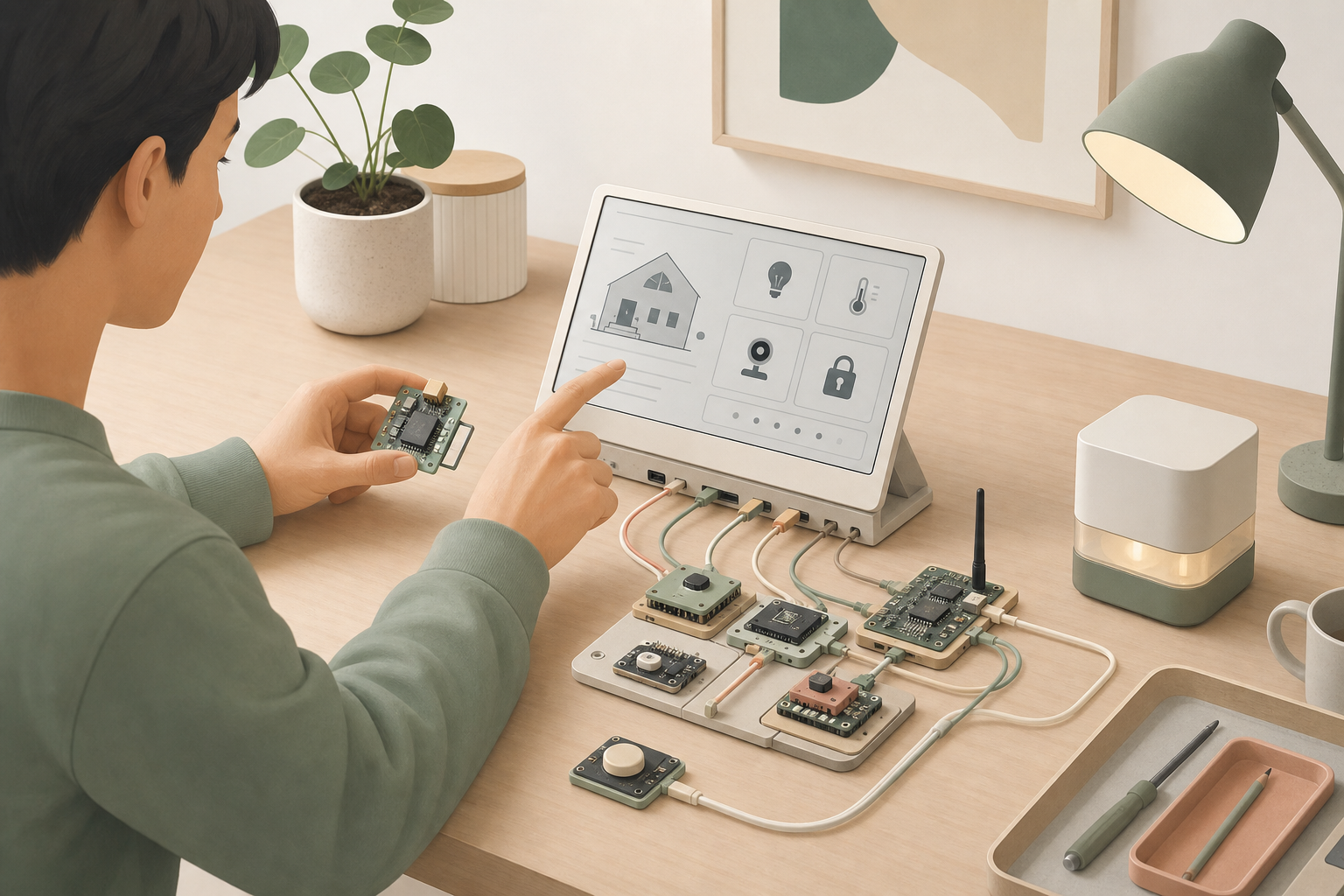
After introducing its Muse autonomous agent on desktop and mobile platforms to handle travel bookings, form filling, and shopping tasks, Meta is now pushing its frontier models directly into physical devices. The tech giant has unveiled Muse Gadgets, a fully open-source initiative designed to let developers, makers, and hobbyists connect custom hardware components to the Muse agent ecosystem.
This move marks a distinct departure from the walled-garden AI hardware devices that have struggled in recent quarters, leaning instead on the tinker-friendly maker culture and rapid prototyping communities.
Open-source firmware, ESP32, and e-ink displays
The software package published by Meta revolves around two main pillars: dedicated low-level firmware for microcontroller connectivity and a flexible Linux software development kit (SDK). The architecture is deliberately engineered to run on affordable, widely available hardware, particularly ESP32 microcontrollers and Raspberry Pi single-board computers.
As reported by TechCrunch, Meta accompanied the repository release with several sample applications to jumpstart development. Suggested builds range from color e-ink desk displays that surface daily schedules to HDMI-connected dongles that stream the Muse agent onto large television screens. Developers can link Muse to ambient sensors, physical switches, tactile interfaces, and motor actuators, supported by a newly launched Discord channel dedicated to hardware debugging and community skills sharing.
The Home Link prototype and community smart homes
Alongside the open codebase, Meta’s internal hardware team showcased its own proof of concept named Muse Home Link. The USB-C-powered peripheral is designed to integrate into residential local networks and coordinate smart home hardware, bridging autonomous decision-making with local appliances.
According to details shared by The Verge, Nat Friedman, head of product at Meta’s Superintelligence Labs, confirmed that the company manufactured 5,000 Home Link units to distribute free of charge to Muse subscribers via a priority waitlist. Powered by community-developed skills, the Home Link dongle can instruct smart lights, manage audio systems, and dispatch print jobs over local networks without requiring constant desktop supervision.
Meta nevertheless included a cautionary notice advising makers to proceed at their own risk. Granting an autonomous reasoning engine direct control over physical actuators and local endpoints raises critical security concerns, particularly when network tokens and administrative permissions are executed through third-party custom scripts.
Mocchi's take
Opening agentic AI to standard hardware platforms is a sensible correction following the disappointing commercial trajectory of dedicated, proprietary AI wearables. For European engineering firms and IoT developers, Meta’s approach lowers the cost barrier for prototyping telemetry hubs, voice-enabled machinery interfaces, and responsive industrial monitors using commodity silicon. However, engineering teams must prioritize network air-gapping and hardware-level sandboxing: giving an autonomous agent access to physical actuators demands strict verification protocols to ensure that unexpected generative hallucinations never translate into unintended physical actions.