IA · 31 August 2026 · 4 min read
Meta Brings Robots into Data Centers: Mechanical Arms and AI to Manage Hardware
In brief: Meta has initiated internal pilot programs to introduce autonomous robotic systems into its data centers, handing over physical tasks previously handled by on-site technicians—such as replacing network cables and power-cycling server racks. The move is designed to curb operational expenses as capital expenditure on AI infrastructure surges, while easing skilled labor shortages in remote locations. This initiative marks a significant milestone in bringing Physical AI into mission-critical cloud operations.
by Team Mocchi's
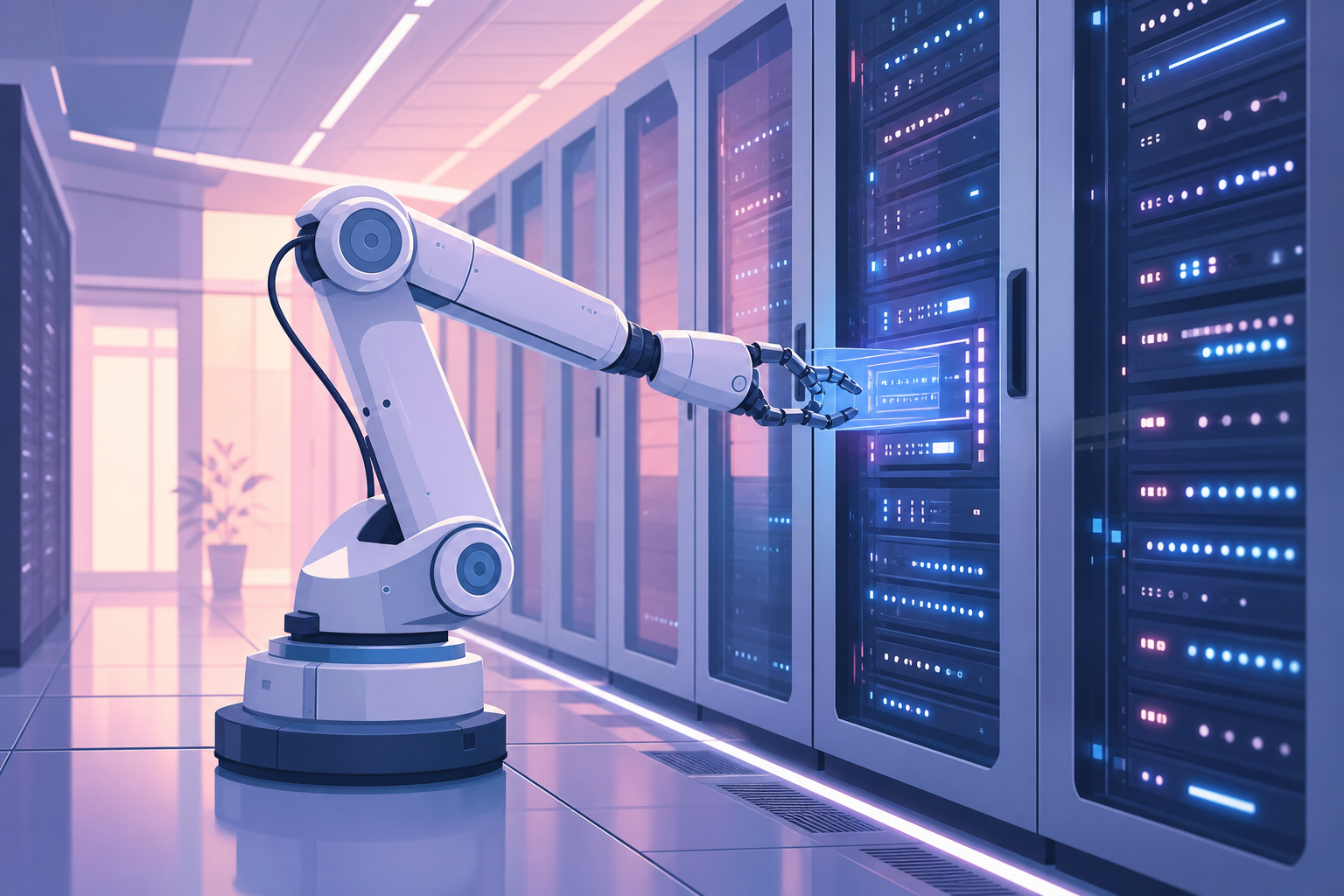
The global race to scale artificial intelligence infrastructure is no longer waged solely through massive computing clusters and soaring power grids; it also requires managing increasingly complex physical logistics inside server facilities. As reported by Ars Technica, Meta has launched confidential pilot projects to deploy robots and mechanical arms for routine data center operations, automating physical maintenance tasks traditionally performed by on-site technicians.
The long-term ambition for Mark Zuckerberg's company is to keep operational labor expenses under control while capital expenditure on cutting-edge AI silicon continues to surge at historic rates.
Kinova arms and cabling bots: what happens inside the racks
According to accounts from current and former employees, Meta is evaluating hardware from several specialized robotics vendors, including Kinova, ABB, and Watney Robotics. Among the most advanced trials is the deployment of the Kinova Gen3 robotic arm, tested to perform power-cycling tasks and cut physical electrical supply to unresponsive server units.
In parallel, the tech giant is testing purpose-built robotic units engineered to plug, unplug, and reroute networking cables across high-density patch panels. Internal estimates from technicians suggest that successful automated cabling could absorb up to 80 percent of the routine workload currently assigned to maintenance crews. Smaller, dedicated devices have also made their way into server rooms: compact remote-controlled robotic actuators capable of physically pressing power buttons and reset switches on edge hardware, such as Mac minis used for testing environments.
From delicate hardware to vision-action foundation models
Until recently, using robotics inside computing facilities was largely unfeasible due to cost and precision constraints. In early industrial trials, mechanical manipulators lacked millimetric dexterity and occasionally damaged delicate server chassis and fiber connectors during insertion attempts. However, sharp reductions in mechatronic hardware costs, paired with breakthroughs in multimodal Vision-Language-Action (VLA) models, have made manipulative robotics viable for controlled indoor environments.
Meta is not alone in exploring this frontier. Multiple robotics startups and hyperscale vendors are developing commercial systems to assemble modular racks, hot-swap faulty components, and carry out predictive thermal inspections. This transition directly addresses a geographical bottleneck: major data campuses are increasingly located in rural or sparsely populated areas to take advantage of cheaper land and high-voltage grid connections, where recruiting and retaining specialized round-the-clock technical staff remains difficult.
Official stance: balancing hiring and automation
When asked about the testing, Meta declined to comment on specific trials, with a company spokesperson reiterating that the company continues to invest heavily in recruiting and upskilling workers to support ongoing facility expansion. Meta emphasized that the United States is currently experiencing its largest infrastructure buildout since World War II, facing an acute shortage of specialized technicians.
Nonetheless, during technical presentations last year, Eric Xu, senior manager for robotics at Meta, explicitly outlined the company's long-term vision: deploying robots across data centers to accelerate incident remediation, monitor environmental telemetry, and handle preventative maintenance autonomously around the clock.
Mocchi's take
Meta's push confirms that Physical AI has matured enough to handle high-precision manipulation in mission-critical industrial environments. For software agencies and engineering teams, this signals that next-generation automation is moving beyond warehouse sorting and traditional assembly lines directly into edge infrastructure and IT management. Organizations designing server rooms, industrial switchboards, and edge deployments should start designing hardware layouts that are natively robot-friendly, standardizing connectors and physical panels for robotic manipulators.