Software · 25 September 2026 · 4 min read
Microsoft Unveils Copilot ‘Super App’: Home, Code, and Autopilot to Reshape Workplace Productivity
In brief: Microsoft has officially introduced a redesigned Copilot application, consolidating chat, no-code software generation, and autonomous agents into three dedicated tabs: Home, Code, and Autopilot. The update enables knowledge workers to build sandboxed internal cloud apps and deploy 24/7 background agents within their enterprise tenant. Alongside the redesign, Microsoft is rolling out consumption-based pricing for complex agentic workflows and launching an AI FinOps suite for IT spend management.
by Team Mocchi's
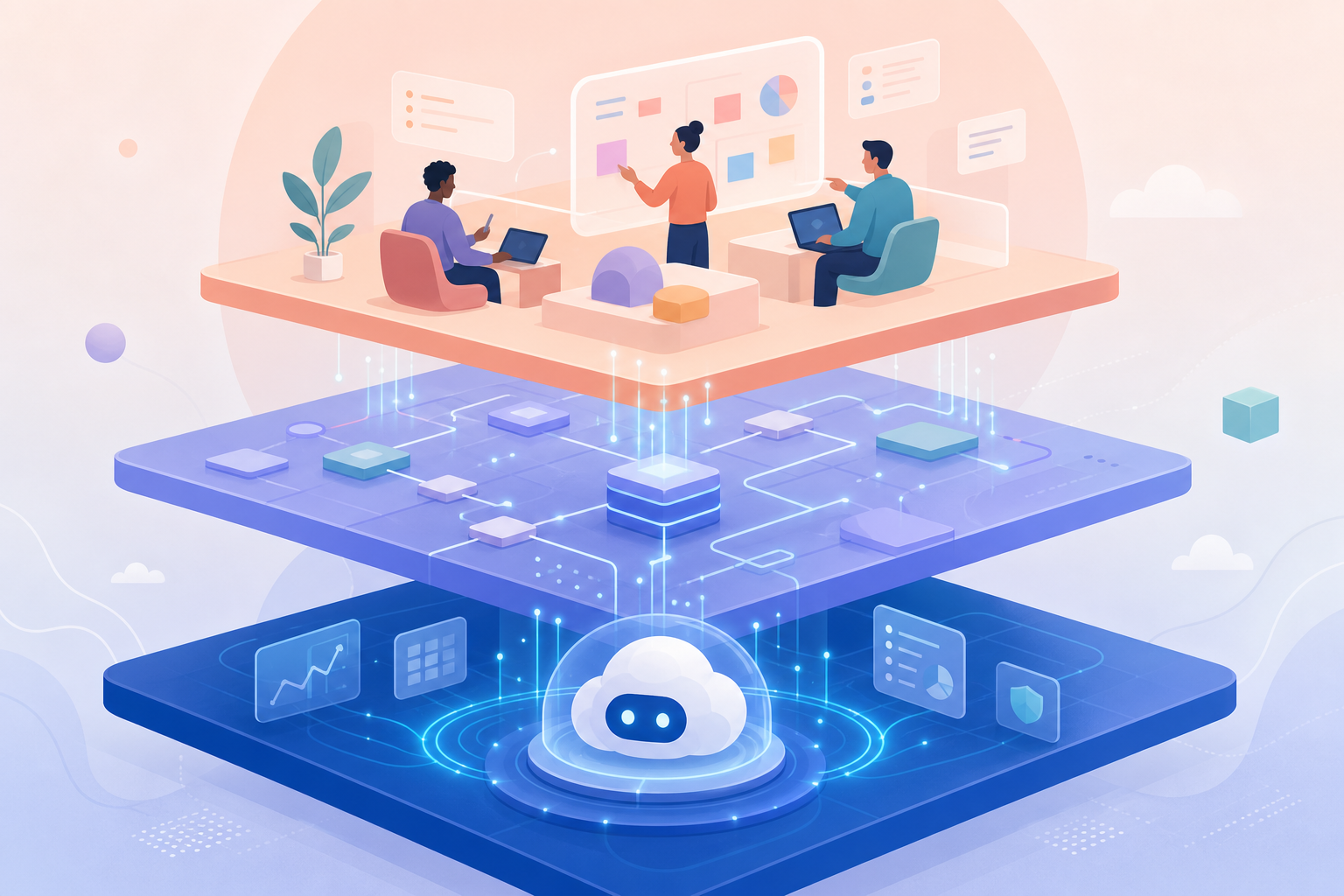
Following months of rapid experimentation and fragmented feature rollouts across its product line, Microsoft is consolidating its enterprise artificial intelligence suite into a unified interface. The company has officially taken the wraps off its new Copilot application, redesigning the experience into a centralized workspace that executives in Redmond are comparing in scope and long-term impact to the advent of Microsoft Office in the 1990s.
The refreshed interface centers on three primary tabs: Home, Code, and Autopilot. As reported by The Verge, the Home view serves as the primary landing page, combining everyday conversational chat with the Cowork collaborative canvas. The landing experience incorporates a new Today module, acting as an executive dashboard that summarizes unread emails, upcoming meetings, and urgent Teams discussions while suggesting specific next actions to resume interrupted workflows.
Introducing Code: Sandboxed vibe-coding for the enterprise
The most notable departure from conventional office software is the inclusion of the Code tab. Powered by GitHub Copilot technology, this module allows non-developer knowledge workers to build custom tracking systems, analytical dashboards, and workflow automations simply by chatting with the model. The generated assets are immediately compiled and hosted as internal, cloud-native web applications.
To satisfy corporate governance standards, these micro-applications run inside isolated sandboxes within the organization’s secure cloud tenant. This architecture empowers business units to resolve localized tooling gaps autonomously, reducing reliance on backlogged internal IT departments while guaranteeing that company data never leaves compliant organizational boundaries.
Autopilot: A digital teammate with persistent cloud identity
The third pillar, Autopilot, is the cloud-native evolution of Scout, the personal assistant prototype Microsoft showcased at its Build conference earlier this year. Unlike traditional reactive chatbots, Autopilot operates on its own persistent cloud instance, enabling it to execute tasks, track channel chatter, and process automated workflows around the clock even when the employee's machine is shut down.
Built on Microsoft IQ, the agent is architected to understand internal organizational charts, data permissions, and ongoing business context. It functions with an assigned identity and long-term memory, allowing coworkers to tag it via @Autopilot in Teams channels, Outlook threads, and shared documents with full auditability and granular IT access controls.
Moving toward usage billing: The necessity of AI FinOps
This structural evolution also brings a pivotal change to Microsoft’s monetization model. While traditional chat and embedded assistant features in Word, Excel, PowerPoint, and Outlook remain bundled into standard per-seat licenses, compute-heavy agentic workflows in Cowork, Code, and Autopilot will now be billed based on active consumption.
Because persistent background agents and heavy model calls can quickly drive up enterprise cloud expenses, Microsoft is introducing FinOps for AI. The monitoring toolkit provides IT administrators with real-time spend dashboards, custom threshold limits, and automated policy gates, ensuring that autonomous agent operations do not translate into unexpected monthly overages.
Mocchi's take
Integrating sandboxed application generation and autonomous agents directly into core productivity tools offers enterprise leaders a compelling framework to tame unmanaged shadow IT within a compliant environment. However, the shift toward usage-based billing for agentic compute demands disciplined financial oversight: without rigorous architecture and clear business cases, operational costs can compound rapidly without delivering tangible ROI. For European businesses, the key will lie in discerning where ad-hoc generated micro-apps genuinely solve a workflow friction and where mission-critical processes still require robust, custom-engineered software connected to core legacy systems.