Software · 19 November 2026 · 5 min read
From Writing Code to Managing Software Factories: Nadella Explains Microsoft's 60,000 Buyout Plan
In brief: Speaking at The New York Times DealBook Summit, Microsoft CEO Satya Nadella detailed the rationale behind offering voluntary buyouts to 60,000 employees in October. The tech giant is pivoting its workforce toward the governance of autonomous AI agents, transforming developers from manual code writers into managers of synthetic software factories. Nadella also warned that agentic traffic will dismantle legacy business models built around the human-driven web.
by Team Mocchi's
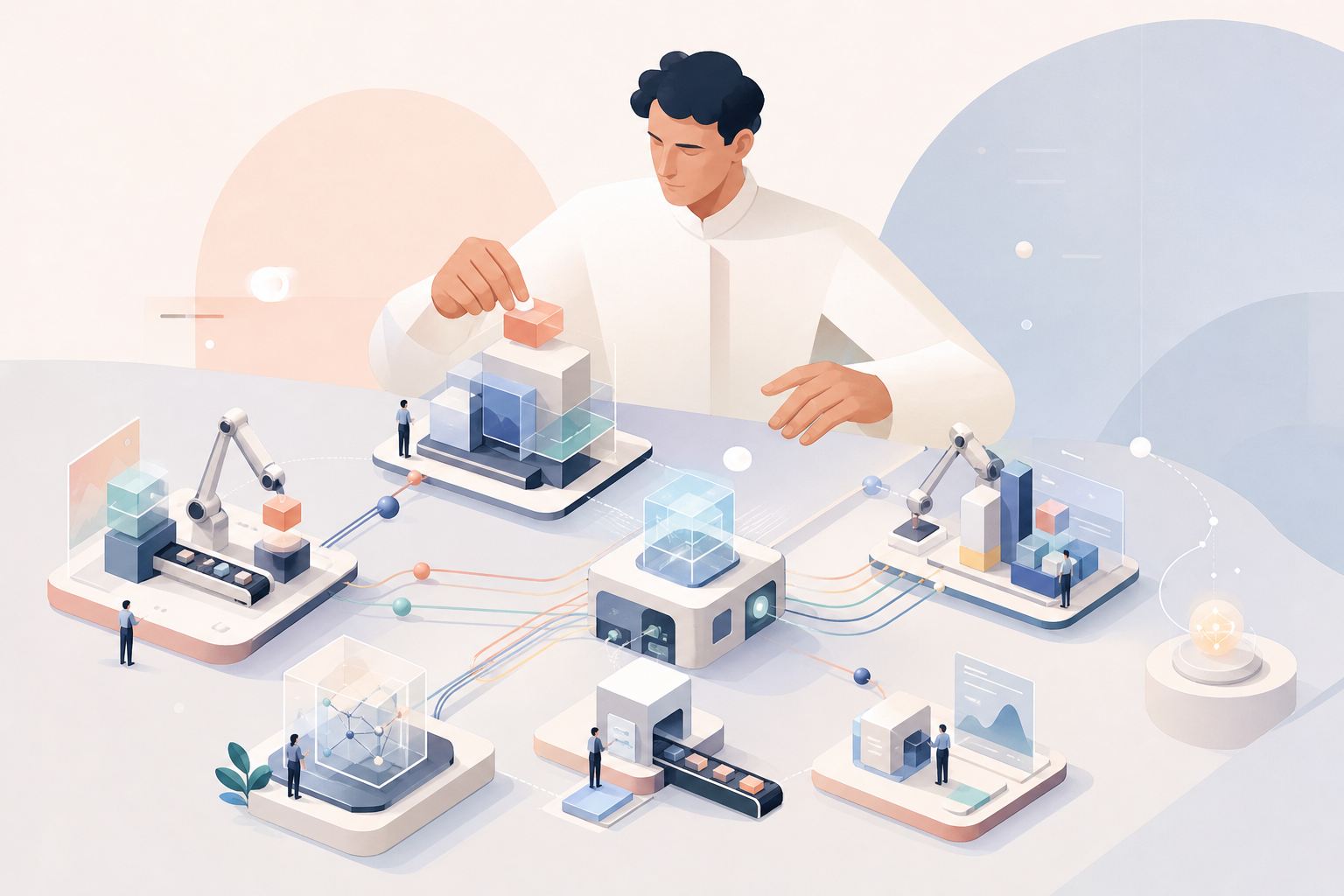
A month after extending voluntary buyout packages to roughly 60,000 employees — nearly a quarter of its global headcount —, Microsoft Chief Executive Satya Nadella publicly addressed the operational logic driving the move. Speaking at The New York Times DealBook Summit, the executive explained that offering buyout packages rather than executing across-the-board layoffs was designed to grant workers personal agency in choosing whether to undergo an unprecedented professional transition.
At the core of Microsoft's structural overhaul is not the direct elimination of software engineers, but a radical elevation of what software engineering actually entails: instead of drafting code line by line, technical professionals must now design and oversee automated systems capable of executing implementation tasks autonomously.
Moving Past Panic to a New Operating Point
Nadella described the intellectual trajectory of the tech sector over the past three years. The industry moved swiftly from early skepticism — the assumption that generative systems could never navigate enterprise codebases — to outright panic, centered on the idea that human developers would soon be rendered entirely obsolete.
Microsoft's view is that software engineering remains very much alive, but its operating point has shifted. As reported by TechCrunch, Nadella framed software engineering teams around the concept of a manufacturing plant: engineers no longer assemble the individual components by hand; instead, they build and optimize the automated software factory that manufactures the product through autonomous agent swarms.
Eleven Engineers for Cowork: The Factory Blueprint
To substantiate this structural shift, Nadella highlighted the engineering unit responsible for Cowork, Microsoft's flagship autonomous agent within the 365 enterprise suite. The core team comprises just 11 software engineers whose day-to-day focus is confined to setting architectural boundaries, validation harnesses, and behavioral guardrails for AI coding assistants.
Microsoft projects that this operational pattern will expand across all corporate functions in the near future. Every knowledge worker is poised to transition from direct task execution to agent delegation and supervision. For an enterprise that has operated for more than fifty years with conventional hierarchical structures, managing this transition represents significant friction; providing an exit package allowed the organization to reset expectations without triggering prolonged operational paralysis.
The Reshuffling of the "Human Web"
This internal restructuring parallels broader tectonic shifts across digital business models. Nadella argued that the proliferation of autonomous agents will dismantle the economic pillars of the commercial internet, which were established entirely around human page views, attention capture, and ad impressions.
According to coverage by TechCrunch, traditional web aggregators will be forced to pivot from display advertising toward transaction-oriented models and cost-per-action frameworks. Nadella explicitly contrasted closed ecosystems — referencing retailers that block autonomous shopping bots — with open platforms, noting that organizations refusing to accept agentic consumers risk forfeiting transactional market share to competitors that accommodate machine-to-machine commerce.
Mocchi's take
Nadella's analysis aligns closely with what we observe every day in production software development: technical value has fundamentally moved away from boilerplate syntax toward architectural precision, validation pipelines, and governance constraints. For European and mid-sized enterprises operating with lean engineering teams, this software-factory model is not an existential threat, but an unprecedented operational lever. The decisive competitive differentiator will not be adopting another generative foundation model, but redesigning development workflows so that engineers become directors of automated development factories rather than manual typists.