IA · 20 July 2026 · 3 min read
Beyond Chatbots: Japan's $6.2B Bet on "Physical AI" with Noetra and Nvidia
In brief: During a high-stakes visit to Tokyo, Nvidia CEO Jensen Huang outlined the future of "physical AI." In response, Japan launched Noetra—a sovereign consortium of 44 companies backed by a $6.2 billion government fund to build foundation models for robots, vehicles, and factories, powered by Nvidia's upcoming "Vera Rubin" superchips. This shifts the AI paradigm from web-based chatbots to real-world industrial automation.
by Team Mocchi's
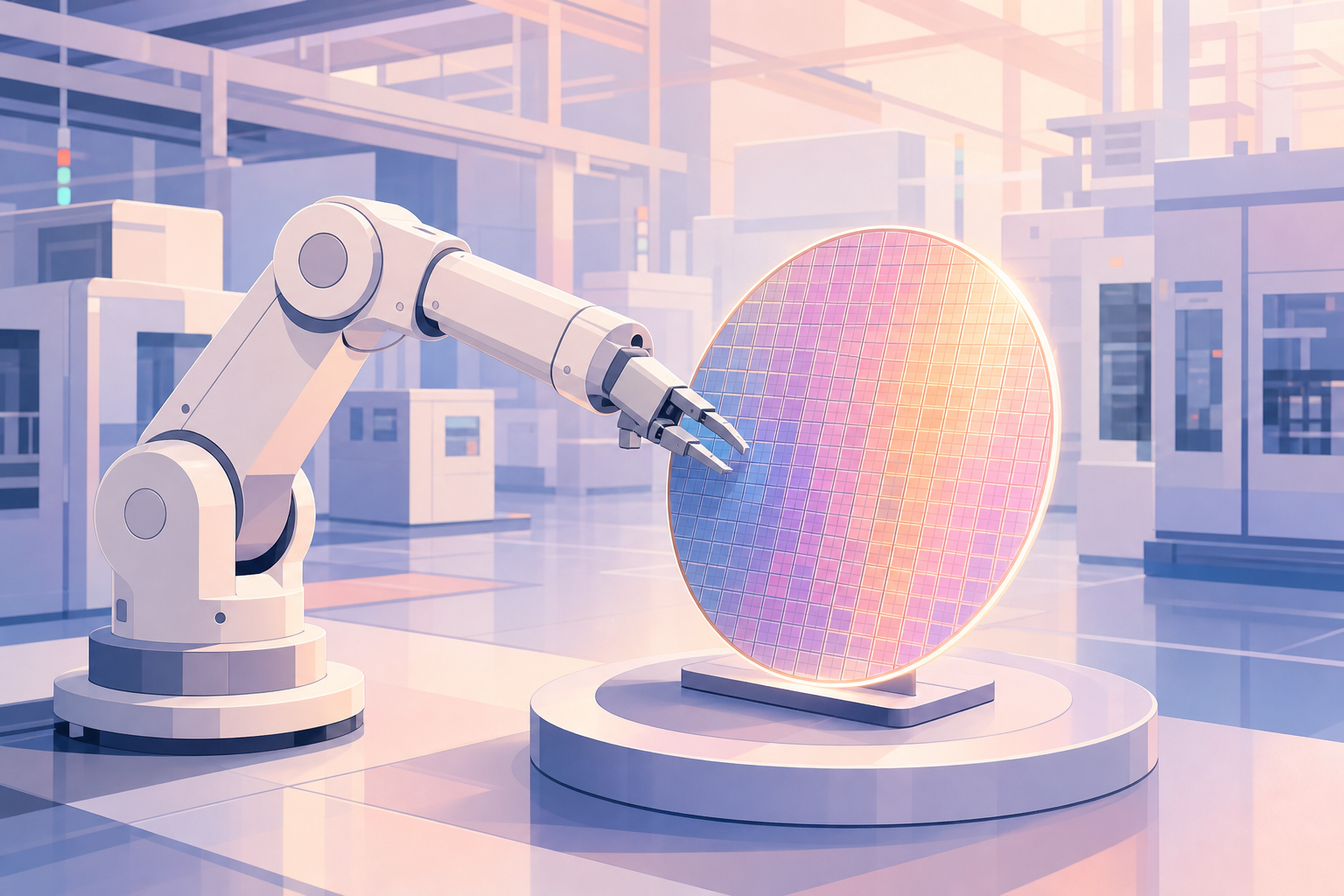
The Era of Physical AI: The Factory Floor as the New Frontier
While global public attention remains fixated on the evolution of conversational chatbots and commercial image generators, technology leaders are quietly shifting the axis of the AI revolution toward the tangible world. Artificial intelligence is stepping out of screens and moving directly into assembly lines, engines, and robotic arms. This is the dawn of "Physical AI"—and Japan is positioning itself to become its global testbed.
The definitive confirmation of this shift came during Nvidia CEO Jensen Huang's recent visit to Tokyo. As reported by TechCrunch, Huang courted the country’s industrial and semiconductor elite with a sharp message: the next chapter of AI belongs to factory floors, robots, and machines. Nvidia and Japanese manufacturing giants have sealed a strategic alliance to co-design this future, marrying Nvidia's computing hardware dominance with Japan’s historic excellence in mechatronics and robotics.
Project Noetra: Tokyo’s Bid for Sovereign AI
To avoid relying on US or Chinese AI infrastructures to run its production lines and autonomous vehicles, the Tokyo government has spearheaded the creation of Noetra. This sovereign consortium unites roughly 44 domestic tech and industrial leaders, with prominent names like SoftBank, Sony, NEC, and Honda at its core.
To back this initiative, the Japanese government has committed a monumental 1 trillion yen (approximately $6.2 billion) over five years. Noetra's goal is not to compete with OpenAI or Anthropic in creative writing or general coding. Instead, the consortium aims to build "physical foundation models"—software architectures designed from the ground up to understand physical laws, control high-precision mechanics, and orchestrate complex workflows within smart factories.
Noetra’s roadmap is structured into three distinct phases:
- Phase 1 (launching during fiscal 2026): Development of an advanced reasoning model optimized for the Japanese language and local regulatory contexts.
- Phase 2 (by 2028): Release of an "omni-modal" version capable of simultaneously processing text, images, video, and audio streams from industrial sensors.
- Phase 3: Deployment of "Real-world Native AI," embedding the models directly into the hardware of robots and vehicles on the field.
Hardware of the Future: The "Vera Rubin" Architecture
While the software brains will be developed locally by the consortium, the beating heart of the computing infrastructure remains firmly in Nvidia's hands. To support Noetra, the California-based chipmaker will build its first "Vera Rubin AI factory" in Japan.
This state-of-the-art, 140-megawatt data center is scheduled to go live by 2028. The facility will be packed with Nvidia's highly anticipated next-generation architecture: 13,750 Vera CPUs and 27,500 Rubin GPUs. This massive hardware deployment will allow Noetra to train physical AI models with unprecedented speed and energy efficiency, pushing past the limits of current-gen silicon and enabling real-time simulation of industrial environments via advanced digital twins.
Mocchi's take
For Italian companies—globally renowned for precision manufacturing, packaging, and industrial robotics—this shift to physical AI is a wake-up call. It is no longer enough to integrate generic AI into marketing or administrative workflows; future competitiveness will depend on deploying custom, intelligent models directly at the edge, on the machine itself. The Noetra model proves that industrial data sovereignty and security are best protected by building proprietary, vertically integrated systems. For Italian enterprises and custom software developers alike, the defining challenge of the coming years will be translating complex mathematical models into safe, high-performing physical instructions for world-class industrial automation.