Software · 30 September 2026 · 5 min read
OpenAI Takes on Microsoft in Workplace Software: Space, Pages, and Slides Arrive in ChatGPT
In brief: At DevDay 2026 in San Francisco, OpenAI unveiled an integrated workplace productivity suite built directly into ChatGPT, featuring collaborative workspace Space, document editor Pages, and an interactive slide generator. Backed by 1.2 billion weekly active users and an architecture designed to challenge traditional app store distribution, Sam Altman's company is stepping into direct competition with Google and its primary partner and investor, Microsoft.
by Team Mocchi's
Beyond the Chatbot: ChatGPT Becomes a Workplace Suite
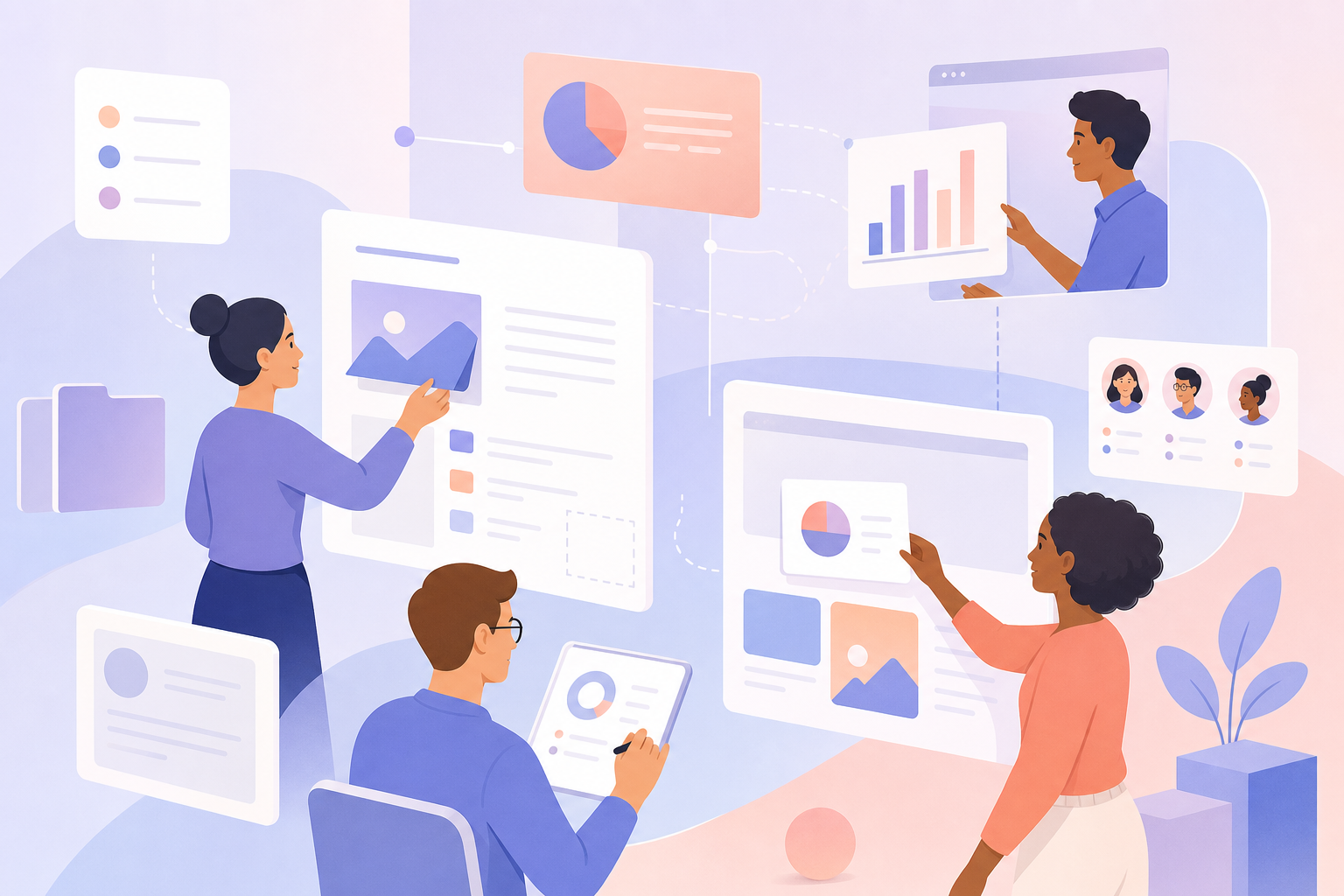
At its annual DevDay conference in San Francisco, OpenAI signaled a decisive pivot in its core product roadmap: transforming ChatGPT from a conversational assistant into an operational workplace suite. Among the primary announcements was a set of productivity tools built to enable human coworkers and autonomous AI agents to collaborate on shared project files in real time.
As reported by TechCrunch, the foundation of this release is Space, a shared environment that acts as an active, living repository. During the keynote, CEO Sam Altman explained that unlike traditional cloud storage drives, ChatGPT Spaces are dynamic: teams can assign continuous background instructions to a page, such as monitoring team messaging channels and automatically updating status sheets and documentation as decisions are finalized.
Pages and Slides: Direct Competition for Word and PowerPoint
Two dedicated tools anchor Space to compete head-on with legacy enterprise software. The first is Pages, a word processor positioned as a hybrid canvas built for collaborative authoring between human professionals and software agents. Inside Pages, teams can draft long-form reports, run contextual web research, generate charts, and structure visual information without ever leaving the ChatGPT interface.
Alongside Pages, OpenAI debuted a collaborative slide tool designed to overhaul traditional presentation workflows in PowerPoint and Google Slides. Users can generate complete decks through natural language conversation; the resulting slides can subsequently be edited, refined, and commented on by both human team members and their autonomous agents through targeted prompts.
Shifting Dynamics with Redmond and the Attack on App Stores
OpenAI's expansion into workplace software marks an increasingly delicate moment for its partnership with Microsoft, which has invested more than $13 billion in the firm and centered its enterprise offering on Microsoft 365 Copilot. ChatGPT is now explicitly attempting to keep enterprise users within its own interface, reducing their daily reliance on external productivity suites.
The strategic push goes well beyond documents. According to an analysis by TechCrunch, OpenAI is positioning ChatGPT as an application runtime that bypasses conventional app store channels. By surfacing contextual app suggestions within chats and introducing interactive extension sidebars, third-party software can now run directly inside conversational threads. As highlighted by The Verge, ChatGPT has officially crossed 1.2 billion weekly active users, granting OpenAI the market leverage required to monetize entire operational workflows rather than standalone API calls.
Mocchi's take
OpenAI's foray into workplace productivity underlines a structural shift: enterprise software is moving away from static applications retrofitted with AI sidebars toward foundation models generating software surfaces dynamically around the workflow. For businesses, this transition demands careful scrutiny regarding platform lock-in and information governance, as placing dynamic knowledge bases and operational handoffs inside proprietary spaces raises critical data portability challenges. When engineering custom enterprise solutions, we believe the strategic advantage will not come from standard document authoring tools, but from orchestrating agentic environments around verified internal databases, open protocols, and proprietary business processes.
Further reading
- https://techcrunch.com/2026/09/29/openai-takes-on-microsoft-with-the-launch-of-what-feels-a-whole-lot-like-chatgpts-own-office-suite/
- https://techcrunch.com/2026/09/29/openais-latest-features-take-direct-aim-at-the-app-store-model/
- https://www.theverge.com/ai-artificial-intelligence/1001681/openai-devday-2026-biggest-news-announcements