XR · 28 June 2026 · 3 min read
From Spatial Reality to Physical AI: OpenAI Poaches Apple’s Vision Pro Engineering Leader
In brief: Paul Meade's departure from Apple to join OpenAI represents a major strategic shift in the AI hardware landscape. The former head of Vision Pro engineering will lead the team tasked with building physical interfaces and wearables, accelerating OpenAI's transition toward ambient, on-device computing.
by Team Mocchi's
The Convergence of Hardware and Artificial Intelligence
The intersection of artificial intelligence and spatial computing is reshaping the leadership dynamics of Silicon Valley. A pivotal transition has recently shaken the engineering corridors of Cupertino and San Francisco: Apple's vice president of hardware engineering, the leader responsible for the Vision Pro headset, is leaving the tech giant to join OpenAI's hardware team.
This movement is far more than a typical executive departure; it is a clear indicator of how leading artificial intelligence companies are accelerating their transition from cloud-based software models to physical, ambient interfaces. The executive, who spearheaded the development of Apple's flagship spatial computing device and directed the engineering of its upcoming AI-powered smart glasses, brings an unparalleled wealth of experience in micro-engineering, optical systems, and sensor integration.
A Wearables Track Record and the Strategic Shift
The departing engineering leader played an essential role in defining Apple’s spatial computing roadmap. Beyond managing the complex, high-density hardware of the Vision Pro, he was also steering the development of the company’s unannounced smart glasses project, scheduled for release next year.
These glasses, designed to be lighter, more affordable, and geared toward daily consumer use compared to the bulky Vision Pro headset, represent a critical counterweight to wearable devices already competing in the market. Losing this technical lead deprives Cupertino of one of its most authoritative hardware minds just as the battle for the augmented reality market intensifies.
Simultaneously, this departure occurs during a broader internal reshuffling at Apple. Recent leadership changes and the anticipated elevation of new executives within the hardware engineering division have led to organizational friction, prompting several veteran vice presidents to seek opportunities elsewhere.
OpenAI’s Physical Ambitions
For OpenAI, securing a hardware pioneer of this caliber is the missing piece of a physical product strategy that has slowly been taking shape. While primarily recognized for its large language and generative models, the organization's ambition to build dedicated consumer hardware has been an open secret.
OpenAI has been working quietly with legendary industrial designers, including Apple’s former design chief Jony Ive and his creative firm LoveFrom, to conceptualize a novel consumer AI device. The goal of this collaboration is to design a product radically different from the smartphone—a "calm" interface centered around natural, ambient, and voice-first interactions that reduces our reliance on traditional screens.
However, turning a high-level design philosophy into a mass-produced consumer electronic device requires deep engineering expertise. Managing global supply chains, optimizing battery efficiency in compact form factors, and integrating real-time sensory inputs are highly specialized challenges. The new hardware lead provides OpenAI with the exact execution capabilities needed to turn these concepts into reality.
The Future of Ambient Computing
The evolution of artificial intelligence is proving that software alone will eventually hit a bottleneck on today's devices. Current smartphones and laptops are built around visual and touch paradigms designed decades ago. Generative and agentic AI, by contrast, demands seamless, hands-free, and multimodal interaction.
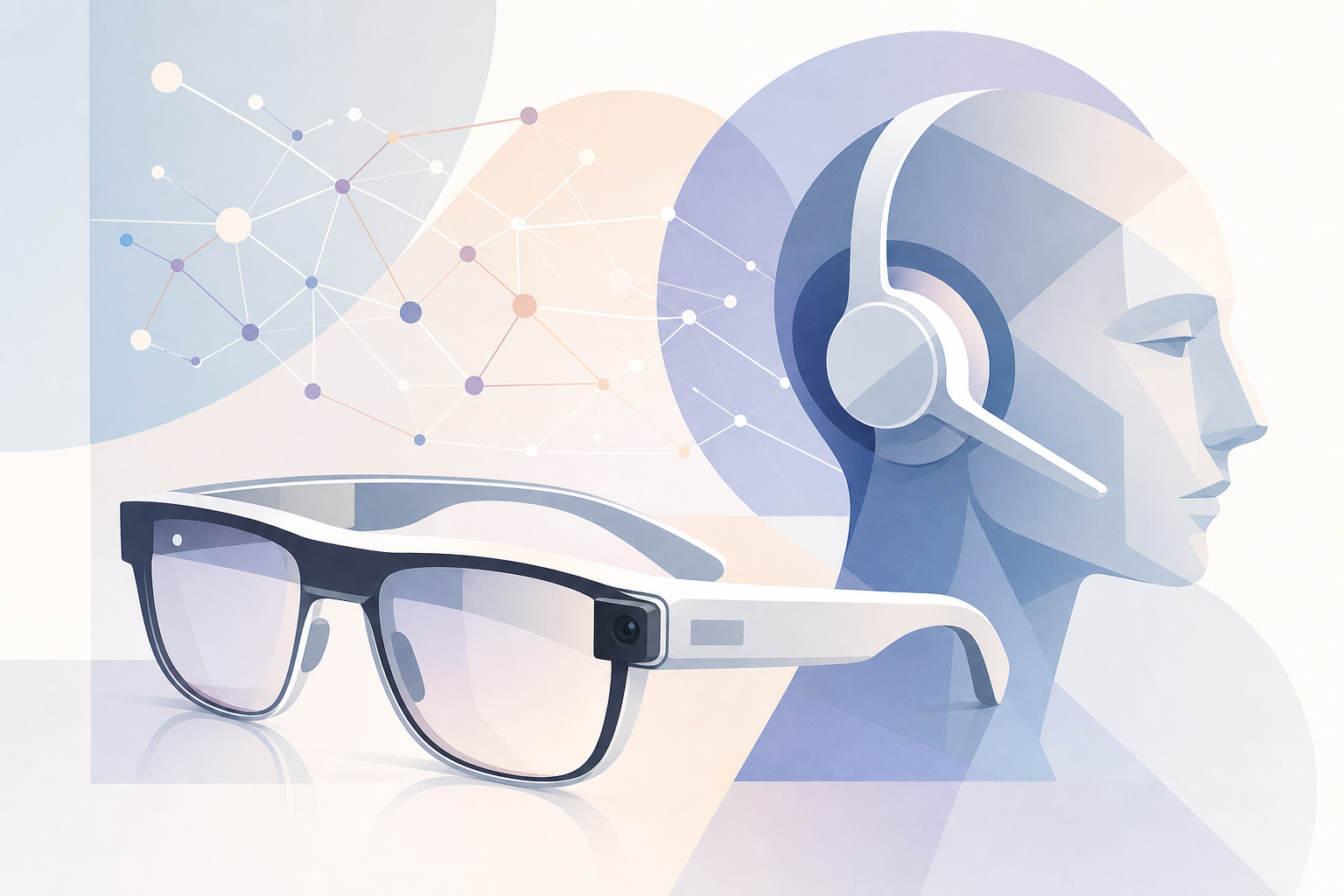
The rapid expansion of a top-tier hardware division within OpenAI indicates that the next competitive frontier won't just be fought in the cloud or inside data centers, but directly on the user's body. Smart glasses and ambient audio wearables are emerging as the natural hardware form factors for this transition.
For software developers and enterprises, this shift signals a clear trajectory: future digital products must expand beyond two-dimensional screen layouts. Instead, they will need to operate within spatial and ambient computing environments, where real-time visual comprehension and situational awareness become the baseline for user interaction.