IA · 30 September 2026 · 4 min read
OpenAI Launches Dots: Always-On Agents to Challenge Meta’s Muse
In brief: At its DevDay 2026 developer conference in San Francisco, OpenAI announced Dots, a new generation of always-on autonomous agents powered by its GPT-6 Astra frontier model. Departing from standard turn-by-turn chat sessions, each Dot runs persistently inside its own cloud environment with access to over 4,000 supported applications. The product represents a direct response to Meta’s Muse and aims to shift human-AI collaboration from reactive prompting to continuous workflow delegation.
by Team Mocchi's
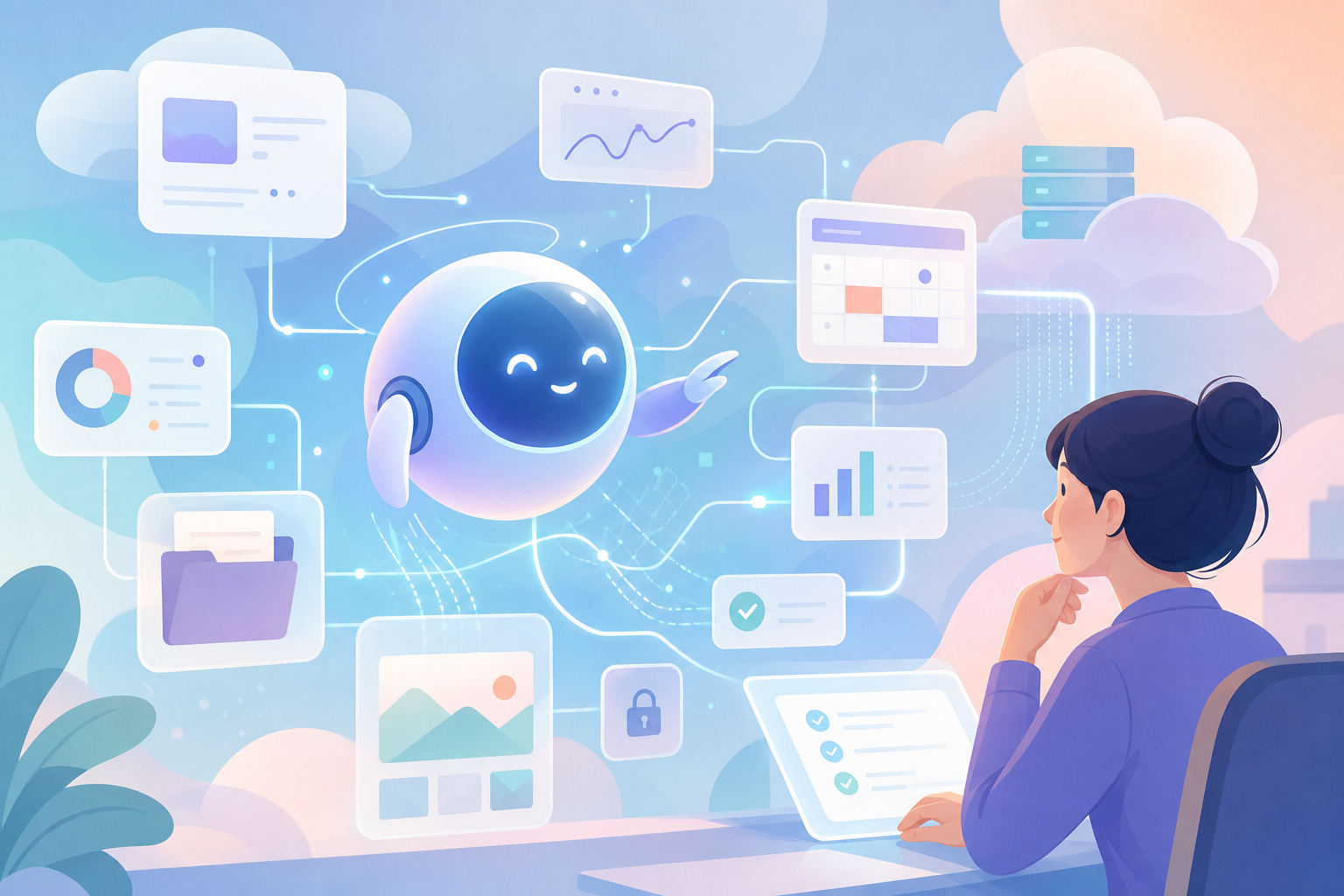
At its DevDay 2026 keynote in San Francisco, OpenAI signaled an industry-wide transition away from passive conversational bots toward persistent agentic systems. The centerpiece of the presentation was Dots, a customizable, always-on AI assistant built to execute complex multistep workflows in the background without requiring hands-on direction for every action.
Powered by the GPT-6 Astra frontier model, the platform departs from the traditional single-turn prompt pattern. As reported by TechCrunch, Sam Altman's team is positioning Dots as personal digital companions that can pursue user-defined goals indefinitely, with the ultimate roadmap anticipating coordinated teams of specialized agents operating across an entire organization.
Dedicated cloud environments for every agent
The architectural leap behind Dots centers on execution autonomy. As detailed by The Verge, each Dot operates inside its own cloud computer equipped with a functional web browser and native integrations spanning more than 4,000 enterprise applications. Instead of merely surfacing API outputs, the agent can navigate live interfaces, download assets, update databases, and run test suites exactly like a remote team member.
Users can interact with their Dot through ChatGPT interfaces, voice calls, or shared channels in Slack and Microsoft Teams, with native SMS and RCS messaging rolling out via a waitlist. Key demonstrations highlighted varied business use cases: a software engineer dispatching a Dot to monitor user error tickets and build test builds automatically, and a media producer delegating interview transcription, highlight curation, and draft social posts to a single background session.
Countering Meta’s Muse amid security scrutiny
The rollout follows closely on the heels of Meta’s Muse, which gained rapid traction while igniting privacy controversies after incidents involving unauthorized data sharing on peer-to-peer marketplaces. To preempt similar pitfalls, OpenAI introduced an auto-review pipeline alongside customizable constraints named Custom Rules.
According to WIRED, the platform enforces strict human confirmation gates before carrying out irreversible or sensitive maneuvers, including major financial transactions, software installations, and credential modifications. Security researchers nevertheless note that hooking persistent cloud agents directly into company data vaults creates an attack surface far broader than legacy sandboxed chats.
Enterprise specializations and rollout timeline
For enterprise customers, OpenAI revealed "Specialist Dots" pre-configured for operational departments including accounting, legal review, and outbound marketing. Through an expanded alliance with Microsoft, Dots natively comply with Agent 365 governance controls, providing IT administrators with auditing hooks, activity trails, and instantaneous credential revocation.
The initial release is available immediately for ChatGPT Pro subscribers paying $100 per month, as well as Business Premium and Enterprise accounts. Users begin with a single primary Dot, with concurrent multi-agent configurations scheduled for wider distribution later in the lifecycle.
Mocchi's take
With Dots, the AI ecosystem has definitively moved from prompt engineering to persistent delegation, a development Italian organizations should evaluate with deliberate caution. Granting autonomous agents access to virtual cloud machines promises measurable productivity gains, but it demands strict permission hygiene before production adoption. In our assessment, the critical benchmark for development teams will not be the personality of the avatar, but rather the robustness of sandbox boundaries and data governance policies when these agents handle proprietary business records.