IA · 10 July 2026 · 3 min read
OpenAI’s Big Move: Government Greenlight Unleashes GPT-5.6 and ChatGPT Work
In brief: OpenAI has officially launched the GPT-5.6 model family worldwide following US regulatory approval. Alongside it, the company introduced ChatGPT Work, an autonomous agentic platform merging chat with Codex capabilities to automate complex multi-hour enterprise workflows while sunsetting the Atlas browser.
by Team Mocchi's
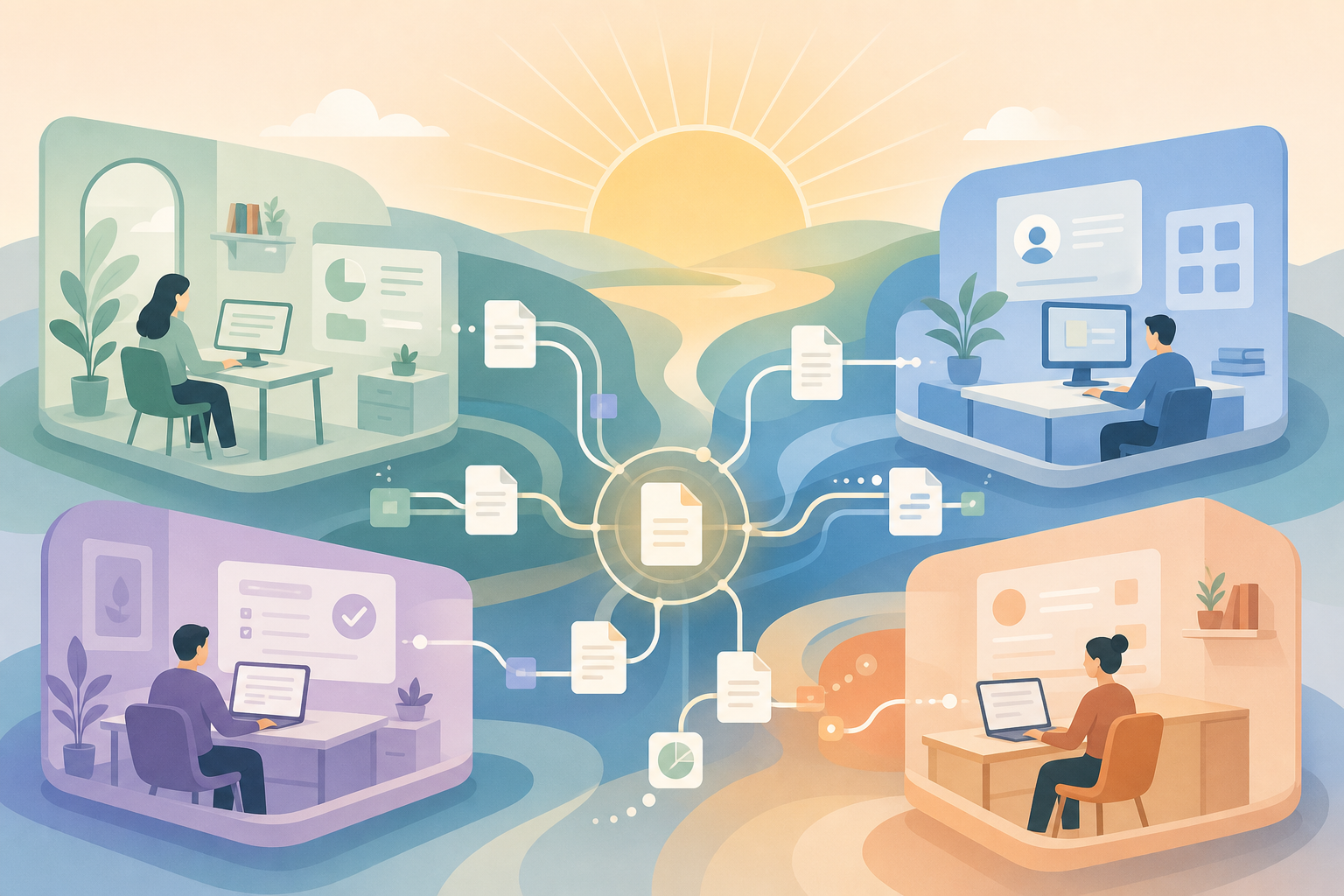
The generative AI race is taking a decisive step toward the era of autonomous agents. OpenAI has announced the global release of its new model family, GPT-5.6, alongside a completely redesigned platform for the workplace: ChatGPT Work. The surprise move comes after two weeks of regulatory tension that forced the San Francisco startup to restrict access to the model to government-approved entities. Now, having secured the final greenlight from the US administration, the technology is ready to redefine how we interact with enterprise software.
Government Approval and the Debut of 'Sol'
The road to GPT-5.6 was not without friction. As reported by The Verge, the model was stuck in a 'limited preview' phase due to national security reviews. With that bottleneck cleared, CEO Sam Altman introduced the suite, calling it 'the best model we have ever produced.'
The new family consists of three variants: Sol (the flagship model, focused on peak performance in coding, cybersecurity, and scientific reasoning), Terra, and Luna. OpenAI's stated goal is to offer frontier intelligence while keeping inference costs down—a crucial factor in a market where enterprises are beginning to feel the economic squeeze of AI licensing.
Goodbye Atlas: Building an Ecosystem for Autonomous Work
The real shift for everyday users and enterprises, however, lies in ChatGPT Work. With this release, OpenAI is radically changing the paradigm: the classic conversational chat interface is being relegated to 'ChatGPT Classic' (a simple desktop shortcut), while the core of the application becomes a control center for complex workflows.
This strategic shift marks the definitive end of Atlas, the proprietary browser launched just nine months ago, which has now been officially sunset. OpenAI is shifting its web-browsing ambitions to an updated Chrome extension and native desktop integration. As Ars Technica notes, ChatGPT Work merges conversational capabilities with Codex's code-generation technology. The result is a tool capable of operating autonomously for hours on a single goal, modifying local files, or executing complex tasks in the background.
Scheduled Tasks and Offline Execution
Unlike older chatbots that timed out after a few minutes of inactivity, ChatGPT Work introduces Scheduled Tasks. These are AI-driven 'cron jobs' that can monitor triggers—such as receiving an email or database updates—and execute workflows autonomously, even when the user is away from their keyboard.
Integration with enterprise systems is handled via a unified plugin directory, connecting the agent to tools like Slack, Microsoft Teams, Google Drive, SharePoint, and various CRMs. Users can invoke an external app simply by typing '@', allowing the agent to pull the necessary context to complete complex assignments—from budgeting to generating hyper-localized marketing campaigns. However, this level of autonomy comes with much higher resource consumption, and OpenAI has warned that heavy use of ChatGPT Work will drain plan limits significantly faster than classic chat.
Mocchi's take
With the release of GPT-5.6 and ChatGPT Work, the era of simple 'assistant chatbots' is officially over, unlocking enterprise-grade agentic automation. For Italian businesses, this transition represents a tremendous opportunity for efficiency, but it demands an immediate shift in data governance and cybersecurity. Giving an AI agent direct access to read and write on local file systems, Slack, or SharePoint means organizations must establish strict access controls and boundary guidelines. We advise companies to begin mapping out automatable workflows through small-scale pilots, keeping a close eye on infrastructure costs—which can scale rapidly with agentic workloads—and setting clear guardrails for when human intervention is required.