IA · 28 July 2026 · 4 min read
Perplexity Brings AI Agents to Windows: The New Frontier of Desktop Automation
In brief: Perplexity has launched the Windows version of its Personal Computer tool, turning enterprise PCs into autonomous agent hubs capable of interacting with local files, Office 365, and web tools. The release marks a shift from chat-based AI to digital workers embedded directly within daily desktop environments.
by Team Mocchi's
AI Agents Arrive on the Enterprise Desktop
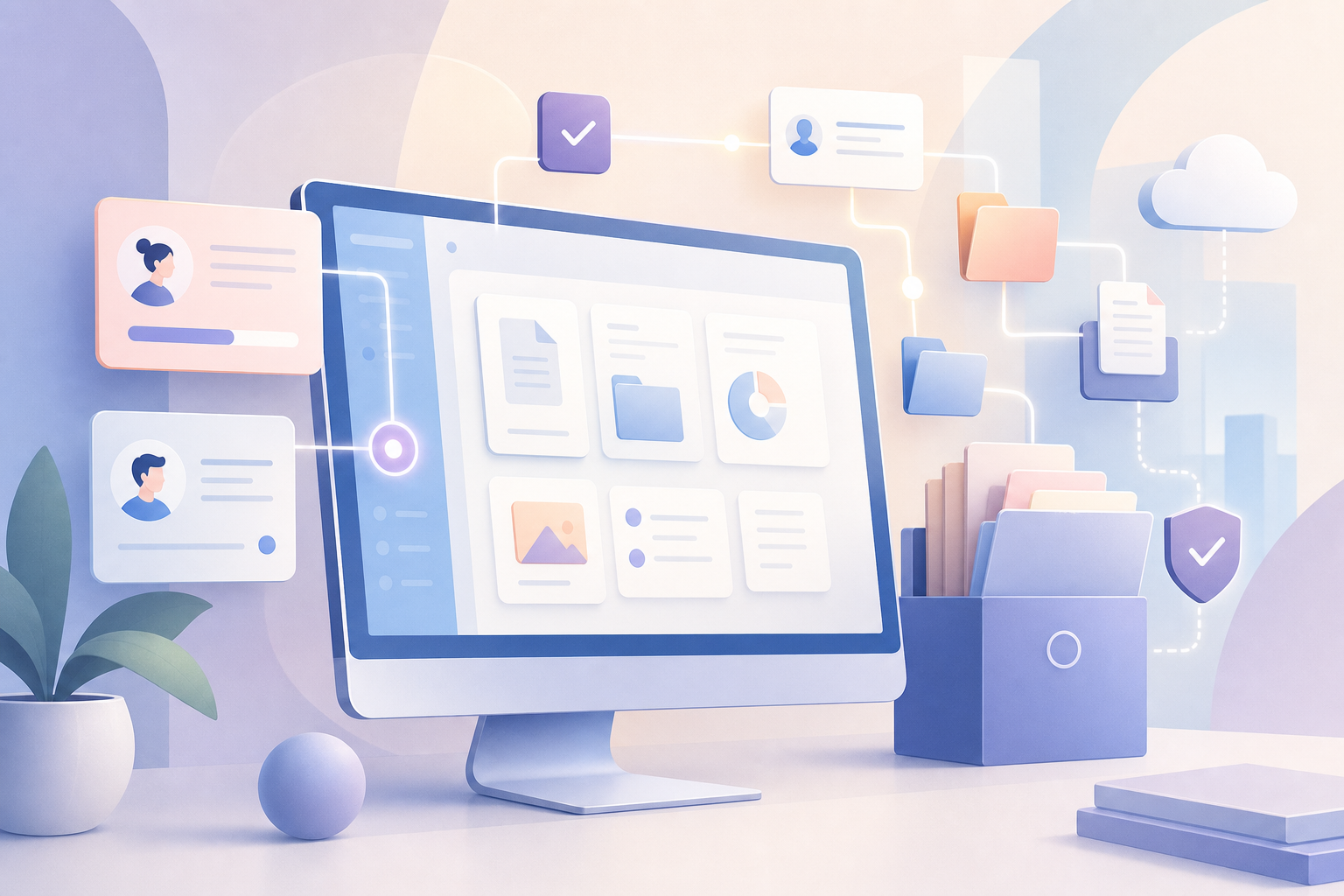
For years, generative artificial intelligence has been largely restricted to browser windows and isolated SaaS platforms. Now, the race for enterprise productivity is moving straight to the operating system level. Perplexity has announced the expansion of its "Personal Computer" agent tool to Windows, the dominant operating system in corporate environments globally. As reported by The Verge, the tool acts as a "general-purpose digital worker" capable of accessing local file systems, updating spreadsheets, drafting documents, and orchestrating complex tasks by connecting on-device data with Microsoft 365 apps and the web.
The release follows the tool's macOS debut earlier this year and builds upon existing integrations with Microsoft Teams and Office workflows. By expanding to Windows, Perplexity aims to address a long-standing gap in enterprise automation: much of the critical context and daily operational work still resides on local machines, outside the reach of traditional cloud-based AI tools. The feature is available exclusively to Max and Enterprise Max subscribers, starting at $200 per user per month, signaling a direct push toward high-value corporate workloads.
Beyond Inference: The Systems Challenge of Enterprise Agents
Running autonomous agents directly within a desktop environment transforms AI from a simple query-and-response tool into an active workflow engine. However, local execution introduces strict architectural and system performance demands that go far beyond standard API calls. According to an analysis published by MIT Technology Review, the success of enterprise agents depends less on raw model inference power and more on overall system design. Managing multi-step task planning, data retrieval, failure retries, and execution latency requires a resilient, monitored infrastructure.
Research on agentic workloads indicates that evaluating these systems requires looking beyond model accuracy to metrics like agent density per vCPU and task throughput. When an agent executes multi-step operations locally, recursive tool calls and data reads generate significant compute loads that impact both local machine performance and end-user latency. As a result, deploying desktop agents successfully demands a carefully balanced architecture between cloud-based reasoning and local system resource management.
Security, Governance, and the Local Data Challenge
Delegating multi-step operational tasks to autonomous desktop software introduces serious security and data governance considerations. An agent with local file access and execution capabilities can become an expanded attack surface if not tightly governed. To address these concerns, Perplexity has built-in mandatory notification prompts that require user approval before the agent performs high-risk actions, such as sending emails or deleting local files.
Additionally, Perplexity states that local enterprise data accessed by the tool will not be used to train foundational models. Nevertheless, for enterprise IT departments, the primary challenge remains aligning agent execution with existing Identity and Access Management (IAM) frameworks. Ensuring that an AI agent adheres strictly to the individual user's access boundaries—preventing data leaks or unauthorized privilege escalation—is an essential prerequisite for enterprise adoption.
Mocchi's take
The arrival of AI agents directly on the Windows operating system highlights a clear shift in enterprise technology: the true value of AI is moving away from standalone chat interfaces toward deep integration with local files and business systems. For organizations evaluating workflow automation, tools like Personal Computer offer an exciting way to streamline repetitive manual tasks, but they also underscore the need for rigorous software governance. Deploying off-the-shelf agents requires clear boundaries, reliable human-in-the-loop safeguards, and strict data access controls. As a software agency, we believe that successful enterprise automation relies on pairing powerful generative models with custom-built architecture designed specifically around an organization's unique operational workflows.