Software · 23 September 2026 · 5 min read
Rabbit Ditches Dedicated Hardware: OS3 Brings Its AI Agent to PC, Mac, and Messaging
In brief: Two years after the debut of the orange R1 pocket companion, Rabbit has pivoted to pure software with the launch of OS3, a cross-platform agentic operating system. The startup has halted manufacturing of its physical device, shifting its focus toward a cloud-coordinated agent capable of operating locally across Windows, Mac, and Linux machines via web browsers or chat apps like Telegram.
by Team Mocchi's
In early 2024, Rabbit promised to liberate users from the tyranny of smartphone apps with a bright orange, AI-first pocket gadget. Two years later, reality has set in for the startup led by Jesse Lyu. Rabbit has officially introduced OS3, an "agentic operating system" engineered not for proprietary consumer hardware, but to live directly on the screens and operating systems people already use every day.
Alongside the launch, Lyu confirmed in an in-depth interview with WIRED that the company has ceased manufacturing the R1 device. Rabbit is not shutting down, however: backed by $60 million in total funding and maintaining a lean crew of fifteen employees, the startup is attempting to redefine itself as an agile software platform.
A distributed architecture connecting up to five devices
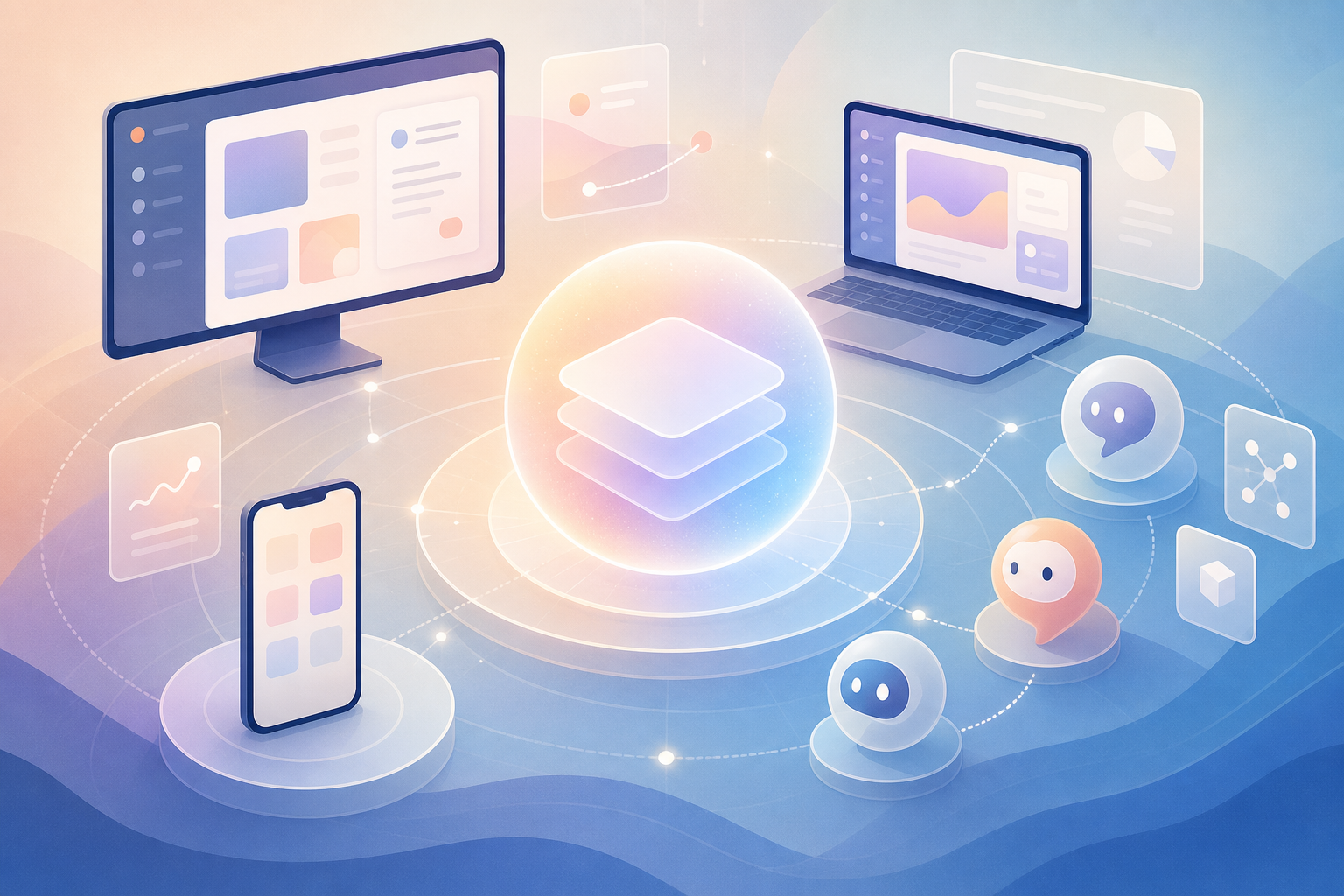
Technically, OS3 relies on a hybrid cloud-and-edge model. As detailed by The Verge, the system coordinates tasks in the cloud while executing actions locally on users' machines through native desktop clients for Windows, macOS, and Linux. Each account can link up to five distinct devices simultaneously, allowing users to plug in their preferred frontier models from third-party AI providers.
Users interact with OS3 using plain text or voice commands. The system analyzes the user's intent and autonomously decides which model to query, which local files to inspect, and which paired device should execute the assigned workflow. Access no longer requires specialized electronics: users can reach OS3 via a dedicated desktop browser dashboard, through ubiquitous messaging platforms like Telegram and iMessage, or on original R1 devices via an over-the-air firmware update.
On the privacy front, Rabbit claims that OS3 does not train on user data or sell it to third parties, though it does maintain interaction logs and long-term memory states on remote servers to ensure conversational continuity.
From the Large Action Model to agent convergence
Rabbit’s pivot mirrors the broader shifts across the artificial intelligence sector. In 2024, the R1 gadget faced harsh reviews because its experimental Large Action Model (LAM)—which relied on cloud virtual machines mimicking clicks across web interfaces—was plagued by sluggish response times and high failure rates. Lyu maintains that the hardware was financially sound, claiming over 100,000 units sold with sub-5% return rates, but acknowledges that a small engineering team could not match the brute capital of Silicon Valley's tech titans.
Autonomous software agents are now central to the roadmaps of Meta, Google, and OpenAI, all racing to let models navigate native filesystems and digital interfaces. Rabbit hopes to leverage its early head start in automated actions, while still keeping a foot in hardware: the company revealed it is developing a niche "cyberdeck" tailored for vibe-coding, slated for release in the coming months with OS3 built in.
Mocchi's take
Rabbit's evolution underscores a pattern we monitor closely across digital transformation initiatives: dedicated consumer AI hardware has largely hit a dead end, whereas real enterprise value lies in seamless cross-platform software orchestration. For companies exploring automated workflows, the architectural principles behind systems like OS3 offer clear lessons. Effective agents should not force teams to adopt new standalone gadgets; instead, they must integrate quietly with existing operating systems, desktop environments, and business tools. As these autonomous layers mature, the primary challenge shifts away from interface novelties toward strict endpoint security, deterministic execution, and rigorous local data governance.