IA · 14 July 2026 · 3 min read
The Great Paradox of Proprietary AI: Satya Nadella’s Shocking Warning on Losing Corporate Know-How
In brief: In an unexpected public post, Microsoft CEO Satya Nadella warns companies against relying on proprietary AI. He argues that businesses are 'paying twice' (with money and data) and giving away their competitive edge. The solution lies in model distillation to reclaim technological sovereignty.
by Team Mocchi's
Nadella’s Warning: The "Double Payment" of Artificial Intelligence
In the Silicon Valley landscape, where enthusiasm for generative AI often overshadows long-term strategic reflection, a new stance has emerged that is bound to redefine the power dynamics between model developers and the enterprise world. As reported by TechCrunch, Microsoft CEO Satya Nadella has issued a stark warning to companies integrating AI: the current consumption model based on proprietary APIs represents a systemic danger to businesses' intellectual property and competitive advantage.
According to Nadella, companies are falling into an economic and strategic trap he calls "paying twice." On one hand, they pay standard fees for the token usage required to run models from large labs like OpenAI or Anthropic. On the other hand, they unknowingly hand over their most valuable asset: their proprietary knowledge and daily operational workflows. "You essentially pay for intelligence twice," Nadella wrote in his unexpected blog post, "once with money, and again with something even more valuable: the proprietary knowledge you must reveal to make that intelligence useful."
"Data Exhaust" and the Trojan Horse Risk
The core of Nadella's argument lies in the concept of "data exhaust." When a company integrates proprietary AI into its processes, employees do not just send standard queries. They interact with the system, write complex prompts based on real-world scenarios, connect agents to internal business tools, and, crucially, correct the model's output when it makes a mistake.
This continuous feedback and correction process is far from neutral. Every single adjustment made by an expert user is stored, analyzed, and ultimately distilled back into the proprietary model as institutional know-how. Through this mechanism, large AI labs accumulate operational details, business nuances, and industry-specific logic that a competitor could never buy on the open market.
This dynamic fuels the concern, already voiced by prominent figures such as Palantir CEO Alex Karp, that proprietary AI providers are acting as "Trojan horses." Once these labs accumulate enough information about a specific market or workflow through their clients' data, nothing prevents them from launching competing vertical products, effectively cutting out the very companies that trained them.
The Way Out: Distillation and Model Sovereignty
To break this vicious cycle, Nadella proposes a radical paradigm shift based on reciprocity and "distillation." The argument is straightforward: if AI labs claim the right to freely scrape the internet to train their original algorithms, enterprises must have the reciprocal right to study and distill those models to build their own private solutions.
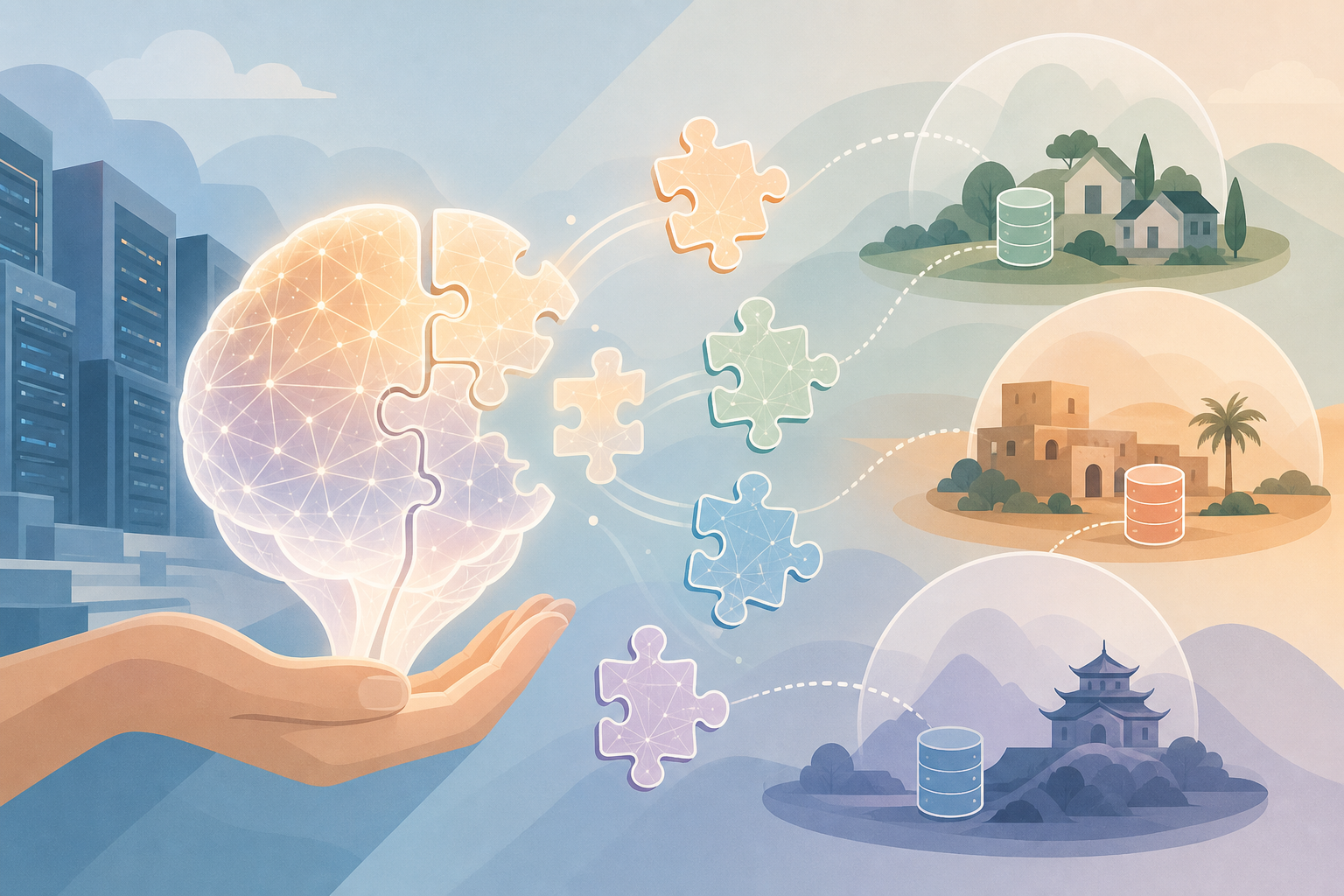
Model distillation is a technique that allows companies to transfer the capabilities of a large model (such as GPT-4 or Claude) into a smaller, highly specialized model that the company owns entirely. Instead of constantly relying on an external API and sending sensitive data to the provider's cloud, the enterprise uses the initial proprietary model only as a temporary "teacher" to train its own local or on-premise "student" model.
This approach ensures that all subsequent refinement, user corrections, and industry-specific knowledge remain strictly within the company's security perimeter, protecting intellectual property and drastically reducing long-term token-related operational costs.
Mocchi’s take
Nadella’s warning confirms a vision that we at Mocchi's have long championed: the superficial integration of third-party APIs is not a sustainable strategy for Italian companies seeking a real competitive edge through AI. Today, developing custom software means designing infrastructures that guarantee technological sovereignty. For our enterprises, the right path is not to hand over their craft and industrial know-how to overseas silicon giants. Instead, they should leverage model distillation and customized open-source models to build intelligent assistants and agents that remain an exclusive, proprietary asset of the business.