Tech · 30 June 2026 · 4 min read
South Korea's One-Trillion-Dollar Bet to Conquer RAMageddon and Champion Robotics
In brief: South Korea has unveiled a near $1 trillion public-private investment plan focusing on memory chips, regional AI data centers, and humanoid robots. By doubling DRAM production and commercializing robotic labor in automotive plants, the nation aims to secure global technology sovereignty and lead the hardware foundations of physical AI.
by Team Mocchi's
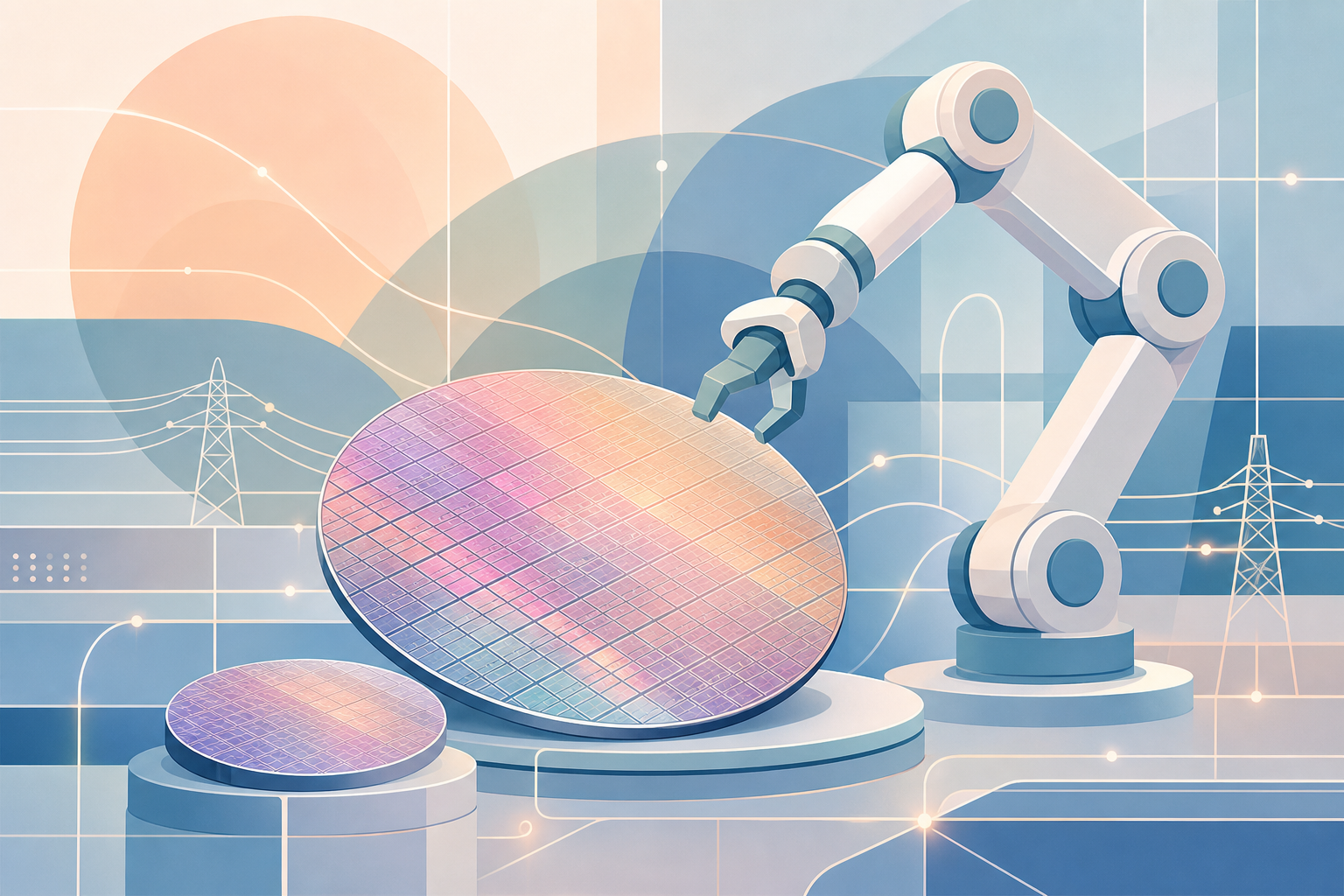
Seoul’s Answer to the Global Silicon Shortage
The global memory chip shortage triggered by the artificial intelligence boom, a phenomenon widely referred to as the "RAMageddon" crisis, has prompted South Korea to launch one of the most ambitious industrial initiatives in modern history. The South Korean government, collaborating closely with the country’s leading tech conglomerates, has announced a sweeping national investment plan totaling nearly one trillion dollars, with over $900 billion committed by private enterprises.
This strategic move is designed to position the Asian nation as the uncontested infrastructure leader for the next decade of technological progress. During the official announcement, state officials outlined a "triple axis" development strategy focusing on advanced semiconductors, next-generation AI data centers, and physical artificial intelligence, specifically humanoid robotics. The ultimate goal is to establish South Korea as an irreplaceable hub in the global AI value chain.
Overcoming the Chip Crisis: Over $570 Billion for Memory
The primary pillar of the megaproject centers on semiconductor manufacturing, an sector where South Korea already wields massive global influence. Tech giants Samsung and SK Hynix plan to invest approximately $518 billion to build four massive fabrication plants (fabs) in the southwestern region of the country, an area historically left out of major high-tech industrial developments. Additionally, another $52 billion will be dedicated to constructing an advanced High Bandwidth Memory (HBM) packaging hub in the central province.
The stated goal of this monumental investment is to double South Korea’s Dynamic Random-Access Memory (DRAM) production capacity within the next five years. This aggressive industrial expansion aims to bring relief to a global market currently strangled by unprecedented demand, which has driven up the cost of servers, supercomputers, and consumer electronics worldwide.
Distributed Data Centers and the Infrastructure Challenge
The second axis of the national strategy allocates approximately $356 billion through 2035 to build large-scale AI data centers. Energy and technology giants, including SK Group, GS Group, and Naver, will lead this infrastructure deployment.
To prevent further strain on the Seoul metropolitan area, these new computing facilities will be distributed across outlying provinces, including South Chungcheong, Gangwon, and the Jeolla regions. However, this geographic decentralization brings severe logistical and engineering challenges, particularly regarding resources. The Ministry of Climate, Energy and Environment has already initiated plans to secure several gigawatts of additional electrical power and the massive water supplies required to cool these processing systems, sparking intense domestic debates over the ecological sustainability of the projects.
The Era of "Physical AI": Humanoids on the Factory Floor by 2028
The third core component of the South Korean master plan targets humanoid robotics, a sector the government intends to bring to full commercial viability by 2028. The strategy aims to integrate "Physical AI" directly into everyday industrial workflows. Hyundai, the majority owner of Boston Dynamics, will lead the industrial push to mass-manufacture the next generation of Atlas humanoid robots.
These autonomous machines will initially be deployed within the group's automotive plants and other heavy-labor industrial environments. Their role will be to take over the most strenuous, repetitive, or dangerous physical tasks. The government’s roadmap includes targeted financial incentives to encourage adoption of these systems not only in heavy manufacturing but also in logistics and advanced public services.
Social and Industrial Implications
An industrial overhaul of this magnitude is not without domestic friction. The announcement comes amid a heated public debate regarding the massive profits accumulated by major tech conglomerates during the AI boom, with some political factions demanding a more equitable redistribution of wealth.
Concurrently, labor unions in the manufacturing and automotive sectors have raised concerns over the rapid integration of humanoid robots, warning of potential negative impacts on human employment. Despite these challenges, Seoul's long-term vision remains clear: securing technological sovereignty and solidifying the country’s position as the physical hardware factory for the global AI revolution.