Tech · 13 June 2026 · 4 min read
SpaceX's AI Pivot: The $1.8 Trillion IPO and the Bet on Orbital Data Centers
In brief: SpaceX has officially become a public company, debuting on Nasdaq with shares priced at $135 and closing at over $160. With a valuation around $1.8 trillion, the company has made Elon Musk the world's first trillionaire. Surprisingly, the IPO documents reveal that the majority of the company's valuation is driven not by space launches or standard Starlink broadband, but by its potential to provide AI services powered by orbital data centers.
by Team Mocchi's
SpaceX's AI Pivot: The $1.8 Trillion IPO and the Bet on Orbital Data Centers
SpaceX’s historic stock market debut marks a milestone not just for space exploration, but for the global technology market as a whole. Debuting on the Nasdaq exchange on Friday, June 12, 2026, at an initial price of $135 per share, the company founded by Elon Musk closed its first day of trading at $160.95—a 19% surge. This performance pushed the company’s total valuation to nearly $1.8 trillion, cementing Musk as the world's first nominal "trillionaire" with a personal stake valued at over $700 billion.
However, beyond the record-breaking numbers and the overnight millionaires created among current and former employees through company stock option programs, the most disruptive aspect of the IPO lies in the strategic positioning outlined in official financial filings. Investors did not buy into SpaceX to bet on Mars voyages or Starship heavy-lift rockets; the real promise of growth lies in space as the next frontier for artificial intelligence infrastructure.
Shifting Focus from Rocket Launches to Orbital Data Centers
Until now, the public narrative surrounding SpaceX has focused on aerospace logistics and broadband internet connectivity provided by the Starlink constellation. Yet, in its S-1 document filed with the Securities and Exchange Commission (SEC) in May, the company drastically downplayed the economic weight of these traditional markets. SpaceX made it clear that "space-enabled solutions" and consumer Starlink broadband represent less than 7% of its total addressable market.
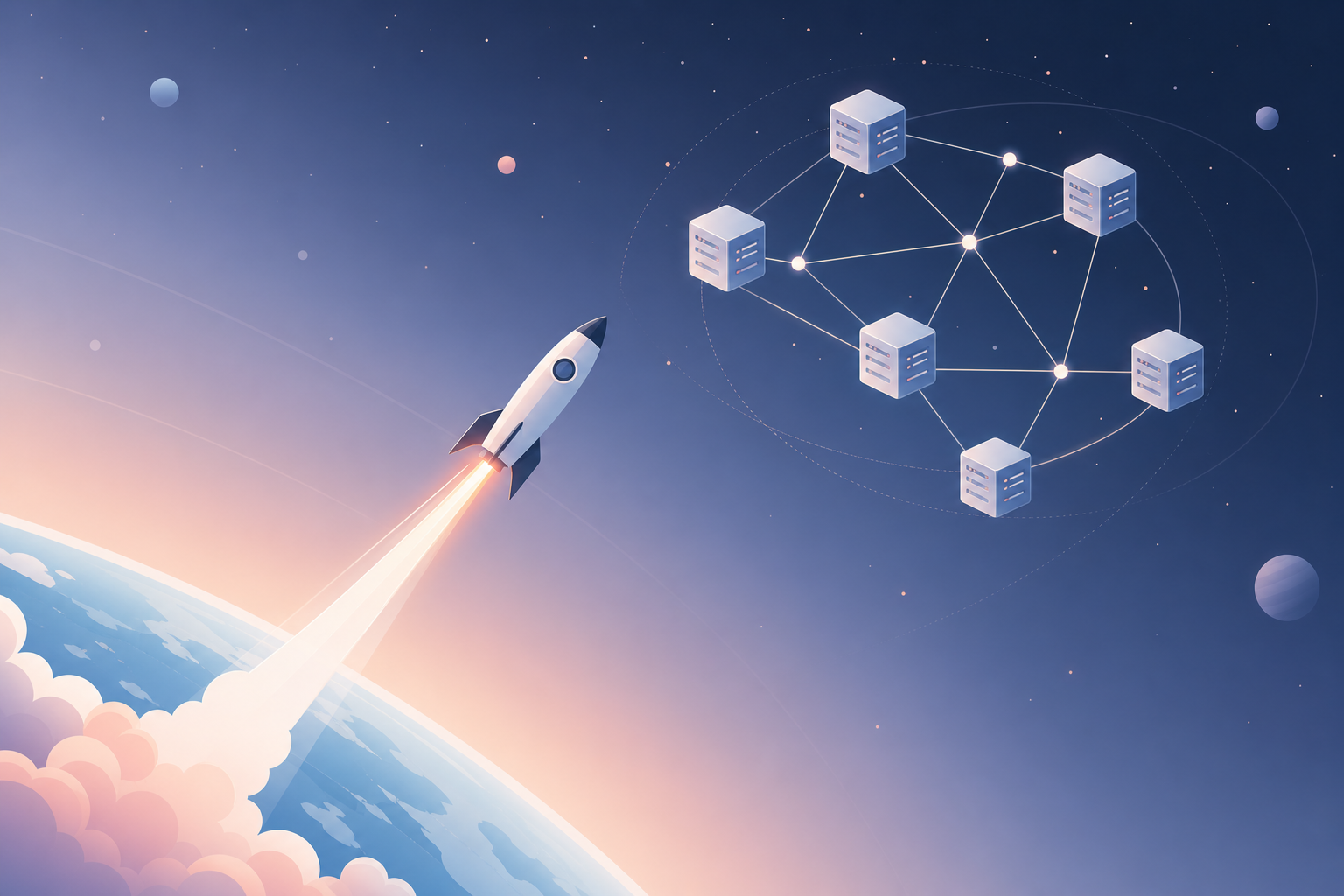
The remaining 93% of SpaceX's future value is attributed to providing AI services managed directly in space through orbital data centers. As reported by Ars Technica, SpaceX's goal is to host enterprise-grade computational workloads outside Earth's atmosphere. This approach promises to bypass terrestrial cooling and energy constraints by leveraging direct solar power and deep-space temperatures, while offering global low-latency data transit via inter-satellite laser communications.
Implications for Public Partners and Shareholders
SpaceX’s transition to a publicly traded company introduces unprecedented transparency requirements and, more importantly, a fiduciary duty to shareholders. While voting control and overall governance remain firmly in Musk’s hands, stock price fluctuations and investor demands for profitability will inevitably influence where the company directs its capital and attention.
This transition is a sobering moment for public partners like NASA, which supported SpaceX with vital development contracts during its early years when bankruptcy was a looming threat. While the company's priorities once aligned primarily with lunar landings and Mars exploration, private investors will now demand a sharp focus on commercializing orbital data centers and high-margin AI services, potentially shifting resources away from purely scientific or exploratory milestones.
The Future of Off-World Computing
The SpaceX IPO marks the beginning of a new era for global cloud computing and artificial intelligence. With a valuation that places it among the world's largest tech giants, SpaceX is no longer just competing with traditional aerospace contractors like Boeing or Lockheed Martin; it is launching a direct challenge to cloud infrastructure giants like Amazon Web Services, Microsoft Azure, and Google Cloud. If the bet on orbital data centers proves scalable and secure, low-Earth orbit may soon host the backbone of next-generation distributed AI.