Tech · 5 September 2026 · 4 min read
Tesla Cybercab Hits the Road Under Federal Scrutiny: NHTSA Launches Safety Investigation
In brief: Just hours after Tesla kicked off public rides for its pedal-free, steering-wheel-less Cybercab in Austin, the U.S. National Highway Traffic Safety Administration (NHTSA) opened a formal investigation. Tesla bypassed the federal exemption process utilized by competitors like Amazon's Zoox, asserting that its purpose-built autonomous vehicle already complies with existing standards. The federal Audit Query highlights escalating friction between aggressive autonomy deployment and legacy automotive safety regulations.
by Team Mocchi's
Public rides in Austin trigger immediate federal inquiry
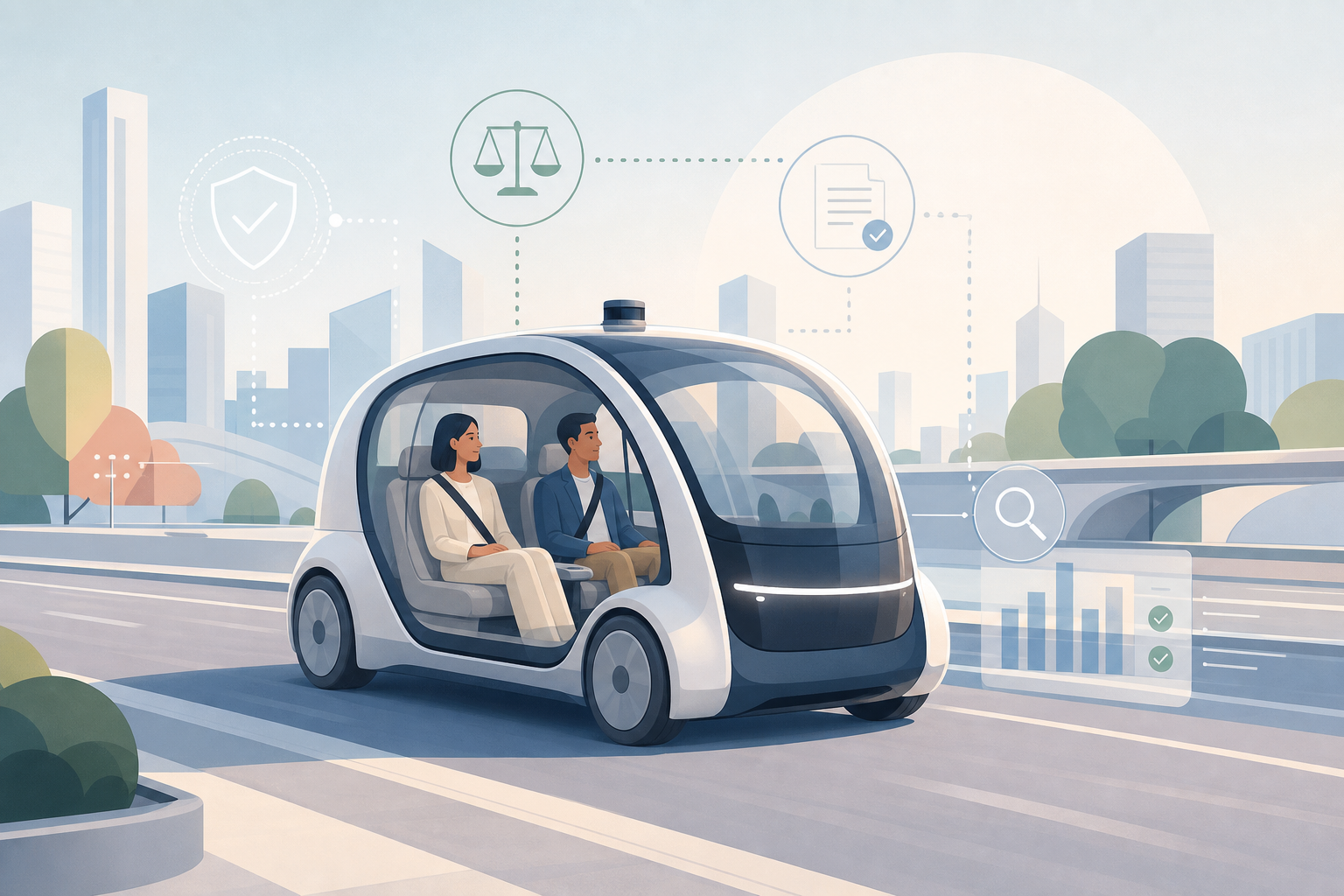
Tesla's Cybercab has officially begun carrying passengers on public roads in downtown Austin, Texas, marking the first major commercial step in Elon Musk's planned Robotaxi network, which aims to expand across Texas and Florida. The vehicle—a purpose-built two-seater completely devoid of a steering wheel, brake pedals, or traditional side mirrors—represents the hardware manifestation of Tesla's vision for end-to-end autonomous mobility. However, only hours after the company hosted hundreds of enthusiasts for inaugural driverless rides, federal authorities stepped in.
As reported by Ars Technica, the National Highway Traffic Safety Administration (NHTSA) has launched a formal investigation known as an Audit Query. The federal regulator will examine the safety data and internal testing protocols Tesla relied on to determine that its bespoke autonomous vehicle complies with Federal Motor Vehicle Safety Standards (FMVSS).
The clash over federal exemption pathways
The dispute stems from a sharp departure from standard automotive and robotaxi deployment practices. Under current federal regulations, vehicles operating on public roads are expected to possess manual driving controls and specific visibility equipment designed for human drivers. To navigate this constraint, other autonomous vehicle developers have pursued formal waivers. For instance, Amazon subsidiary Zoox secured a federal exemption earlier this summer allowing it to operate up to 2,500 custom-built vehicles without steering wheels.
Tesla, by contrast, opted against applying for an exemption, asserting that the Cybercab already fulfills federal safety requirements without needing special dispensation. In a public statement, NHTSA Administrator Jonathan Morrison noted that while the agency fully supports the development and deployment of autonomous vehicles, federal regulators must ensure existing laws are rigorously observed. Ann Carlson, former acting NHTSA administrator and currently a professor of environmental law at UCLA, remarked that the inquiry reflects widespread regulatory frustration with Tesla's decision to circumvent the established exemption channel.
Transitioning rules and potential regulatory penalties
The standoff unfolds during a delicate transition for road safety governance. The NHTSA is currently drafting revisions to eight longstanding vehicle safety rules to accommodate driverless designs by phasing out mandatory requirements for manual components like brake pedals and windshield wipers. Nevertheless, until those updated rules take legal effect, the existing regulatory framework remains binding.
The Audit Query carries substantial practical implications. The agency holds the authority to mandate mechanical or architectural alterations, suspend vehicle deployments, or levy multimillion-dollar civil penalties if self-certification claims fail technical scrutiny. For Tesla—which has increasingly staked its corporate valuation on autonomous fleets and robotics rather than conventional automotive manufacturing—the probe represents a decisive stress test for its deployment strategy and regulatory standing.
Mocchi's take
The Cybercab inquiry offers a clear lesson for organizations deploying intelligent systems into the physical world: algorithmic performance cannot substitute for regulatory compliance. For Italian and European businesses engineering autonomous mobile robotics, industrial IoT, or safety-critical AI agents, attempting to bypass certification hurdles is a high-risk gamble that inevitably invites regulatory blowback. Proactive compliance, underpinned by traceable validation data and open collaboration with oversight bodies, remains the only viable path to operational scale and sustainable trust.