IA · 11 July 2026 · 3 min read
The End of "Renting" AI: Why Enterprises are Shifting to Open Source
In brief: In a recent interview, Hugging Face CEO Clem Delangue highlighted how companies are moving away from pay-per-use proprietary APIs toward customized open-source solutions. As AI projects scale, the cost of renting closed models becomes unsustainable, driving roughly half of Fortune 500 companies to rely on open repositories to maintain technological control. This transition not only impacts software but also sets the stage for the transparency needed in the future of robotics and reshapes the geopolitical balance of tech development.
by Team Mocchi's
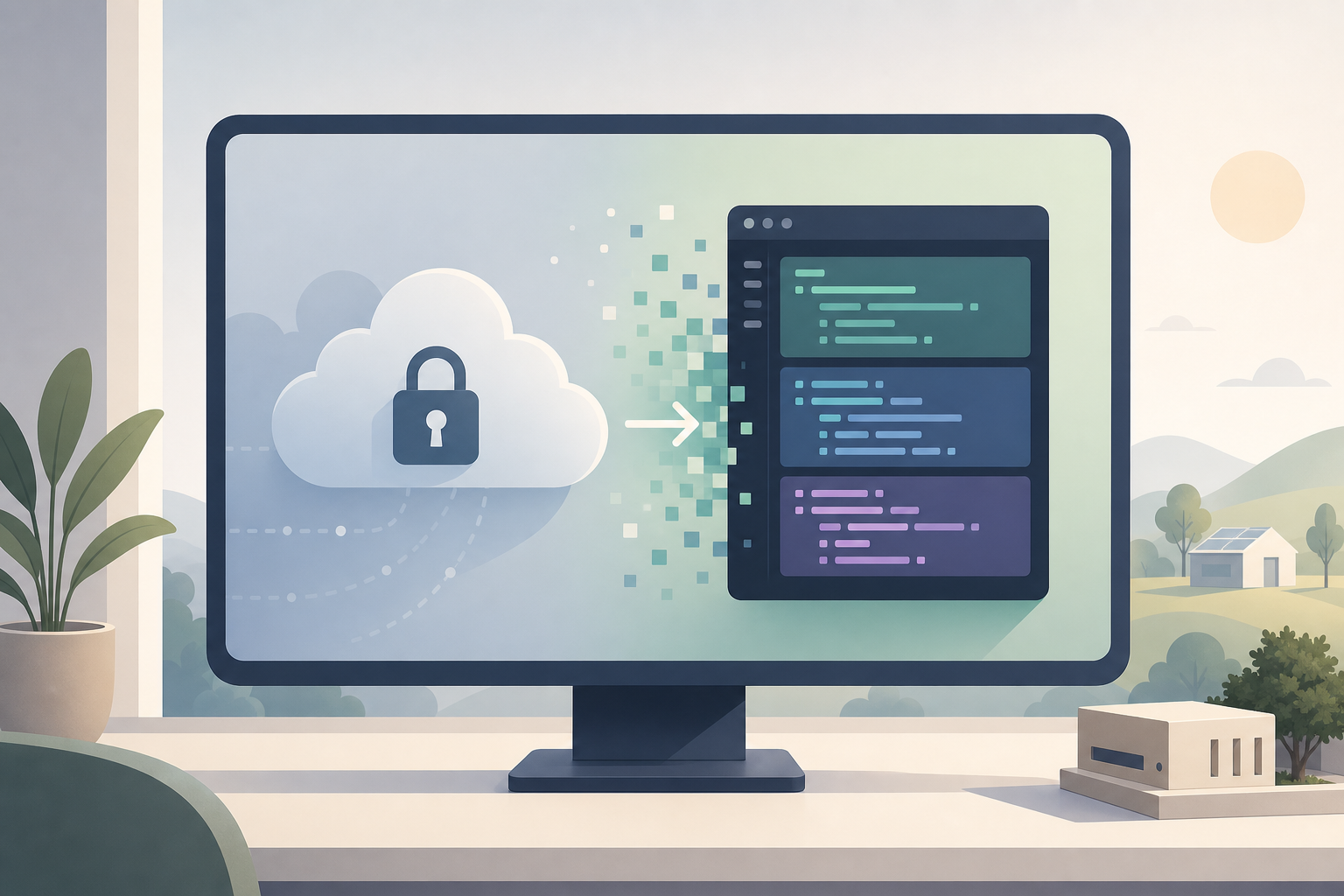
In the current tech landscape, the integration of artificial intelligence has followed a predictable pattern: companies start by experimenting with the APIs of well-known frontier models, only to eventually run into economic and structural hurdles. As reported by TechCrunch, the era of 'renting' AI is beginning to show signs of strain. Clem Delangue, co-founder and CEO of Hugging Face, explained in a recent episode of the Equity podcast that the massive growth of open-source models reflects a crucial enterprise need: moving away from subscription-based models for a technology they do not own, and instead building their own proprietary infrastructure.
The Variable Cost Trap
Many organizations take their first steps in AI by calling closed proprietary models via API. This strategy is excellent for prototyping because it reduces time-to-market and requires minimal infrastructure expertise. However, as highlighted in TechCrunch, once an application scales and user traffic spikes, pay-per-use billing becomes an unsustainable line item.
This cost barrier is pushing over half of the Fortune 500 to leverage Hugging Face to download and host open models and datasets. Shifting from closed APIs to open-source alternatives allows companies to size their inference hardware precisely to their workloads, eliminating dependence on the pricing shifts of third-party vendors.
Data Sovereignty and the New AI Geopolitics
Beyond cost efficiency, data sovereignty is the second major pillar of this transition. When a company relies on a third-party proprietary model, it has to send sensitive information outside its secure perimeter. The open-source approach allows businesses to deploy models internally or within a private cloud network that they fully control.
Delangue also raised an important point regarding the geopolitics of open-source: currently, a significant portion of open models downloaded in the West are produced by Chinese research labs. For the Hugging Face CEO, this should not lead to blind protectionism or mistrust of shared code. Instead, it should serve as a wake-up call to improve transparency and foster the development of local, sovereign alternatives, reducing the concentration of power among a handful of US-based corporations.
Robotics as the Next Frontier for Transparency
The demand for open AI becomes even clearer when looking beyond chatbots and code assistants. With the rise of advanced robotics and humanoid systems for workplace and home use, AI is physically interacting with our surroundings. A robot operating in an office or a home has constant visual and sensor access to highly sensitive environments.
According to Hugging Face, running these physical systems via proprietary third-party APIs is a significant privacy risk. In physical environments, open-source is not just a budget optimization; it is a fundamental requirement to protect user privacy and intellectual property.
Capital Efficiency Over Silicon Valley Hype
To prove how deeply rooted this philosophy is, Hugging Face is pursuing a growth path quite unusual for Silicon Valley. Rather than succumbing to multi-billion-dollar fundraising hypes, the company has prioritized capital efficiency, reportedly turning down a major investment offer from Nvidia.
This financial independence keeps the platform neutral for the global developer community. Their focus remains on providing secure, optimized deployment tools for companies building and integrating AI into their own software ecosystems.
Mocchi's take
As an Italian custom software agency, we see this strategic shift firsthand in our clients' projects. While closed APIs were fantastic for democratizing initial access to AI, Italian businesses looking for long-term value must now focus on IP ownership and infrastructure control. Investing in fine-tuning open-source models—hosted on private clouds or on-premise—is no longer just a way to optimize IT budgets, but a strategic necessity to protect business data and guarantee operational resilience free from external platform dependencies.