XR · 3 July 2026 · 4 min read
The "as-a-service" device era: why Meta's smart glasses now require a subscription
In brief: Meta has introduced a premium subscription plan for its smart glasses, limiting advanced features like voice isolation in loud environments to just a few hours per month for free users. Since processing occurs entirely on the device without taxing cloud servers, this move highlights a clear shift toward monetizing embedded hardware software. The decision paves the way for a business model where physical device purchases are only the beginning of a recurring commercial relationship.
by Team Mocchi's
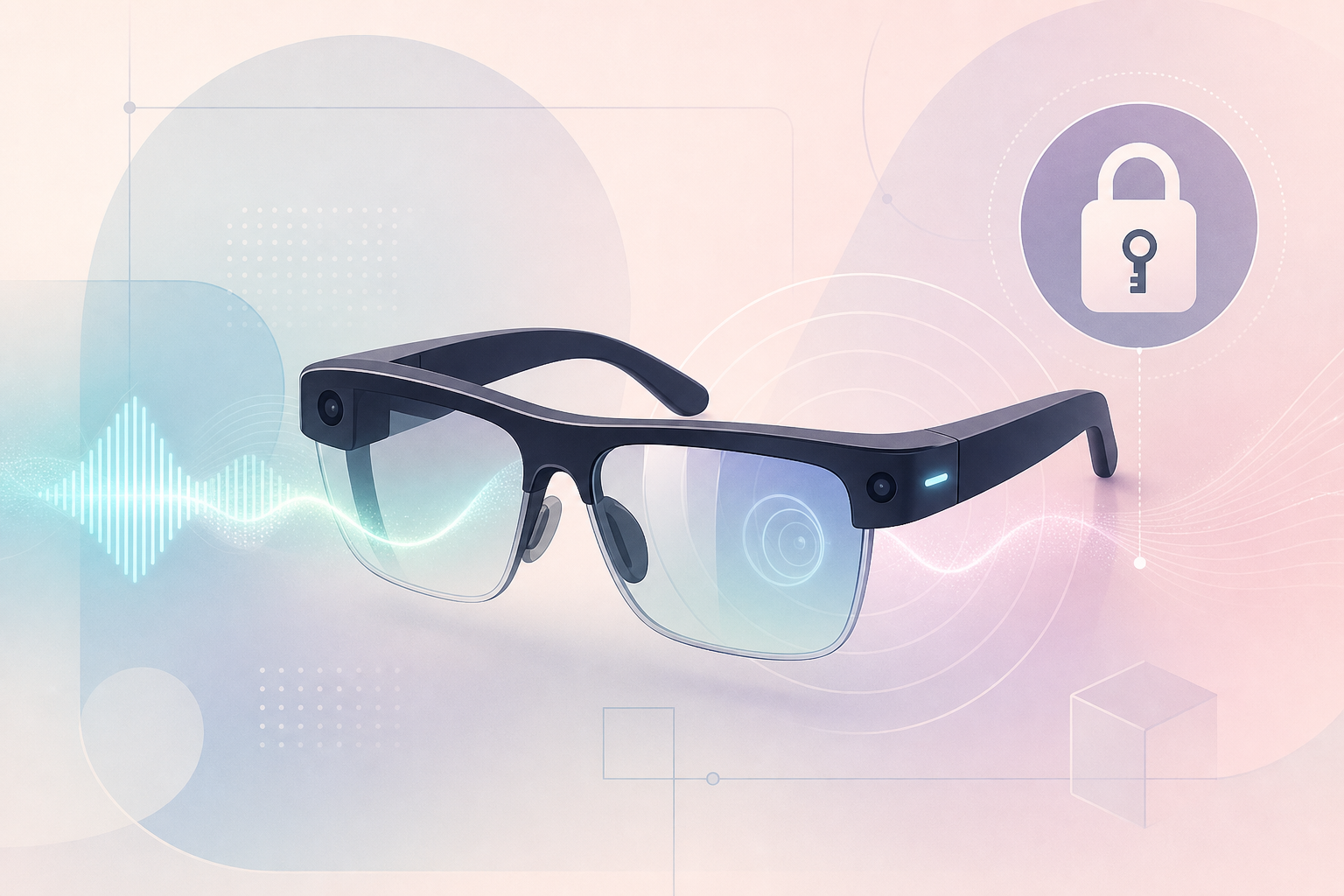
Hardware is no longer enough: welcome to Feature-as-a-Service
The consumer hardware landscape is undergoing a quiet yet radical transformation. Until recently, the pact between manufacturer and buyer was straightforward: you paid an upfront price to own a physical object and all of its built-in features. Today, the rise of artificial intelligence and the push for recurring revenue streams are dismantling this traditional model. The latest sign of this shift comes from smart glasses, with the announcement of a premium subscription plan designed to unlock extended access to some of their most advanced capabilities.
This decision does not just change how users experience glasses made in collaboration with well-known eyewear brands; it sets a foundational precedent for the entire extended reality (XR) and smart wearables industry.
The "Conversation Focus" case: local intelligence locked away
The primary feature introduced under the paid tier is called Conversation Focus. This system isolates and amplifies a speaker's voice in highly noisy environments, significantly improving audio clarity. The key technical detail here is that this processing does not occur on remote servers; rather, it runs entirely on the device’s local silicon (on-device processing).
Despite consuming no cloud bandwidth or company server resources, users who do not pay the monthly subscription will only get three hours of free usage per month. To exceed this limit and reach up to fifteen hours, they will need to subscribe to the new monthly plan, which also bundles priority support from human experts.
Choosing to restrict a local feature raises technical and economic questions. From an operational standpoint, the limit is not a safeguard against server congestion, but a purely commercial barrier designed to convert highly active users into paying subscribers.
A matter of monetization, not infrastructure costs
Artificial intelligence companies frequently place limits on APIs or chatbots due to the massive computational costs of running large language models on cloud servers. For smart glasses, however, the narrative is different. Over the last eighteen months, the efficiency of running local models has improved dramatically, reducing energy consumption and compute overhead.
The decision to introduce a subscription is therefore not about recovering live compute costs, but rather about monetizing an existing customer base over the long term. As profit margins on physical hardware sales continue to shrink, manufacturers see integrated software services as the primary path to sustaining profitability and justifying heavy research and development investments in AI and advanced optics.
Redefining ownership in the age of artificial intelligence
This business model, which can be described as "Hardware-as-a-Service," is not entirely new—the automotive industry has previously experimented with subscription-based heated seats or smart headlights, with mixed results. However, its systematic application to wearables represents a point of no return.
For custom software developers and tech firms, this shift highlights several critical strategic dynamics:
- The centrality of on-device experiences: building AI models capable of running locally via edge computing is becoming the core competitive battleground.
- Deconstruction of value: a product’s value is no longer tied to its physical shell, but rather to the flexibility and continuous updates of the software running on top of it.
- New retention metrics: businesses must design user experiences that justify recurring costs, even for features that users might expect to be standard.
Toward a subscription-based hardware future?
Introducing subscriptions for features processed directly on-device sparks a practical and philosophical debate about the nature of ownership. If continuous payment is required to unlock the full potential of a wearable, the user effectively ceases to be an owner and becomes a technology tenant.
As wearable adoption grows, technology companies must strike a delicate balance between the need for recurring revenue and consumer perceptions of value. What is certain is that the path is set: the devices of the future will never be truly "finished" at the point of purchase. Instead, they will continue to evolve—and require investment—throughout their entire lifecycle.