IA · 29 June 2026 · 4 min read
Digital Music's Fault Line: Tidal Strips AI Monetization while Suno Courts Indie Artists
In brief: The digital music industry is splitting: traditional streaming services are enforcing strict blocks on monetization for fully AI-generated content to protect organic creativity. Meanwhile, AI generation giants are attempting to contractually co-opt human creators, offering funding in exchange for broad derivative rights.
by Team Mocchi's
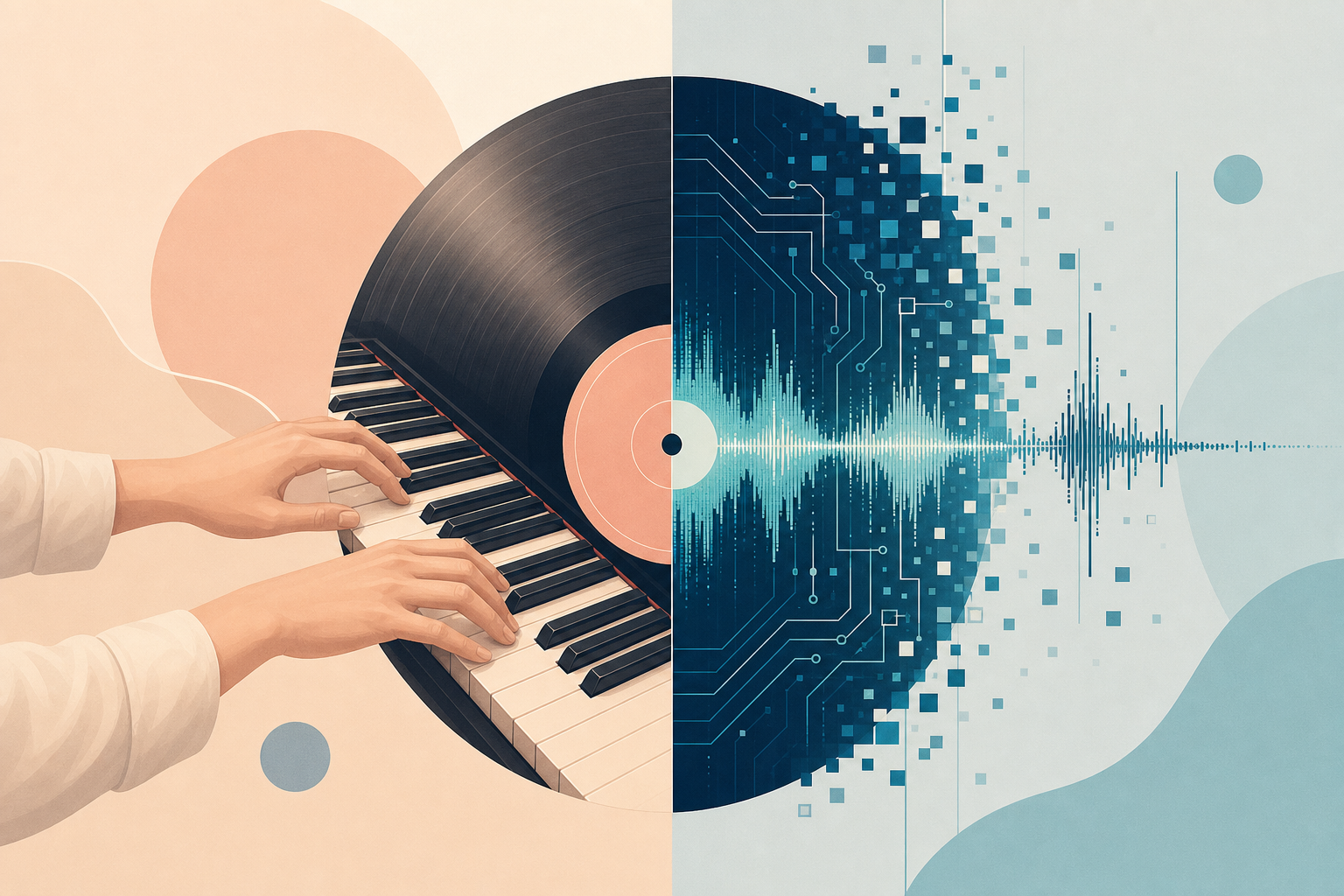
Digital Music's Fault Line: The Battle Over Rights in the Synthetic Era
The digital music market is undergoing a profound structural shift. Over the past few hours, the dynamics of this sector have polarized around two contrasting moves, drawing a clear line between the protection of human creativity and the rapid expansion of generative AI platforms. On one side, a major global streaming platform has announced an unprecedented crackdown on wholly synthetic music, stripping all monetization from tracks that are 100% generated by algorithms. On the other side, a leading AI music generator has introduced an incubator program for independent artists which, while offering grants and mentorship, demands radical concessions on copyrights and image control in return.
The Crackdown on Synthetic Monetization
The decision by the high-fidelity streaming service marks a watershed moment for the industry. In the coming weeks, tracks identified as entirely AI-generated will receive a dedicated visual badge and, crucially, will no longer be eligible to earn royalties or participate in direct-to-fan sales. This measure goes beyond financial penalties: the platform will deploy automated detection tools to swiftly remove any audio files attempting to clone or impersonate the voices or identities of real artists and bands without authorization.
The platform's leadership has clarified that this step does not target technological advancement itself, but rather aims to preserve the ecosystem that rewards organic creativity. This move responds directly to growing concerns from subscribers and creators who do not want their platforms flooded with generic, single-click content. While other major digital distributors are gradually introducing tagging and moderation filters, a total ban on financial compensation is the most drastic action taken by a global operator to date.
The "Spark" Incubator and Intellectual Property Capture
While traditional distributors raise defensive barriers, developers of generative tools are attempting to integrate with human creators. A prominent AI music startup has launched "Spark," an incubator program designed for unsigned, independent musicians. The initiative provides grants, promotional support, and mentorship, positioning the technology firm as a streaming and talent-scouting destination rather than just a software utility.
However, the program's contractual terms have raised significant eyebrows among musician communities and legal experts. To access the funding, participants must grant the startup an exceptionally broad license. This allows the company not only to host their original tracks but also to let other users remix them and generate derivative works using AI. Furthermore, the agreement waives the artists' rights to participate in class-action lawsuits and includes a strict non-disparagement clause. This rule prevents participants from making any negative statements about the company, its staff, or its products, on pain of immediate termination and loss of funding.
The Split in the Music Market
These two simultaneous developments expose a fundamental divide that is unlikely to be resolved anytime soon. Creators find themselves caught between defending their work in saturated traditional markets and accepting funding from the very technology companies that threaten to devalue their profession in the long run.
The adoption of such aggressive licensing terms by AI developers suggests a strategic move to build a legal shield against ongoing copyright lawsuits. By legally securing the rights to remix and adapt music from emerging artists, these platforms aim to feed their training models while mitigating legal exposure in the courts.
Future Outlook for Digital Distribution
How the market responds will shape the future of music distribution. If streaming platforms successfully enforce monetization blocks on synthetic audio, we may see the emergence of two parallel markets: a certified, human-only ecosystem and a tech-driven alternative where machine-generated music and flexible indie contracts feed a continuous loop of production and consumption. For tech companies and independent labels alike, navigating these new legal and distributive boundaries will be crucial for managing catalogs and sustaining growth in a fragmenting landscape.