IA · 19 September 2026 · 4 min read
Dropping the prose: RLHF inventor launches Jev, a text-free Transformer built for code
In brief: Diogo Almeida, one of the pioneers behind the RLHF technique that powered ChatGPT, has unveiled Jev via his startup TypeSafe AI. Built on Transformer architecture, the model deliberately breaks away from the Large Language Model paradigm by ditching natural language output entirely in favor of calibrated probability decisions across predefined schemas. The design choice eliminates hallucinations, slashes latency, and drops computation costs to unprecedented lows, capturing widespread attention across software engineering teams.
by Team Mocchi's
The conversation illusion in software automation
For nearly four years, the tech industry operated under the premise that human conversation was the ultimate interface for computational intelligence. Yet developers integrating Large Language Models (LLMs) into production codebases repeatedly ran into the same structural roadblock: computers do not think or operate in prose; they rely on strict data schemas, deterministic types, and reliable branching logic. A reckoning is now underway, driven by one of the key architects of the modern AI boom.
Diogo Almeida, a former OpenAI researcher who helped develop ChatGPT and co-authored foundational work on Reinforcement Learning from Human Feedback (RLHF), has introduced Jev through his venture TypeSafe AI. As reported by TechCrunch, Almeida's journey led him to an unconventional conclusion: optimizing neural networks for human phrasing created systems that are deeply impressive on the surface, but fundamentally flawed and fragile when embedded into real-world software automation.
A Transformer free of words and hallucinations
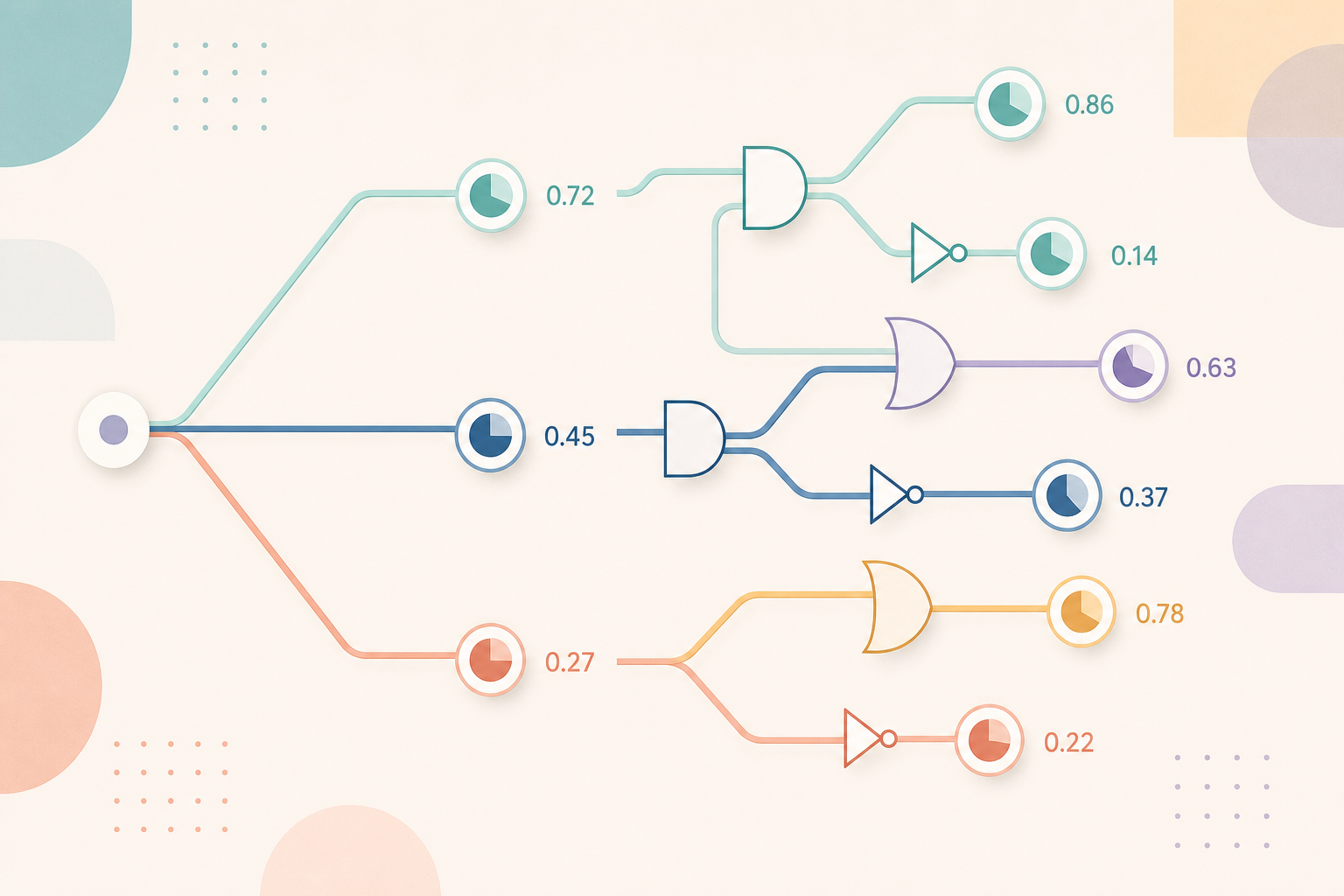
Jev's foundational premise is both straightforward and radical: it is a Transformer-based model, but it is not a language model. It generates no sentences, produces no self-justifying explanations, and refuses free-form textual output. Instead, it ingests structured input and returns calibrated probability distributions across a finite set of options predefined by the developer before execution.
This structural boundary resolves the hallucination dilemma at the mathematical layer. When allowable outputs are strictly mapped to a closed, typed schema—such as a specific enum, routing path, or configuration flag—the model simply cannot invent data or wander off course. It outputs raw confidence metrics for valid options, providing downstream code with clean, predictable signals ready for conditional logic and automated validation.
Shifting economics: billing by the billion tokens
Removing sequential token-by-token text generation fundamentally reshapes the economics of running AI inference. In autoregressive LLMs, the bulk of cloud expenditure and runtime latency stems from iteratively predicting every word in a response.
With Jev, TypeSafe AI upends current API pricing conventions. Output tokens carry no fee whatsoever, as the model merely yields numerical vectors. On the ingestion side, billing is calculated per billion tokens rather than per million. This drastic cost reduction, coupled with sub-millisecond execution times, enables engineers to embed intelligence directly into compilers, routing middleware, and agent pipelines without budget or performance penalties.
Industry reception and the shift to typed agents
The software development ecosystem responded almost instantaneously. High initial traffic briefly strained TypeSafe AI's API infrastructure shortly after launch, reflecting strong developer appetite for deterministic intelligence. Engineers building autonomous agent infrastructure, including teams at Vercel, noted that relying on conversational LLMs for basic classification and workflow branching has long been an over-engineered and brittle compromise.
By unbundling the pattern-matching power of Transformers from the overhead of conversational interfaces, TypeSafe AI is paving the way for systems that do not simulate companionship, but instead run robust, verifiable software.
Mocchi's take
In our day-to-day engineering of custom platforms and intelligent infrastructure, we have long observed the sheer inefficiency of forcing software backends to parse verbose conversational prose to execute simple logical branches. For engineering teams building enterprise architectures, TypeSafe AI's paradigm shift offers a welcome reality check: businesses should stop paying for the verbosity of general-purpose models when all they require is rigorous determinism. We are convinced that the future of agentic workflows does not involve machines chatting to one another in sentences, but compact, typed models strictly bounded by software logic.