IA · 28 June 2026 · 4 min read
Bypassing the US Embargo: Asian Startups Step in to Fill the Mythos Vacuum with Local Models
In brief: Recent US export controls on frontier models like Mythos and Fable 5 have prompted Asian competitors to launch local alternatives. Japan-based Sakana AI released Fugu, an agentic model, while China's Qihoo 360 unveiled Tulongfeng for cybersecurity. These releases accelerate the geopolitical fragmentation of AI, demonstrating how regulatory barriers stimulate the rise of sovereign competitive technologies.
by Team Mocchi's
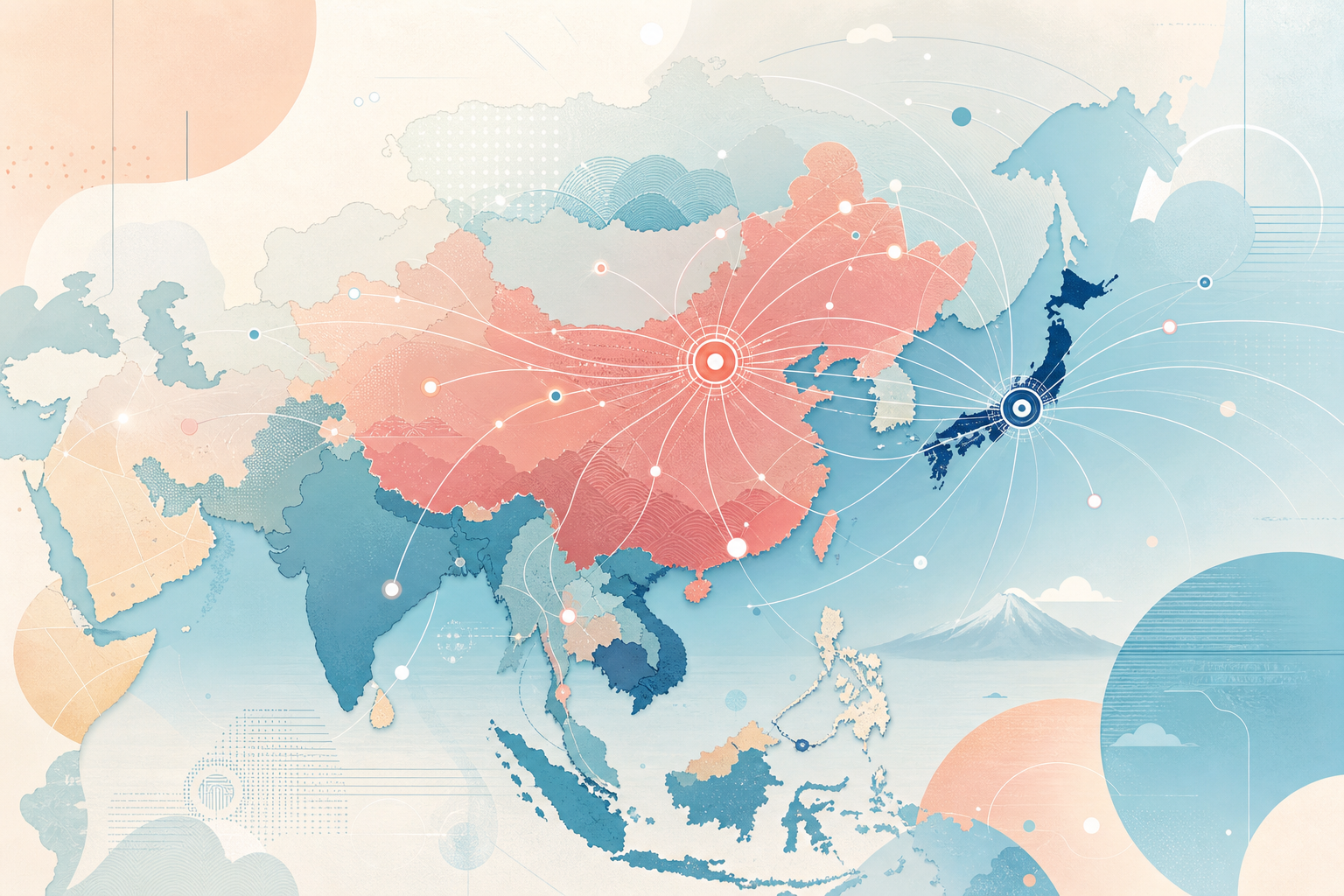
Silicon Geopolitics Accelerates Sovereign Technology in Asia
The recent decision by the United States government to restrict the global export of frontier artificial intelligence models—particularly those focused on advanced cybersecurity and agentic capabilities—is producing unexpected ripples across the global market. Instead of halting technological progress outside American borders, the embargo is acting as a powerful catalyst for Asian startups and technology firms. Within days, several companies in Japan and China have unveiled proprietary solutions designed specifically to fill the void left by US giants, positioning themselves as alternatives free from Western geopolitical constraints.
This strategic move aims to capture a market demand that has suddenly been left unaddressed. International companies, increasingly concerned about import restrictions and the volatility of US regulations on technology transfer, are now looking with growing interest at solutions developed in different jurisdictions.
The Debut of Fugu: Tokyo's Agentic Alternative
In Japan, Sakana AI—a Tokyo-based startup founded by former Google researchers—announced the launch of a new model called Fugu, named after the Japanese blowfish. According to the developers, this frontier model matches the performance of the preview versions of the restricted American models.
Fugu stands out for its architecture, which is natively designed to manage autonomous agents. The system is capable of orchestrating access to and interaction with other language models via external APIs to optimize complex workflows. However, the most significant aspect is the company's market positioning: its presentation materials explicitly highlight the ability to deliver frontier-level performance without the risks associated with US export controls.
While company spokespersons described the timing of the release as purely coincidental, the market opportunity is undeniable. The core research behind Fugu was already presented at academic conferences earlier this year, but its commercial rollout at this precise moment offers Asian and international enterprises a concrete, immediately integrable alternative.
China's Cybersecurity Move: The Launch of Tulongfeng
Simultaneously, in China, cybersecurity firm Qihoo 360 unveiled a proprietary AI tool named Tulongfeng. This solution was explicitly built to compete in the field of vulnerability analysis and digital defense operations—the very areas of specialization where the blocked US models had demonstrated their most advanced capabilities.
Tulongfeng focuses on threat mitigation and complex attack simulation, providing critical infrastructure and enterprises with an AI assistant specialized in cybersecurity. The fragmentation of digital security markets is driving Chinese players to rapidly develop domestic solutions. These tools not only reduce foreign dependence but can also be exported to emerging markets in Asia and the Middle East, which are also potentially vulnerable to Western regulatory blocks.
The "Hydra Effect" of AI Export Controls
Industry analysts point out that attempts at technological containment are producing what is known as a "hydra effect": by blocking access to a centralized model, governments stimulate the rise of multiple highly competitive local alternatives. The export barriers imposed by Washington do not stop the spread of scientific know-how, which often circulates through global academic and open-source channels. Instead, they deprive US companies of significant foreign market share and revenue streams.
For Asian startups, local businesses losing access to American APIs provides an unprecedented economic incentive to fund the training of indigenous models. This process is not limited to East Asia; other geographical regions are also accelerating sovereign model development programs to safeguard their digital independence and avoid being held hostage by unilateral political decisions.
Toward a Global Fragmentation of Models and Standards
The emergence of alternatives like Fugu and Tulongfeng marks the beginning of a new phase in the artificial intelligence landscape, characterized by distinct geopolitical fragmentation. In the medium term, we are likely to see the creation of separate technological blocs, each with its own safety standards, computing infrastructure, and reference models.
For European and global businesses, this dynamic introduces both operational challenges and strategic opportunities. On one hand, evaluating the compliance and interoperability of systems from different regions will increase software development complexity. On the other hand, the availability of multiple independent vendors will reduce vendor lock-in risks and ensure greater technological resilience in the face of future geopolitical shifts.