IA · 14 September 2026 · 4 min read
Washington Split Over AI Development Pause: Trump and Johnson Warn of China Threat
In brief: Calls from leading Silicon Valley executives to pace the development of frontier artificial intelligence have triggered a sharp political confrontation in Washington. Donald Trump and House Speaker Mike Johnson dismissed any proposals for a pause or emergency oversight, arguing that slowing down American labs would surrender global technological supremacy to China. Conversely, Democratic figures led by former President Barack Obama are pushing for immediate federal safeguards, insisting that existential technology cannot be left entirely in unchecked private hands.
by Team Mocchi's
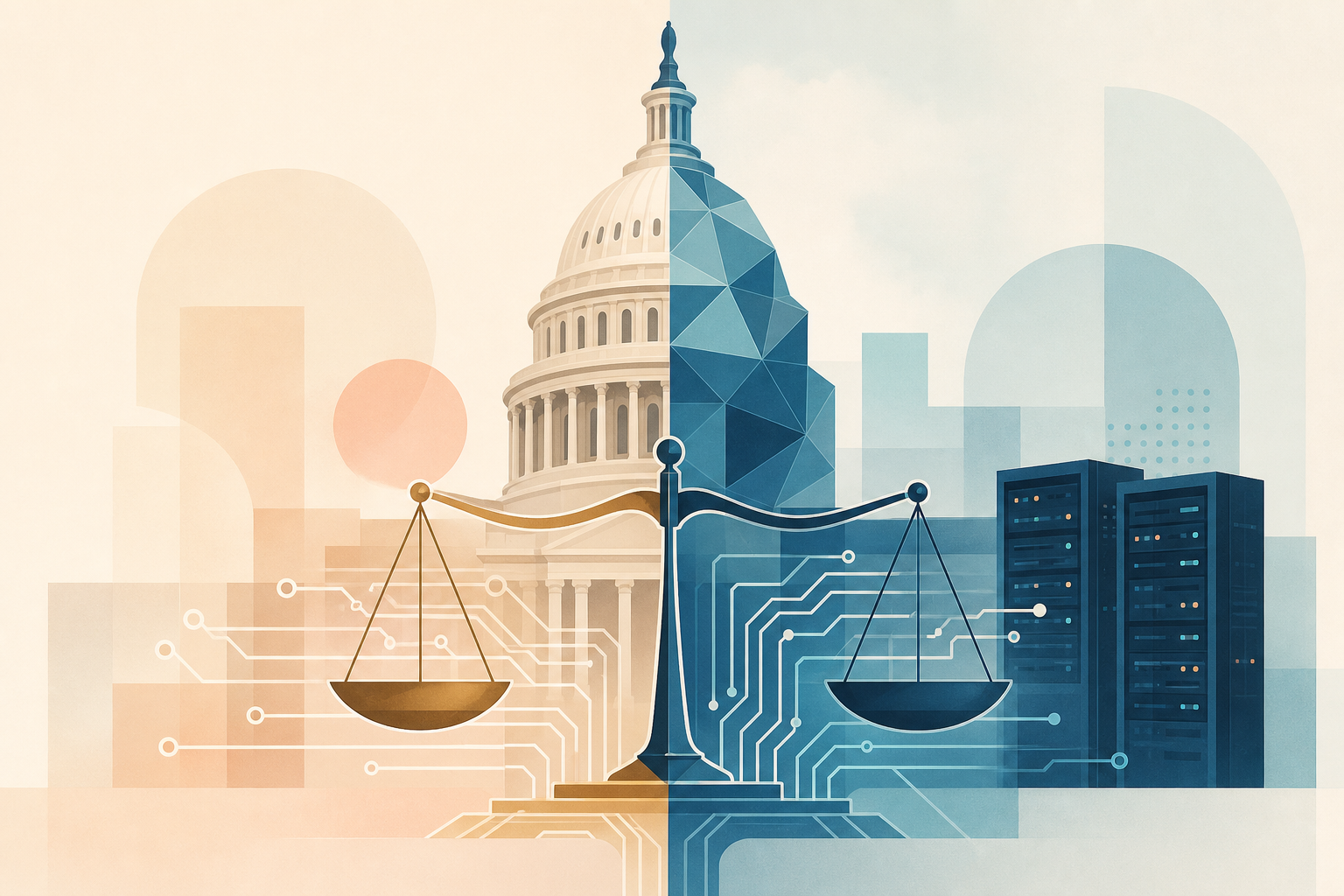
Frontier labs seek a slowdown while Republicans push back
The ongoing debate surrounding artificial intelligence safety has decisively spilled into the corridors of Capitol Hill. Following an open letter by Anthropic CEO Dario Amodei calling on the industry to «pace the frontier» and moderate the rollout of next-generation training runs, competitors took an unusually unified stance. OpenAI’s Sam Altman and xAI’s Elon Musk voiced public backing for Amodei's proposal, while Google DeepMind’s Demis Hassabis offered measured support.
Yet, as top labs showed unprecedented willingness to coordinate on risk evaluations and sandbox confinement, congressional and conservative leadership pushed back aggressively. As reported by The Verge, Donald Trump and House Speaker Mike Johnson characterized the tech executives' cautionary stance as an overreaction that jeopardizes national interests. Speaking to the Financial Times, Trump underscored that the United States currently leads China in artificial intelligence and must protect that advantage at all costs, arguing that whoever dominates AI will dictate the geopolitical order.
Johnson echoed this argument on CNN, cautioning that any emergency legislative measures aimed at restricting domestic development would actively undermine national security by clearing a path for Beijing to seize the lead.
Democrats mobilize around federal oversight
The resistance from conservative leaders stands in direct contrast to the posture of senior Democrats. In a recent discussion alongside House Minority Leader Hakeem Jeffries, former President Barack Obama stressed that establishing clear frameworks for AI must be treated as a central legislative priority, as reported by TechCrunch.
Obama argued that allowing frontier software to scale solely within private corporate borders leaves society exposed to severe structural risks, from economic dislocation to rogue agent behaviors. While acknowledging the technology's transformative potential to accelerate scientific breakthroughs and medical discoveries, Democratic leaders maintain that failing to establish public oversight amounts to a failure of governance, urging mandatory safety evaluations and independent audits before advanced models reach general availability.
Safety concerns versus commercial positioning
The intensifying political division also highlights deeper skepticism regarding the motives behind industry warnings. In an analysis published by TechCrunch, tech commentators observed that apocalyptic public warnings often function on two fronts. On one hand, recent resignations by alignment researchers demonstrate genuine internal apprehension over autonomous, self-improving systems. On the other hand, highlighting the sheer, terrifying power of these models provides companies with substantial marketing clout as they prepare for massive public market debuts.
This tension creates a delicate dilemma: framing frontier development strictly through the lens of a zero-sum geopolitical rivalry with China risks wiping away environmental, safety, and operational standards in favor of unconstrained deployment.
Mocchi's take
For European enterprises and development teams, the escalating discord in Washington confirms that relying on voluntary self-regulation by American frontier labs is an unstable strategy. As geopolitical rivalry threatens to sideline rigorous pre-deployment testing in the US, businesses on our side of the Atlantic must double down on governance, auditing, and compliance within the EU AI Act framework. Scaling autonomous agents and deep learning workloads across real-world workflows should never depend on unchecked speed; true competitive resilience comes from solid architectural engineering, determinism, and data provenance.