IA · 27 June 2026 · 4 min read
White House Tightens Grip on Frontier AI: OpenAI Limits GPT-5.6 Rollout, Anthropic Gets Partial Reprieve
In brief: The US artificial intelligence landscape is undergoing a profound regulatory transformation. Under direct pressure from the federal administration, OpenAI has agreed to limit the rollout of its new GPT-5.6 model family to a small group of partners approved on a case-by-case basis by authorities. Meanwhile, after a two-week total freeze, Anthropic has received partial authorization to deploy its cybersecurity-focused model, Mythos 5, to approximately one hundred selected organizations. These moves highlight an increasingly stringent oversight regime on frontier models, sparking industry concerns over potential strategic delays in the global AI race.
by Team Mocchi's
The Invisible Clash Over National Security
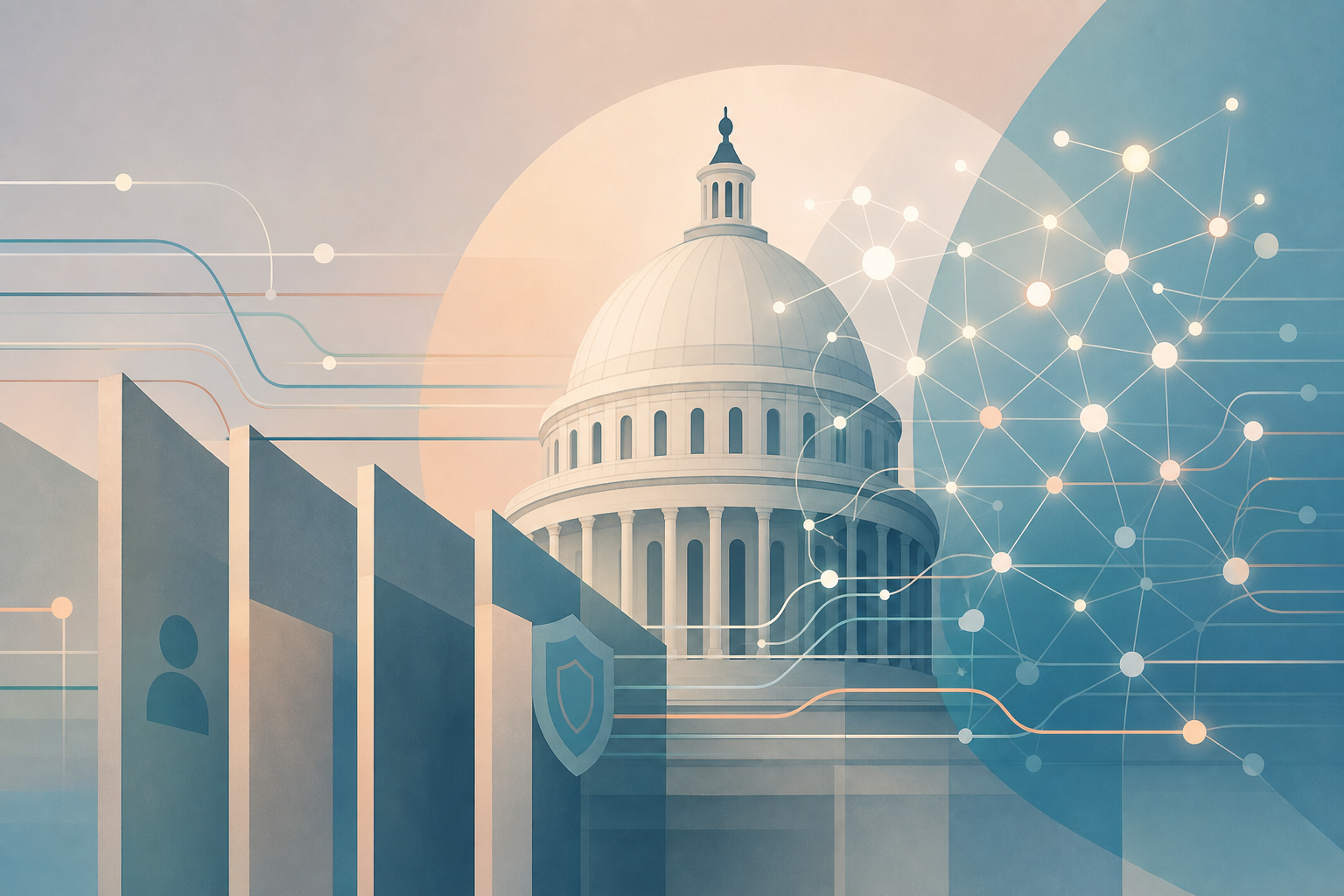
Over the past forty-eight hours, the boundary separating commercial technology development from US national security has grown even thinner. The artificial intelligence sector is currently navigating an unprecedented level of government oversight, profoundly altering how frontier models are brought to market. At the heart of this shift are two of the country's leading research labs, both forced to negotiate release terms directly with federal authorities.
On one hand, the deployment of the next generation of language models is undergoing a controlled slowdown; on the other, a partial reopening of distribution channels is taking place for cybersecurity-focused systems that were previously blocked. This dual dynamic highlights a preventive federal strategy aimed at establishing a de facto licensing regime over any software deemed highly critical.
OpenAI Scales Back the Rollout of GPT-5.6
The clearest manifestation of this new era is the deployment strategy for GPT-5.6. The next-generation suite, designed to succeed current industry-standard models, features three distinct tiers: the ultra-high-performance flagship model Sol, a balanced everyday model named Terra, and Luna, a faster, cost-effective alternative.
Although the technical infrastructure is fully prepared for release, the rollout will not follow a standard public distribution model. Following a direct request from the federal administration due to safety concerns, access to all three models is being restricted to a highly limited preview phase. Those permitted to test the technology are exclusively enterprise partners pre-screened and approved by government officials on a case-by-case basis.
While development leadership complied with this temporary request to ensure national compliance, the wider industry has expressed strong reservations. The primary concern is that forcing companies to submit advanced models for government review up to thirty days before release creates a heavy bureaucratic bottleneck. Industry experts warn that without clearly defined safety standards, such reviews could lead to indefinite launch delays, jeopardizing American competitiveness in the global technology race and threatening billions of dollars in active infrastructure investments.
A Selective Reprieve for Anthropic and Mythos 5
Simultaneously, a minor thaw has occurred on the regulatory front surrounding Anthropic. Just two weeks ago, a strict national security order forced the company to completely withdraw its cybersecurity-focused models, Mythos 5 and Fable 5, from the market. The original export control directive prohibited non-US citizens—including Anthropic's own non-US employees—from accessing the technology, a restriction so broad that it forced the company to suspend the models entirely.
In recent hours, the administration has softened its stance. A new official directive has granted a special authorization allowing Anthropic to make the Mythos 5 model available to roughly one hundred trusted US government agencies and selected private companies. Most notably, the new directive explicitly permits non-US employees of these approved organizations, as well as Anthropic’s own foreign staff, to access the model under specific safeguards.
However, this partial reprieve does not extend to Fable 5, the sister model pulled during the initial ban. Fable 5, which had been released shortly before the restriction with supposedly stronger guardrails, remains suspended after security researchers demonstrated how easily its protective filters could be bypassed.
The Dawn of a New Regulatory Landscape
These combined developments confirm that the initial policy of prioritizing speed and deregulation is being replaced by direct, targeted government intervention. The ongoing shifts point to an emerging oversight regime where state approval is no longer an optional compliance step, but a strict prerequisite for entering the frontier market.
For enterprises integrating these technologies into their operations, this landscape demands a strategic reassessment. Access to the most advanced AI capabilities may no longer be determined solely by budget or technical compatibility, but by an organization's regulatory alignment and compliance with national security mandates.
Further reading
- https://techcrunch.com/2026/06/26/trump-admin-releases-anthropic-mythos-to-be-used-by-more-than-100-us-companies-agencies/
- https://techcrunch.com/2026/06/26/openai-limits-gpt-5-6-rollout-after-government-request-says-restrictions-shouldnt-be-the-norm/
- https://www.theverge.com/ai-artificial-intelligence/957372/openai-will-delay-gpt-5-6-after-trump-administration-request